Truck or Trailer? Wrong Answer Costs You Years.
Every week someone walks into our shop or calls us up and says “I want to start a food truck.” And the very first question we ask back is: do you actually want a truck, or would a trailer make more sense for what you’re trying to do?
Most people haven’t thought about it. They use “food truck” as a catch-all for the whole mobile food industry. But trucks and trailers are genuinely different businesses to own, and the choice you make here affects your daily life, your profit margins, and your growth options for years. We’ve built hundreds of both, so we’ve got some opinions.

Why a Food Truck Makes Sense
A food truck is self-contained. Engine, kitchen, generator, everything in one box. You drive it to the spot, pop the window, and you’re open. No tow vehicle to maintain, no backing a trailer into a tight festival lot while people stare at you. Just one vehicle, one insurance policy, one set of keys in your pocket.
Trucks are king when you need to bounce between locations in a single day. Lunch at a business park in Denver, happy hour at a brewery in RiNo, late night near Coors Field. You can reposition in 15 minutes. Try doing that while hitching and unhitching a 20-foot trailer.
Trucks also tend to do better in tight urban spots. Street parking, small festival footprints, bar patios. Some Denver events specifically limit vendor space to truck-only because trailers plus tow vehicles take up too much room.
And then there’s perception. Fair or not, a lot of customers associate food trucks with higher-end street food. A slick wrapped truck with a serving window and LED lights just hits different than a white trailer on a gravel lot. Branding matters, especially when you’re competing for event bookings and social media attention.
This 16ft burger truck we built for a Bozeman operator is a good example of what a self-contained rig looks like. Everything under one roof.
Why a Food Trailer Might Be the Smarter Play
Here’s what a lot of first-timers don’t realize: trailers are almost always cheaper to build than trucks. You’re not paying for a chassis with an engine, transmission, and drivetrain. A comparable kitchen in a trailer costs 20 to 40 percent less than in a truck. If your budget is tight, that difference could be the gap between getting open this summer or waiting another year.
Trailers also give you more kitchen space per dollar. A 20-foot trailer has more usable floor space than a 20-foot truck because you don’t lose square footage to the cab and engine compartment. For menu concepts that need room (think pizza with a deck oven, or BBQ with a smoker) trailers can fit equipment that simply won’t go in a truck.
Maintenance is simpler too. When the tow vehicle needs service, you drop the trailer and drive the truck to the shop. Your kitchen sits in the lot, untouched. With a food truck, when the engine goes down, your entire business is in the shop.
And something people overlook: you can upgrade your tow vehicle independently. Start with the F-250 you already own, and when business is good, move up to a nicer truck. The trailer stays the same.
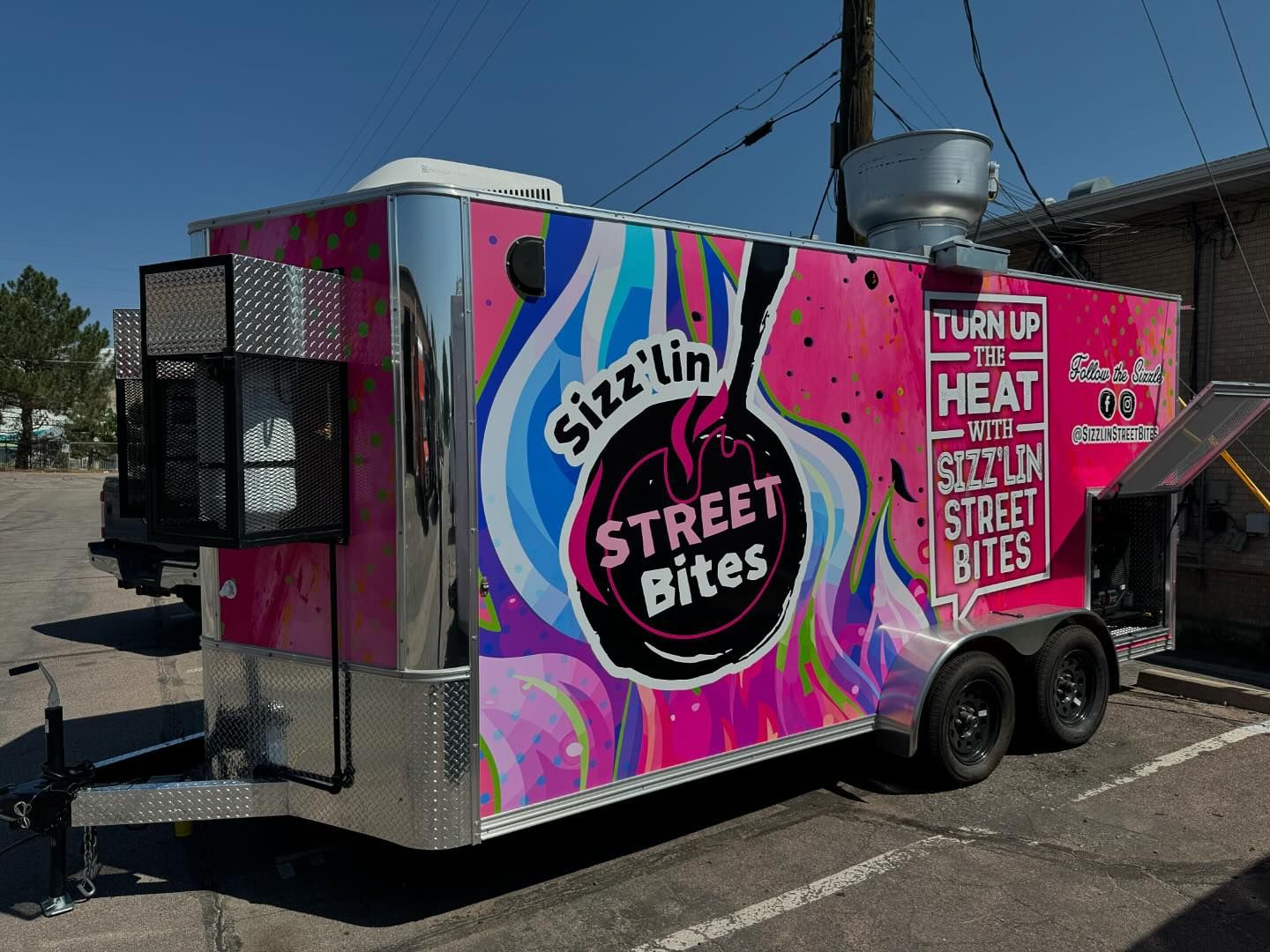
This ice cream trailer we built for an Aspen operator is a great example. Clean, compact, and cost-effective.
Colorado-Specific Stuff You Need to Think About
Mountain Passes and Altitude Kill Towing Capacity
If you’re planning to work mountain-town events (Vail, Breck, Telluride, Steamboat), your tow vehicle better be rated for it. Engines lose 3 to 4 percent of their power for every thousand feet of elevation gain. That F-150 that tows a loaded trailer fine on flat ground in Texas? It’s going to be screaming up I-70 westbound at 45 mph with the transmission hunting between gears and the engine temp climbing.
We’ve had customers who didn’t think about this until they were white-knuckling Vail Pass with an 8,000-pound trailer swaying behind them. Not fun. If mountains are in your business plan, either go with a truck or make sure your tow vehicle is seriously up to the job. Three-quarter ton minimum. Diesel preferred.
This pizza trailer we built for a Vail operator had to survive mountain roads and mountain weather. The build reflects that.
Where Do You Park a Trailer When You’re Not Using It?
Trailers need somewhere to live. In Denver and Colorado Springs, residential parking restrictions are getting tighter every year. Some HOAs flat-out ban trailer parking. Street parking a commercial trailer overnight will get you tickets in most neighborhoods.
A food truck, on the other hand, fits in a regular parking spot. It’s less conspicuous in a commercial lot. Nobody calls the HOA about a truck parked in a driveway.
If you go the trailer route, budget $100 to $400 per month for a storage yard. Some commissaries offer parking as part of their monthly package, which can be a solid deal if the location works for you.
HB25-1295 Changed the Game for Both
Colorado House Bill 25-1295 went into effect January 1, 2026 and it’s a big deal. Under the old system, every county and city had its own food truck licensing requirements. You’d get licensed in Denver, then drive to Aurora and need a whole separate license. Same truck, same kitchen, different paperwork and fees everywhere you went.
HB25-1295 created statewide license reciprocity. One license, recognized across jurisdictions. This is a game-changer for both trucks and trailers, but it especially helps truck operators who move between cities daily. No more stacking licenses for every market you want to serve.
The Cost Breakdown: Real Numbers
Custom food truck build (comparable kitchen): $90,000 to $175,000. Custom food trailer build with the same kitchen: $55,000 to $120,000. The trailer is cheaper, but don’t forget to add the tow vehicle. A capable used truck runs $25,000 to $50,000. New, you’re looking at $45,000 to $70,000. So the all-in cost gap narrows, but the trailer combo is still usually $10,000 to $30,000 less.
Insurance is different too. A food truck is one commercial auto policy. A trailer setup is a commercial auto policy for the tow vehicle PLUS a separate policy (or rider) for the trailer. Usually runs $500 to $1,000 more per year than insuring a truck alone.
So Which One Should YOU Get?
After building both for years, here’s our honest take:
Get a truck if: you’re working multiple locations per day, operating in tight urban spaces, building a brand that relies heavily on the visual impact of the vehicle, or you don’t want to deal with towing logistics. Trucks are the “grab the keys and go” option.
Get a trailer if: you’re mostly stationary or semi-permanent (think a regular brewery lot or weekly farmers market), your menu needs more kitchen space than a truck can offer, your budget is tighter, or you already own a capable tow vehicle. Trailers are the “more kitchen for less money” option.
Skip the conversion if you can. We get a lot of calls from people who bought a used truck or trailer cheap and want us to “just” convert it. Conversions almost always cost more than people expect because you’re working around someone else’s bad decisions. Rotten subfloors, sketchy wiring, non-standard dimensions. If you’re going custom, start with a clean platform.
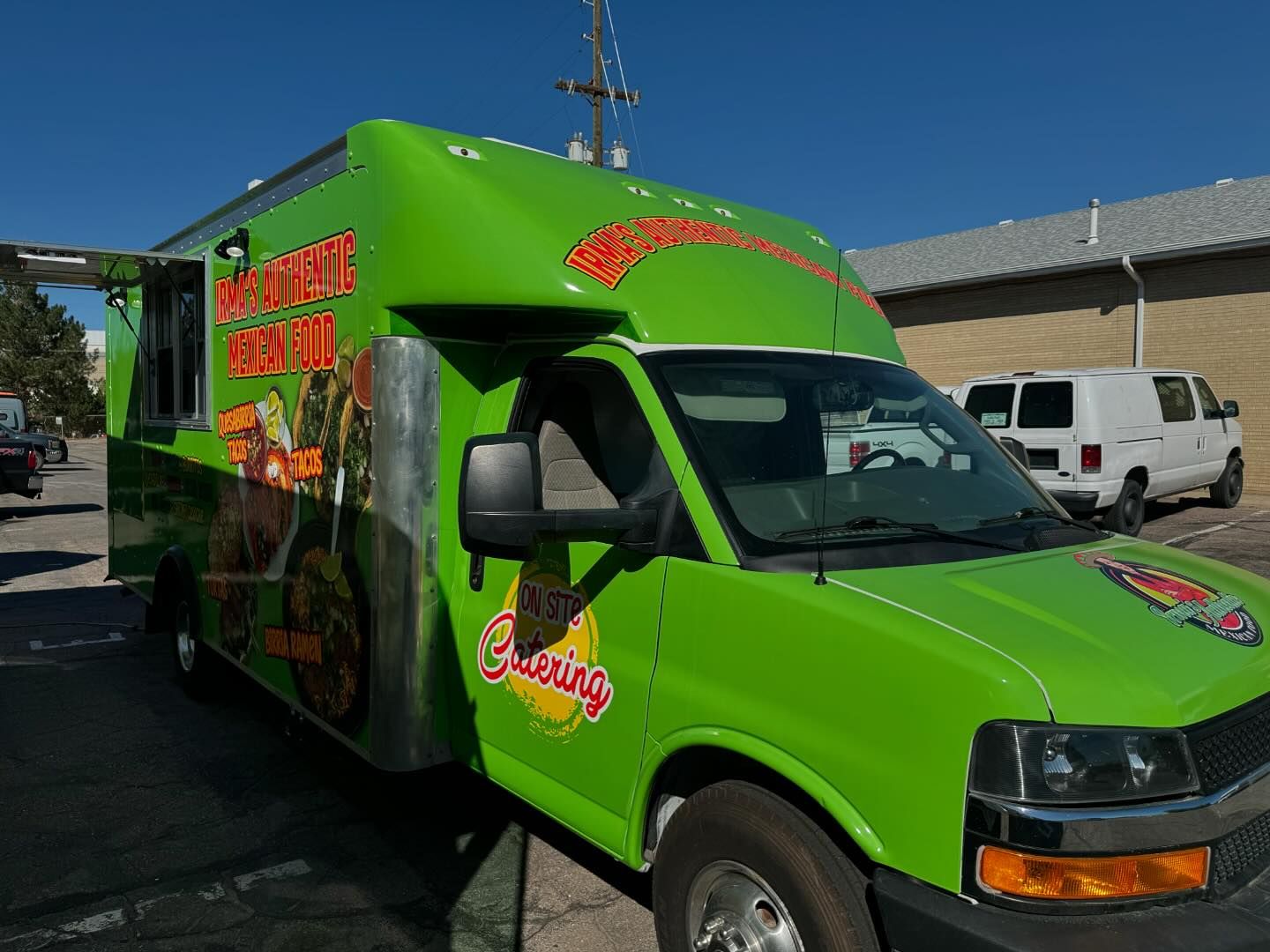
That said, we do conversions when the base vehicle is solid. This box truck conversion for a Sioux City operator turned out great because we started with good bones.
Talk to Us Before You Decide
Seriously. This is the most important decision you’ll make in your mobile food business, and it’s free to get our input. We’ll ask you about your menu concept, your target markets, your budget, and how you plan to operate day to day. Sometimes people come in certain they want a truck and leave wanting a trailer. Sometimes it’s the other way around. The goal is to build you the right thing, not just the thing you Googled first.
Call us at (720) 209-2653 or explore your options by city:
Denver food truck builds · Denver food trailer builds · Colorado Springs · Boulder · Fort Collins · Aurora · Grand Junction · Pueblo
More Resources for Colorado Food Truck Operators
Once you’ve decided between a truck and a trailer, the next step is understanding the investment. Our 2026 food truck cost guide breaks down exactly what you’ll spend on a custom build in Colorado. If you’re launching from scratch, our complete guide to starting a food truck in Colorado walks you through every step from concept to first customer.
Operating in Denver? Don’t miss our Denver food truck inspection requirements guide so you know exactly what DDPHE looks for. And when you’re ready to build, check out our food truck manufacturing, food trailer manufacturing, and food truck repair services.