
Custom Asian Food Trucks & Trailers, Korean, Thai, Sushi, Poke
“Asian food truck” is a category that hides real engineering differences. A sushi operation needs dedicated cold-line refrigeration with zero cross-contamination from hot work. A Korean BBQ truck needs induction tables that draw 40A apiece. A Thai wok operation needs an 80,000 BTU jet burner with a pure-blue flame hot enough to char the rim of the wok, which no standard commercial range produces. We build each of these separately, and we’ve learned not to cross-mix them in a single truck without explicit operator intent.
Wok work, the hottest fire in mobile cooking
Authentic wok hei (the char that makes a stir-fry taste like a stir-fry) requires a flame temperature of 2,000°F+ concentrated under the wok’s curved base. Standard commercial ranges top out around 30,000 BTU per burner, not even close. A real wok station uses a jet-flame or chimney-burner wok range at 80,000-125,000 BTU per well. We install Jade Range Titan or Wolf WKGM-236 2-well jet burners on Thai and Chinese truck builds.
Hood capture on a wok is a distinct engineering problem. The flame plume extends 12-18″ above the wok rim, and the lateral smoke throw during tossing is significant. We specify a Type-I hood at 2.0x standard CFM rating on wok builds, sized to capture the 18″ flame plume plus an 8″ lateral margin. This is the highest hood spec we install on any cuisine.
UL-300 suppression is engineered for the hot plume zone specifically. We run two suppression heads on wok builds, one over the burner deck, one on the downstream capture edge of the hood, because a wok fire behaves differently than a griddle fire.
Sushi prep, cold line isolation
A sushi truck is the opposite of a wok truck. Heat is the enemy. We design sushi builds around a dedicated cold prep line with its own compressor and no heat sources within 4 feet:
- Refrigerated sushi-cut prep table (True TSSU-48-12), 48″ at 36°F, with 12 refrigerated topping pans across the top rail for roe, cucumber, avocado, tobiko, etc.
- Dedicated fish reach-in (separate from the prep-table fridge) held at 32-34°F. Tuna and salmon handling at 38°F is technically legal but flavor degrades perceptibly.
- Rice warmer held at 86-100°F (target 95°F). The rice is the only hot element on a sushi line, and it’s kept 8+ feet from the cut board to prevent warming the fish.
- Dedicated cut boards for each protein category. Color-coded HDPE (yellow for tuna, blue for cooked, green for vegetable) with a dedicated stainless hand-sink for between-protein rinses.
Sushi builds almost always get an exhaust fan for odor, not a Type-I hood. The only hot equipment is the rice warmer, which is a Type-II vapor hood at most. This keeps the build lighter and the insurance premium significantly lower.
Korean BBQ, tabletop grills and custom exhaust
A mobile Korean BBQ operation is an unusual build. Customers grill their own meat at induction-equipped tables or portable butane burners, which means the truck is half-kitchen, half-dining-room. We’ve built two of these as convertible-panel trailers where one wall drops down to become a patio extension with built-in induction tables.
The in-truck kitchen side runs prep: marinated bulgogi, galbi shortribs, kimchi service, banchan plate-up. Each induction table pulls 3,600W at peak, for a 4-table setup that’s 14.4kW of induction alone. We spec a 15-20kW onboard generator plus 60A shore power for this configuration. Overhead exhaust on the dining-side tables uses a downdraft design (butane grills generate less smoke than charcoal; downdraft is sufficient).
Poke, pho, ramen, specific-purpose builds
Poke: Cold line only. Refrigerated fish prep, refrigerated topping rail (12-pan minimum for the full poke-bar experience), ambient rice station, sauce caddy. Lightest build in the Asian category, often a 12′ trailer with a single 50A service.
Pho: Dominated by a 20-gallon broth kettle held at 180°F. We install a dedicated 60,000 BTU burner for the kettle + a second 30,000 BTU for banh (side) work. Noodle cooking is typically done in a pasta-style boiler rather than a wok, the gentler water handling preserves the rice-noodle texture. Broth storage: we add a separate reach-in freezer for overnight broth because most pho operators run a 24-hour bone stock that’s pre-made at a commissary.
Ramen: Similar to pho but with higher ticket volume and more intense noodle-work. A ramen truck needs a dedicated noodle basket rack (we install 6-basket rails) so each order cooks independently. Broth bar has 2-3 held wells for tonkotsu, shoyu, miso, shio, each served at 185°F+.
Real Asian Food Truck builds from our shop
Frequently Asked Questions
Can I run a wok on a standard commercial range?
Sushi on a truck, is the fish safety realistic?
How long does an Asian cuisine truck build take?
What does an Asian food truck cost?
Can I do multiple Asian cuisines on one truck?
Do I need three-phase power?
Frequently Asked Questions
How much does an Asian cuisine food truck cost?
Trucks start at $55,000 and trailers from $40,000 to $55,000.
How long does it take to build?
About six weeks.
Can you install a wok burner?
Yes. High-BTU wok burners require a properly ventilated hood, and we size both correctly.
What about a steam table for noodles or dim sum?
Yes, steam tables, rice cookers, and induction units all integrate well.
Truck or trailer for Asian cuisine?
Both work. Trailers give more space for wok stations.
Do you ship outside Colorado?
Yes.
Request a quote for your Asian build
Tell us about your vision, cuisine, equipment wishlist, timeline, budget. We reply within one business day.
Ready to build your asian food truck?
We build to your menu, your service window, and your jurisdiction. Talk to us about equipment selection, layout, and the specific regulations in your city.
Recent Asian truck builds we delivered
Real builds, real customers, real delivery dates.
Recent builds for Asian menus
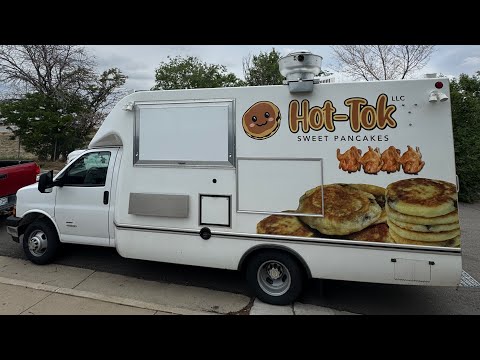
Built around a nine pan dough proofer and the first kitchen display system we fitted.

A drinks truck built around water, ice and three power sources, with a second window that pays for itself.
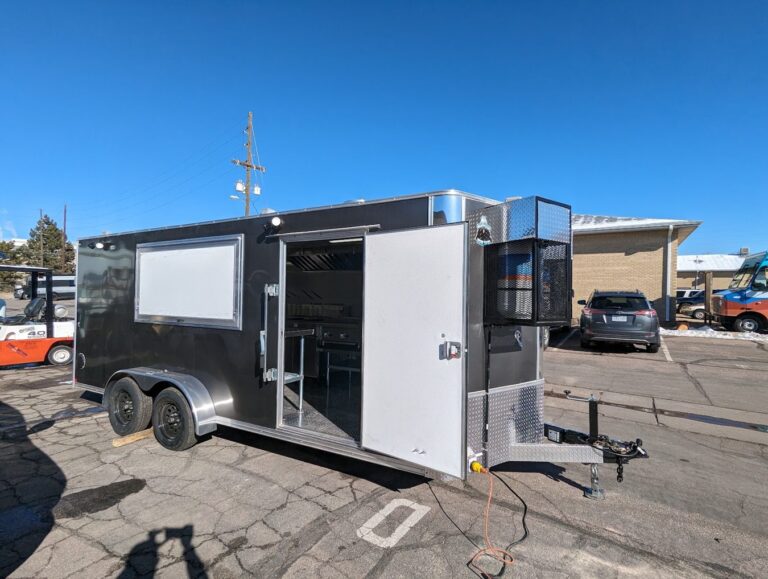
Three fryers, none of them the same, under one eight foot hood.
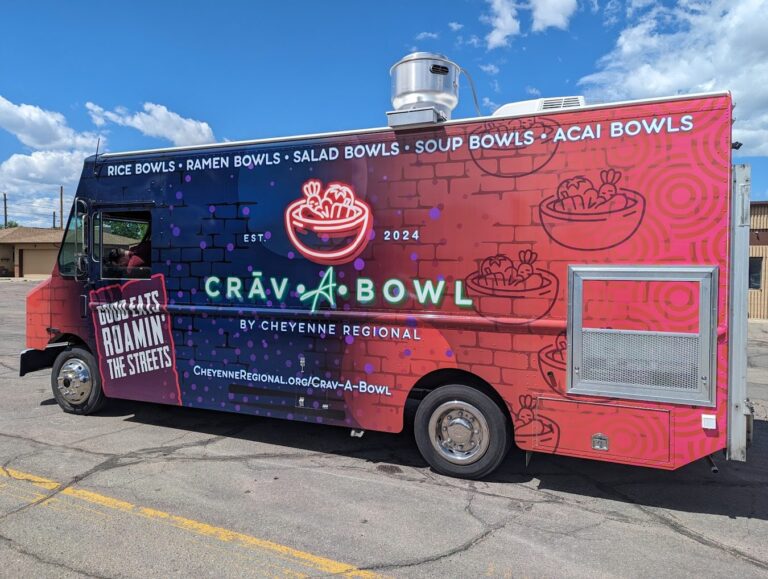
Built for Cheyenne Regional Medical Center around a combi oven and a bowl menu.
Every one of these started with a phone call and a menu. Call or text 719-722-2537.