
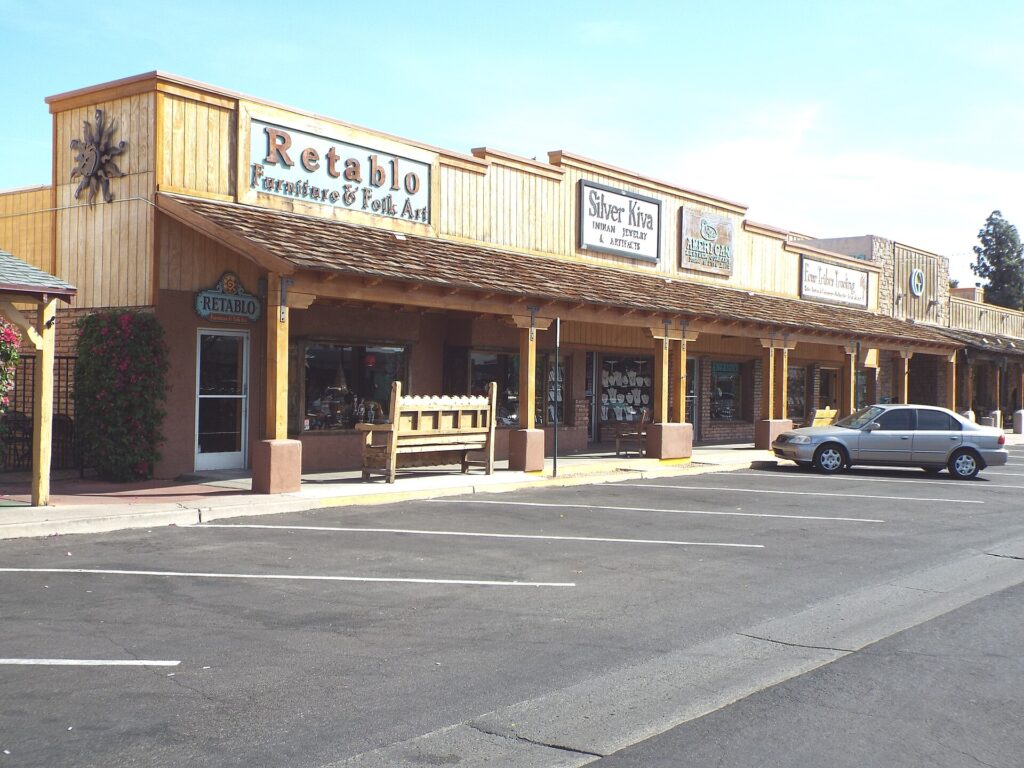
Scottsdale pays well, with resorts, golf tournaments, Old Town nightlife and corporate events, and it regulates trucks more closely than its neighbours. The city licence requires fingerprints for everyone who controls the business. Here is what applies in October 2026.
What a food truck pays in Scottsdale
A full cooking truck pays $610 a year for the Maricopa County permit and $300 plan review the first year, $350 for the Scottsdale licence the first year and $50 a year after, $10 per person for the city fingerprint fee plus the state fingerprint fee, the fire inspection, and $62 for TPT ($12 state plus $50 Scottsdale). Allow about $1,350 the first year before the fire inspection.
Building a food truck for Scottsdale? See what a fully-equipped, inspection-ready truck actually costs with our free build & cost calculator.
A note on HB 2118, because many guides, including an earlier version of this one, got it wrong. House Bill 2118 of 2026 would have stopped Scottsdale and every other Arizona city from requiring their own mobile food vendor licence. The Governor vetoed it in March 2026, so it never became law. The rules that apply are the ones Arizona passed in 2018 in House Bill 2371, described below.
The Maricopa County permit
Maricopa County Environmental Services licenses trucks based in the county. Its board approved a new fee schedule on 19 August 2026, which applies to new applications now and to existing permits at their next renewal. The fee summary sets the annual permits at:
Type I, prepackaged and non temperature controlled food only, such as ice cream trucks: $290, up from $120, and the six month Type I permit is gone. Type II, limited preparation such as coffee, hot dogs and shaved ice: $341, up from $240. Type III, a full cooking truck or trailer: $610, unchanged. Plan review is now $306 for Type II and $300 for Type III, up from $45 and $75.
A Type II or Type III permit is not issued until someone on the business holds a Certified Food Protection Manager certificate, and the person in charge on site during operation has to be a certified manager. Every employee who handles food needs a food handler card from an accredited provider. A unit already licensed by another Arizona county does not need a new Maricopa plan review or inspection, though it still applies for the Maricopa permit, as the county mobile food page explains.
The Scottsdale city licence
Scottsdale’s Mobile Food Vendor licence, sections 16-650 to 16-656 of the city code, is $350 to apply or for a late renewal and $50 to renew each year. Every controlling person is fingerprinted, at $10 to the city plus the Department of Public Safety fee, and the city decides within 90 days. The application asks for your county permit, insurance and a fire inspection. State law allows the fingerprinting, because cities may license mobile vendors when the licence includes a background check.
Fire inspection
Every truck with appliances that produce smoke or grease laden vapour needs a fire inspection, and Scottsdale can require one, but under state law it has to accept a passed inspection from any Arizona city or town fire department within the last twelve months. Inspectors look for a Type I hood with a UL 300 wet chemical system serviced every six months, a Class K extinguisher by the fryers and an ABC extinguisher, propane cylinders secured outside the cab with leak tested lines, and clear exits. Scottsdale accepts its own inspection or proof of another Arizona fire department inspection within twelve months. The city does not publish a separate food truck fire fee. Our fire suppression guide covers the hood and suppression side in detail.
Transaction privilege tax
Arizona calls its sales tax transaction privilege tax, and you need a TPT licence from the Department of Revenue before your first sale. The state fee is $12 per location, plus each city’s own fee, which is $50 for Scottsdale. You report and pay the city portion for wherever the sale happens, so a truck working several cities adds each one to its licence.
The state law that applies
Three statutes set the framework. ARS 36-1761 makes the county where your commissary is located the licensing authority, requires a separate licence for each unit renewed every year, gives that licence reciprocity in every county, requires every employee to hold a food handler card, and lets a city, town or county license mobile food vendors only if its licence includes a background check or fingerprinting. ARS 9-485.01 limits what cities can do. ARS 11-269.24 limits what counties can do.
Under ARS 9-485.01 a city may not require a special permit that other mobile vendors in the same zoning district do not need, may not impose a distance from restaurants except through building, fire, street and sidewalk codes, may not ban trucks from legal parking spaces including metered ones, and may not make you pass its own fire inspection if you can show you passed one with another Arizona city or town fire department in the last twelve months. A city may still keep trucks away from airports and transit facilities and out of residential zones or within 250 feet of them, enforce its zoning, run special event permits, and require its own business and tax licences. Cities over 50,000 people have to let you apply online.
Counties have similar limits. Another county may ask you to apply for its permit and pay its fee even though your home county licensed you, but it cannot make you pass another inspection to get it, cannot require fingerprinting, and cannot limit how long you stay on private property beyond 96 consecutive hours.
Where trucks sell in Scottsdale
Old Town events and nightlife, resort and golf events including tournament week, corporate catering in the Airpark, and private parties in North Scottsdale. Event organisers here often ask for higher insurance limits, so check before you book.
In order
Form the business and get your TPT licence. Submit plans and the plan review fee to Maricopa County before or during the build, with a certified manager named. Pass the county inspection and get the permit. Pass a fire inspection with any Arizona city fire department and keep the paperwork. Then apply for the Scottsdale Mobile Food Vendor licence where it applies, and book events and private property locations.
Common Reasons Food Trucks Fail Scottsdale Inspections
Maricopa County Health Violations
- Missing or Invalid Commissary Agreement: The agreement is unsigned, expired, or doesn’t detail the kitchen facilities
- No Commissary Visit Log: You haven’t documented when and how often you visit your commissary for prep and cleaning
- Temperature Abuse: Time-temperature control for safety (TCS) foods held below 41°F or above 135°F
- Cross-Contamination: Raw meat stored above ready-to-eat foods, or inadequate separation between food types
- Handwashing Station Issues: Non-functional or missing hot water; handwashing sink blocked by equipment
- Equipment Cleanliness: Grease buildup on fryers and griddles, mold in ice machines, or dirty cutting boards
- Pest Evidence: Signs of rodents or insects, gaps in truck sealing, or open food containers
- Missing Food Handler Cards: Staff lacks current ANAB-accredited certifications
Scottsdale Fire Department Violations
- Expired Propane Cylinders: Hydro-test dates outside the current window
- Non-Functional Suppression System: Ansul system not serviced within 6 months, or not properly installed
- Missing or Expired Class K Extinguisher: Fire extinguisher not on-site or past its service date
- Electrical Hazards: Exposed wiring, overloaded circuits, or missing GFCI protection in wet areas
- No Automatic Fuel Shut-Off: The truck lacks a system to automatically cut propane when the suppression system activates
Scottsdale Food Truck Official Resources & Contacts
| Entity | Contact | Phone | Website |
|---|---|---|---|
| Maricopa County Environmental Services | Mobile Food Program | (602) 506-6872 | maricopa.gov/3977/Mobile-Food-Establishments |
| Scottsdale Fire Department | Fire Prevention | 480-312-3453 | scottsaleaz.gov/fire |
| City of Scottsdale | Business & Economic Development | 480-312-7500 | scottsaleaz.gov/business |
| Arizona Department of Revenue | Transaction Privilege Tax | Online | azdor.gov/business/transaction-privilege-tax |
| Phoenix Open (Waste Management) | Vendor Applications | See website | phoenixopen.com |
Frequently asked questions
How much is a Scottsdale food truck license?
$350 for the first year or a late renewal, $50 for an on time renewal, plus $10 per person for the city fingerprint fee and the state fingerprint fee.
Why does Scottsdale fingerprint food truck owners?
State law, ARS 36-1761, lets a city license mobile food vendors only if its licence includes a background check or fingerprinting, so Scottsdale’s licence is built that way.
Did HB 2118 end Scottsdale’s food truck license?
No. HB 2118 was vetoed in March 2026. The licence still applies.
Do I need a certified food manager for a Scottsdale truck?
Yes for Type II and Type III units. Maricopa County requires a Certified Food Protection Manager before it issues the permit.
Other Arizona guides
Arizona food truck permits 2026 · HB 2118 and the law that actually applies · Phoenix · Tucson · Mesa · Chandler · Gilbert · Glendale · Sedona
Building a truck for Scottsdale
We build every truck to pass the county plan review, the health inspection and the fire inspection on the first visit: a Type I hood with suppression installed by a licensed company over every grease producing appliance, a three compartment sink and a hand sink with hot water, potable and waste tanks sized for a full day, and propane in secured cylinders with a detector. In the Arizona heat we also size the air conditioning, insulation and refrigeration for 110 degree afternoons, which is where most used trucks fail. Custom food trucks start at $55,000 and trailers at $40,000, delivered to Scottsdale from Colorado. Call or text 719-722-2537 with your menu.
Jacob Varghese
Zion Foodtrucks
719-722-2537
Zion Foodtrucks builds custom food trucks, trailers, and concession trailers from our shop in Monument, Colorado and delivers them ready to pass inspection across the Mountain West. Owner Jacob Varghese and our team work with first-time owners every day, sourcing the vehicle and handling the full build so you do not have to. Questions about permits or your build? Call or text Jacob at 719-722-2537 or see our custom build services.
Free Food Truck Permit & Inspection Checklist
We put together a printable checklist covering every permit and inspection a mobile food business typically needs. Tell us where to send it and it is yours.
Next steps: free build & cost calculator · 2026 food truck cost guide · food truck financing
Already Have a Truck? We Do the Compliance Work Too
Passing an inspection is one thing, staying current is another. We handle the recurring items out of our Colorado shop:
- LP gas pressure testing, $350. Required annually, and again after any modification.
- Fire suppression inspection and service, $300. The code interval is every 6 months, not annual, which catches a lot of operators out.
- Hood and exhaust cleaning, with the written report and logbook entry inspectors ask to see.
Booked together they are one visit and one day off the road instead of three. Call or text 719-722-2537.
Ready to build your truck?
We design and build custom food trucks and trailers compliant with the regulations on this page. From a single phone call to keys-in-hand in 6 to 8 weeks for most builds.
Built in Woodland Park, Colorado. Delivered to operators in CO, AZ, NE, MT, and WY.