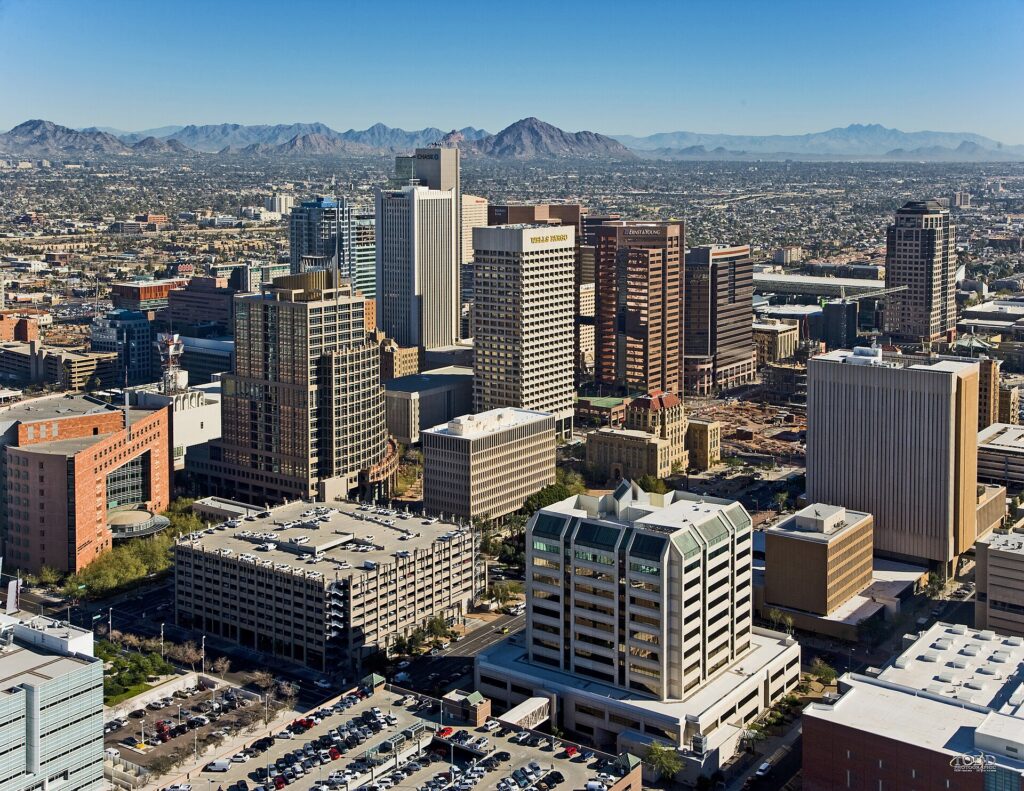
Phoenix, AZ

Food Truck Inspection Requirements in Casper, WY: Your 2026 Natrona County Guide

Casper is the second largest city in Wyoming and the most economically diverse part of the state outside of Cheyenne. The city sits at the crossroads of I-25 and US-20/26, anchored by Casper College, Wyoming Medical Center, the regional oil and gas industry, and a steady summer event calendar that runs from the Beartrap Summer Festival through the Central Wyoming Fair and Rodeo. Food trucks here split their time between downtown lunch service, brewery patios, oil patch catering, and the events at David Street Station. The market is bigger than most operators expect when they first look at the population numbers, and it’s well-suited to operators who can run high volume from a single location.

Casper-Natrona County Health Department (CNCHD) runs the local health program for both the City of Casper and Natrona County. They’re one of only six local health departments in Wyoming and they handle their own plan reviews, mobile food unit permits, and inspections without going through the state Department of Agriculture. We’re Zion Foodtrucks, based in Woodland Park, Colorado, about a four hour drive from Casper. We’ve built BBQ smoker trailers and stepvan units for Wyoming operators working oil patch catering, ranch events, and the Casper event circuit, and this guide reflects what we’ve learned getting trucks through CNCHD’s environmental health office.

How Casper and Natrona County Food Truck Permits Actually Work

Casper-Natrona County Health Department’s Environmental Health Division at 475 South Spruce Street is the licensing authority. They handle plan review, mobile food unit permitting, and routine inspections. Their main number is (307) 577-9752. CNCHD inspects every mobile unit at least twice a year on an unannounced basis and uses the FDA Food Code framework with Wyoming amendments.

The City of Casper layers a separate health license requirement, with fees described in a published table on the city’s website. The City of Casper also requires the standard business license through the city clerk. Fire safety inspection sits with two possible bodies: Casper Fire-EMS Department for trucks operating inside the city limits, and Natrona County Fire Protection District for trucks operating outside the city. Both reference the 2021 International Fire Code and incorporate NFPA 96 (commercial kitchen ventilation) and NFPA 58 (LP-gas) as the technical baselines.

One thing that catches operators off guard: Casper-Natrona is a strong commissary enforcement jurisdiction. CNCHD verifies commissary letters by phone, and a fake or out-of-date commissary agreement is one of the fastest ways to lose a permit. We recommend operators lock down their commissary before they even start the plan review.

Permits and Licenses Required to Operate a Food Truck in Casper

  1. Wyoming business entity (LLC or corporation). Filed with the Wyoming Secretary of State at sos.wyo.gov. About $102 to file an LLC online; $60 minimum annual report.
  2. Wyoming sales/use tax license. Free, applied for through the Wyoming Internet Filing System at excise-wyifs.wy.gov. Casper’s combined sales tax rate is 5 percent (4 percent state, 1 percent Natrona County).
  3. Casper-Natrona County Health Department Mobile Food Unit Permit. Issued by CNCHD Environmental Health at 475 South Spruce Street. Initial license fees and annual renewals are set by the CNCHD board of health and published in the city’s health license fee table. Plan review is required for any unit that hasn’t operated under a CNCHD permit before.
  4. City of Casper business license. Required for operating within Casper city limits. Apply through the City Clerk’s office at City Hall, 200 N. David Street.
  5. City of Casper health license. A separate fee applies for the city’s mirroring of the health permit. The fees are described in a table on the City of Casper’s business licensing page at casperwy.gov/business_detail_T11_R18.php.
  6. Fire department inspection. Casper Fire-EMS at (307) 235-8222 for in-city operations or Natrona County Fire Protection District at (307) 235-9200 for outside the city.
  7. Commissary letter. CNCHD requires a written agreement from a permitted commercial kitchen. Phone verification by CNCHD is standard.
  8. Food Protection Manager certification. ANSI accredited (ServSafe Manager, Prometric, 360training). Required for the person in charge.
  9. Food handler cards. Demonstration of knowledge required by Wyoming food code. Cards strongly recommended for all employees.
  10. Annual propane system inspection. NFPA 58 compliance, signed by a registered LP-gas inspection agency.
  11. UL 300 fire suppression inspection. Tagged within six months at all times. Required for any truck with hood-protected cooking equipment.
  12. Commercial general liability and auto insurance. Strongly recommended; required for operating on city or county property and for most events.

Estimated First-Year Casper Food Truck Costs

  • Wyoming LLC formation and first annual report: $162
  • CNCHD mobile food unit permit (initial): $200 baseline
  • CNCHD plan review (typically built into initial permit): $0 to $250 separate fee depending on the year’s fee schedule
  • City of Casper business license: $25 to $100 depending on category
  • City of Casper health license: per the published fee table
  • Casper Fire-EMS inspection: $0 standard inspection
  • Sales/use tax license: $0
  • ServSafe Food Protection Manager certification: $125
  • Food handler cards (3 employees): $30
  • Commissary kitchen rental (annual): $1,800 to $4,800
  • General liability insurance: $700 to $1,400
  • Commercial auto insurance: $1,300 to $2,400
  • UL 300 fire suppression semi-annual inspection: $200 to $400
  • Annual propane system inspection: $150 to $250
  • Hood and duct cleaning (quarterly recommended): $600 to $1,200

Total first-year compliance costs land in the $5,200 to $11,200 range, not counting the truck. Casper’s commissary market is healthier than Cheyenne’s; there are several shared use kitchens around the East 2nd Street and Yellowstone Highway corridors and several restaurant operators in town who lease off-hours space.

Fire Safety Inspection: What Casper Fire-EMS Looks For

Casper enforces the 2021 International Fire Code with NFPA 96 and NFPA 58 as the technical baselines. Casper Fire-EMS handles inspections for trucks operating inside city limits; Natrona County Fire Protection District handles county areas. Both fire marshals look for the same items.

  • Type I hood meeting NFPA 96. Stainless construction, 6 inch overhang on all open sides of the cooking surface, listed grease filters at the prescribed angle, captive air design.
  • UL 300 listed wet chemical fire suppression system. Ansul R-102, Pyro-Chem PCL-300, Range Guard, or equivalent. Tagged within six months.
  • Manual pull station. Located in the path of egress, clearly labeled, drops both gas and electric to cooking equipment when activated.
  • Mechanical gas shutoff valve. Tied to the suppression system, automatic shutoff on system discharge.
  • K-Class fire extinguisher. Within 30 feet of the cookline, accessible without crossing the cookline.
  • 2A:10B:C extinguisher. Mounted near the primary egress.
  • Propane installation. Maximum 200 lb aggregate. Cylinders secured in a vented compartment, NFPA 58 compliant fittings, regulators with overpressure protection, excess flow valves, and a listed LP-gas alarm in the gas system area.
  • CO detector. If a generator is mounted on or near the unit.
  • Electrical compliance. GFCI on all 120V circuits, no extension cords as permanent wiring, properly rated service.
  • Egress. Service window with positive latching and primary entry/exit door.

See a Zion Food Truck Fire Suppression System in Action

Read the video transcript: Fire Suppression / Denver French Truck
Hello and welcome design food trucks. Today we have another exciting project uh leading us. This one is of course going to be here in Denver and it's going to make um gourmet sandwiches. It is 18 ft long and it has a few tricks up its sleeve. Let's look outside and see its uh exterior and then go inside. goes on the outside. What catches your eye would be the the French themed um wrap on the outside. Very beautiful if I may say so. Um very tasteful. Ties all the sandwich theme together. Um that of course is the awning for the 5-ft window. Self-closing obviously as is required by code. The two exterior lights. You can also see the air conditioner on top. The air conditioner also has a heat pump. That is how you would fill water into the fresh water tank. That is how you drain water from the gray water tank. On the back you would see the RV door as we call it. Um basically the code does not allow the the kind of um roll uh the rollup shutter the rollup door that is not up to code which is why we have to do this. I apologize for the road noise. The truck is parked for delivery. So um that is how you would drain the black water tank. This truck has a bathroom inside. So that's how you would train it. Of course that's the shore power connection the generator box of course which is as you can see lockable. It opens up and uh exposes the generator. That obviously is how the that is how the um that's actually where the um propane tank is. We call them underbelly tanks. you don't like them hanging out in the back of the truck. Um, it's a a fire risk in case if it's a rear ended or whatever. Now, let's go inside and see its many features. This truck, as with others that we build, has two doors, one in the back, one in the front. Code requires that any space a human occupies um must have a ingress and an ingress. This is the ingress, of course. Uh, right in front is the refrigerator. And right here is a range. And the range has a griddle and two burners. And the oven, of course, which is why it's a range. Um, the hood, as you can see, slightly oversized. This is because we believe that this customer might add more equipment as they go, you know, as they go about their business. the menu might change. Um maybe they will want soups or something else. Um which is why we left a little bit of space here and a larger hood. Talking about sandwiches, that's what we're going to be making the sandwiches on. This is a sandwich prep table, a refrigerated sandwich prep table. A freezer right there. The freezer is actually resting on a generator box. So you saw that door on the outside. Um, this is the generator box for it. Right there is a little freshwater tank and uh what it is for um is the toilet. This um truck has a restroom inside for the customer's personal use. Not really open to the public, but it is there. Now, you cannot have um obviously the other plumbing is on this side. Um so you cannot have these uh connecting together. What I mean is so the bathroom the water from the bathroom cannot at any point interact with the water um for the you know hand washing or or bear washing which is why it has completely different systems, different setups. So freshwater tank for the bathroom. There's a little water heater behind it. Of course it has its own water pump. And right there is the bathroom toilet, hand wash sink. Of course, hand wash sink also has hot water. This is the the pull tab for the uh fire extinguisher. On this side you would see a larger water heater and this is required because um of the area where this truck is going to be operating in. Food trucks as you know are regulated by um by county code at least for now. The wiring you would see just like with all our trucks um every piece of equipment has its own breaker. They're all home run so to speak. water heater, mop sink, hand wash sink, three compartment sink, and the um the service window. The service window as always is self-closing. So, you lift up, pass your product, and it closes by itself. The controller for the air conditioner, which is right here. lights. Of course, this truck has an all stainless construction and uh inside the walls is 1 in of insulation, 9/16 in of plywood. The floor is aluminum diamond plate and uh addition of the insulation makes it a very comfortable place to work in. If you have any questions or if you would like a food truck like this uh built for yourself, please do contact us through our website zfotrs.com or our phone number 7209-2653. Thank you. Have a nice day.

Built for Wyoming-Style BBQ Operations

Read the video transcript: BBQ Smoker Trailer
all right welcome to Mal High custom food trucks we're going to be talking about a 26 foot barbecue trailer and food trailer that was custom made by mile high custom food trucks here we have the hand sink with splash guards here to wash our hands we have the triple sink here for washing dishes and things of that nature we have the hand the soap and towel dispenser here this is all custom made Behind the Walls is insulation plywood stainless still with the beautiful diamond plate floor we're going to open up the cabinet here this is where the water heater water pump all the supply lines shut off valves everything is all custom made and installed nice and clean everything will definitely pass for the state that the customer will be operating in going to shut this up here all right now we're going to move on to the electrical electrical panels here it's got 20 amp and 30 amp Breakers everything is all individually broken up for the outlets for the individual pieces of equipment you got inside light switches outside light switches this is the control for the temperature of the fan so in the summer months you can have it on high to pull out the exhaust fumes um from the cooking out and then in the winter months you can dial it down to keep some of the heat inside here and that's very nice um when you're cooking in the winter and the summer months and you're still making money now we're going to talk about the equipment here we've got refrigerators here two of them brand new everything is nice and clean everything's mounted we've made custom legs and custom brackets to be able to essentially attach the equipment and the shelves on the walls we've got a freezer here this all brand new shelving above that's mounted in the walls clients don't have to worry about where they can put the shelves because the whole trailer has complete plywood to where they can mount additional shelves and things of that nature now we're going to talk about the cooking equipment cooking equipment has its own individual feet that are custom made um this is a flat top 36 in and it has a full oven here you have the uh 40 lb frers here with the custom covers that we put in here so this is when the client is done at night they can basically put the covers in and just pull right out with hot grease the key thing is is just not to overfill the oil levels um and is clearly labeled inside the fryer so when they're done at night they can simply put the cover in that's custom made and then they'll be able to just be able to leave and let everything kind of cool off there here we have a 5T window this is custom made and has locks in place it has self closing screens so that keeps the bugs out and then you'll be able to lock it here it comes with the outside awning to support the unit um this is a uh 60 in x 36 in tall window here we have the tables in front everything is color coordinated so everything is nice and sealed with weatherproof and heat proof silicone that makes everything nice and clean there all right and here we have a work toop refri freezer and this is for additional purposes so the client can use this as a table so when they're pulling stuff off their fryer they can consider this like a dump station um let's see talk about the freezer so this can be used is for ice cream and things of that nature so they can the client can have additional sales in addition to selling food and barbecue they can also be selling ice cream and things of that nature to make extra money in the sales we have a hot holding box this unit here is going to be able to hold all the barbecue in it has 18 racks beautifully made um it also is a proofer but essentially they can keep all their barbecue meats and things that nature inside there here we have the fire suppress system that's done by ansu all done professionally made by Johnstown um in town fire protection and it's all professionally installed there looks nice and clean everything's beautifully made we have an additional wall right here which is next to the oven/ flat top there to kind of separate things okay we have LED lights in here we have dual AC units and heat um the lights are 4 feet you've got three of them in here so it's nice and bright um clients don't have to worry about any type of glare these are shatterproof lights so you don't have to worry about if one of them breaks that there's glass in there because there is no glass it's completely plastic um ACM heat they're controlled by remote control which is very nice so in the summer months they can have this thing cranking and pull out put some additional air in here and then the winter months they can put the heat in here the way that they need to so now we're going to talk about the porch we have a 72 in by 32 inch back door here comes with dual locks um in the summer months if you want to have this open and you didn't have the smoker on you can have this open and then it would have a screen that essentially allows you to open here and then the screen attaches to where you can get fresh air in that type of fashion there okay so now we're going to step on to the porch and we have a massive smoker here this looks gorgeous you have the side doors to be able to get onto the porch itself everything's exhausted out from the top so there's going not there'll be minimum smoke that's going to come back into the trailer however it's going to put the smoke out to where people are going to smell some delicious food cooking and they're going to want to come over and and buy some food and be able to enjoy themselves so this particular trailer 26 ft long is dual Park purp it also can do barbecue but it can also do multiple things in the inside with the flat top and the fries for additional sales in addition to the ice cream sales that this particular client would be able to make um outside here we have a beautiful LED light here so at night time they'll be able to cook and pull meat off here in the we hours of the morning when they're baking and things of that nature it has a full custom railing all the way around from front to back all right and then we also have a GFI outlet here so if the client needs to plug in some additional things on the porch this is always nice because then they'll be able to utilize this electrical outlet here now we're going to pause and we're going to take a step outside so we can go over the exterior of the beautiful custom trailer welcome back to M High custom food trucks we have a beautiful custom 26t trailer here with the porch on the back want to show you some details on the outside here this is a ramp so essentially when find is ready to step in they'll just be able to pull this out and step right in and doesn't have to take a huge step to get inside the trailer when they're done at night they can simply just fold it back right inside there we're going to talk about the exhaust fan here it has a grease trap here on the outside that captures all grease so once the client puts their decals or their full wrap on the outside that's going to be able to preserve the outside of the wrap and they'll just have to get up there from time to time to check the grease uh that is being produced from the friers and from the flattop unit that's in the inside so now we're GNA kind of walk around the backside here and look at this beautiful smoker this is a massive smoker it's made by Beck smokers out of Georgia here they' be able to come out onto their ports has LED lights they'll be able to unload this at daytime or night time essentially to take out their product and be able to put it inside of their uh hot box or to be able to serve to the clients we have a custom railing system here that protects everything on the outside or inside of the particular trailer clients can step right in here and get right to their trailer if they don't want to walk from the inside um of the kitchen now we're going to kind of take around a tour around the back side of the trailer we have the smoker here once again huge beautiful smoker here this is to drain out any of the items that are inside as far as grease or what have you that is there um you got the ventilation from the top got dual Stacks that basically pull that beautiful nice smelling uh smoked meat out into the atmosphere to gain more customers to come over they want to buy some good barbecue food here now we're going to kind of take a tour on the driver side here we have a 5 foot by 36 in tile service window here LED lights on the both side super bright so this thing will light up the whole side of the outside of the trailer at night night times we have the inlet here this is to put the water inside of the water tanks you'll be able to screw your freshwater hose into there and be able to fill that tank up this is going to be the gray water hose here or the gray water valve you'll simply be able to take that off and pull the plunger and be able to drain all of the gray water out with no problem okay and then you can put that cap back on there for easy access and we have the Dual 40lb tanks here custom cages Regulators or dual stage Regulators that allow you to be able to turn on for the propane to utilize it when you're done with this tank or vice versa you'll cut one of the tanks off and then cut the other tank on fire up the equipment and then you can continue to keep cooking this is going to be the shore power here this allows you to have 110 access to any brick and Morts to have 110 and then the trailer itself is going to be 50 amps so you'll essentially be able to plug in the adapter and then plug in right here to get full access to the electrical and the inside we have a heavy duty Jack here to support the massive trailer that we have here let's see and I believe for the most part that is it so again we want to thank you for coming to Mal High custom food trucks where we build custom food trailers

This is a 26ft BBQ smoker food trailer we built for a Wyoming barbeque operation. Smoker trailers are huge in Wyoming for a few reasons: oil field and ranch catering jobs run all day with crews that want serious volume, county fairs (Central Wyoming Fair in Casper, the Wyoming State Fair in Douglas, the Sheridan WyoRodeo) need vendors who can throw out 200 plus brisket plates, and ranch wedding catering pays premium money for whole-hog and pit beef setups. We build smoker trailers around offset offset firebox geometry, NFPA 96 compliant grease ducting where required, and water/waste systems sized for 12 hour service days.

Casper-Natrona County Health Department Inspection

CNCHD’s environmental health office uses the standard FDA Food Code framework. The program manager has publicly stated that violations are either fixed immediately during the inspection or within 10 days for items that need parts or service. Items they always check on a mobile unit:

  • Handwash sink. Dedicated, hot water at minimum 100°F, soap, and single-use towels. Cannot share with food prep or warewashing.
  • Three compartment sink. Compartments large enough for your largest equipment, drainboards on both sides, hot and cold water.
  • Fresh and waste water capacity. Wastewater tank at least 15 percent larger than the fresh water tank. Both labeled.
  • Refrigeration. All TCS food at 41°F or below, calibrated probe thermometer present and used.
  • Hot holding. 135°F or above for time-temperature controlled foods.
  • Cooking temperatures. 165°F poultry, 155°F ground meats, 145°F whole muscle and seafood.
  • Date marking. Anything refrigerated more than 24 hours marked with discard date no more than 7 days out.
  • Commissary log. Documentation of where you fill water, dump grey water, and store/prep food.
  • Person in charge demonstration of knowledge. Inspector questions during the visit.
  • Pest exclusion. Window screens, no openings around the service window or door seals.

Inspection results in Casper are published weekly through the Oil City News health and food inspection digest. CNCHD’s reports are public record. We’ve seen this transparency work in operators’ favor – good operators get free advertising, and operators with chronic violations have a hard time hiding from regular customers.

The Commissary Kitchen Requirement in Casper

CNCHD requires every mobile food unit to operate from a permitted commissary unless the unit is fully self-contained. The commissary must hold its own current Wyoming food license. Home kitchens are not allowed under any circumstance. CNCHD will phone verify the commissary, often the same day they receive your plan review, and will revoke the permit if your commissary letter doesn’t match the actual operation.

Commissary options in Casper include shared use kitchens (Casper has several established commissaries on East 2nd Street and out by the airport), restaurant kitchens leasing off-hours capacity (the most common arrangement), school kitchens during summer with proper permitting, and church kitchens that hold a CNCHD food license. The key questions to ask any potential commissary: what’s their current CNCHD license number, what hours can you access the kitchen, what utilities are included, where do you fill potable water, where do you dump grey water, and do they have walk-in cooler space if you need overnight storage.

Wyoming State Considerations for Casper Operators

Casper sits in Natrona County, which means CNCHD handles your food licensing – not the Wyoming Department of Agriculture. But several state level pieces still apply. Wyoming Department of Revenue handles your sales tax. Wyoming Secretary of State handles your business entity. Wyoming State Fire Marshal sets the fire code adoption (currently the 2021 IFC) that Casper Fire-EMS enforces locally.

Wyoming’s no state income tax structure is particularly meaningful for Casper operators with high catering volume. The oil field catering business in central Wyoming – feeding crews at well sites, drilling rigs, and field offices – runs on contract revenue that can scale into the six figures for a single operator within 18 months of opening. Without state income tax, the difference between operating in Casper versus operating in Denver on similar revenue is roughly 4 to 5 percent of net income retained.

Casper’s combined sales tax rate is 5 percent. Prepared food is fully taxable. Wyoming sources sales tax to the location of delivery, so a Casper truck doing a wedding catering at a ranch in Converse County collects Converse County’s tax rate (which is also 5 percent) on those sales. Most central Wyoming counties run at the 5 percent rate.

Step-by-Step: How to Get Your Casper Food Truck Licensed

  1. Form your Wyoming LLC. Online filing at sos.wyo.gov, about $102. Get an EIN from the IRS.
  2. Register for sales tax. Wyoming Internet Filing System at excise-wyifs.wy.gov. No fee.
  3. Call Casper-Natrona County Health Department Environmental Health. (307) 577-9752. Ask for the mobile food unit plan review packet.
  4. Lock down your commissary. Get a signed letter on the commissary’s letterhead with their CNCHD license number. CNCHD will phone verify.
  5. Submit the plan review. Floor plan, equipment list with NSF certifications, water and waste tank capacities, electrical and plumbing schematics, finish schedule, menu, food flow narrative, and the commissary letter.
  6. Build or buy your truck to spec. Working with us at Zion means the plan review packet ships with the unit, sized to clear CNCHD on first review.
  7. Schedule the fire department inspection. Casper Fire-EMS at (307) 235-8222 for in-city operations.
  8. Schedule the CNCHD final inspection. After fire approval. Truck must be at the inspection location with water filled, propane connected, and operator on hand.
  9. Pay CNCHD permit fees. Per the current CNCHD fee schedule.
  10. Apply for the City of Casper business license and city health license. Through the city clerk at City Hall, 200 N. David Street.
  11. Display your licenses. All permits, suppression tag, and propane inspection certificate visible inside the truck during operations.

Common Reasons Food Trucks Fail Casper Inspections

  • Commissary doesn’t pass phone verification. CNCHD calls. If the commissary doesn’t recognize the operator, the application stops there.
  • Wastewater tank undersized. 15 percent rule applies. CNCHD inspectors measure.
  • Cold holding equipment can’t make 41°F under load. Inspectors will probe coolers full of food on a hot day. Undersized refrigeration is a fast fail.
  • Suppression tag past six months. Get on a calendar with a Wyoming-licensed fire suppression contractor.
  • Date marking missing on prepped product. Prep done the day before with no date sticker is an automatic citation.
  • Person in charge can’t answer questions. The inspector will ask about reportable illnesses (the Big Five), allergens, and TCS food handling. Have your operator ready.
  • Propane lines unprotected at chassis crossings. NFPA 58 requires protective sleeves and securing at intervals.
  • K-Class extinguisher missing. The general purpose extinguisher does not substitute. Both are required.
  • No food handler cards visible. Have them on the truck, not in your phone, not at home.

Casper-Specific Operating Context: Where to Park, When to Be There

Casper’s market has more variety than the population suggests. Operators who succeed here typically run three or four anchor accounts and a steady event calendar.

  • David Street Station. The downtown public plaza at 200 South David Street hosts food truck rotations, concerts, and community events through the warm months. Permitted vendors get a steady lunch and dinner crowd.
  • Beartrap Summer Festival. The Casper Mountain bluegrass and acoustic music festival in early August. Vendor space is booked through the festival; demand for food along the way up Casper Mountain Road is heavy.
  • Central Wyoming Fair and Rodeo. Mid-July at the Central Wyoming Fairgrounds. One of the largest fairs in the state.
  • Casper College. Casper College and Wyoming Catholic College combined enrollment provides a steady younger market. Casper College’s main campus on College Drive runs lunch traffic.
  • NIC Casper. The Natrona County Library and the Wyoming Medical Center campus are downtown lunch anchors.
  • Oil patch catering. Crew catering at well sites, drilling rigs, and field offices in the Salt Creek, Frontier, and Hilight areas. These contracts often pay $10 to $15 per plate for 30 to 80 person crews. Logistics are demanding (long drives, generator power, cold weather).
  • Brewery patios. Backwards Distilling, Frontier Brewing, and others run food truck nights through the season.
  • Casper Music Series at Washington Park. Weekly summer concerts.
  • NCAA wrestling and rodeo events at Ford Wyoming Center. The arena’s event calendar drives downtown food truck demand.

Casper Food Truck FAQ

Can I cater at a well site or drilling rig with my Casper truck?

Yes, with a few caveats. Your CNCHD mobile food unit permit is valid statewide for Wyoming-CHS jurisdiction operations as long as you maintain your home base in Natrona County and your commissary stays current. For sites outside Natrona County, you’ll need to confirm with the local jurisdiction whether they require a temporary event permit or recognize your CNCHD license. Most central Wyoming sites are in CHS jurisdiction (state level) and will recognize a current Wyoming license without requiring a separate permit.

What’s the rule on propane on a smoker trailer?

For a wood or charcoal fired smoker that doesn’t use propane for primary cooking, you still need to comply with NFPA 58 for any propane on the unit (typically used for ignition or auxiliary cooking). The 200 lb aggregate cap applies. The hood and Ansul requirements depend on what’s under the hood – if you have a flat top or fryer alongside the smoker, the hood and suppression must cover those. If the smoker is the only cooking equipment and it vents externally through a stack, that’s typically treated separately under solid fuel cooking provisions of the IFC.

How does Casper winter operation work?

Casper winters are real winters. January and February average highs are in the low 30s and overnight lows can drop to negative 10°F or worse. Trucks operating year round need heated water bays, heat traced exterior plumbing, and propane heat in the customer area. Hot holding equipment works harder; cold holding works easier. Most Casper operators run a 9 to 10 month season, with December as the soft floor and steady ramp from March on. Indoor event catering keeps trucks busy through the winter.

Do I need a separate permit to operate at the Central Wyoming Fairgrounds?

The CNCHD mobile food unit permit covers food safety. The fairgrounds itself often books vendors through their concessions process for the fair and rodeo, with vendor space fees and electric/water hookup fees on top. Smaller events at the fairgrounds outside of fair week typically work direct with the event organizer.

Can I commissary out of a restaurant kitchen if I’m a part-time tenant?

Yes, as long as the restaurant has a current CNCHD food license and provides a written letter on letterhead documenting your access. Most Casper operators do this. The restaurant must have a separate handwash and sanitization protocol if you’re prepping during their operating hours, but if you’re prepping off-hours, you’re working in their licensed space and your own license covers the rest.

Is there a separate permit for selling at the Casper Farmers Market?

The Casper Farmers Market at David Street Station and the Casper College Farmers Market book vendors through the market manager. Mobile food units with a current CNCHD permit are eligible. Cottage food operators (selling under Wyoming’s Food Freedom Act) participate under separate rules and don’t need a CNCHD permit, but a food truck always does.

What if my truck breaks an inspection rule mid-day?

CNCHD’s stated practice is that violations are either fixed immediately or addressed within 10 days. Critical violations (cold holding failure, suppression system off-tag, raw sewage discharge) can result in immediate cease-of-operations until corrected. Non-critical violations get a re-inspection date and corrective action notice. Either way, the inspector documents and you sign the report. Don’t argue at the truck. Fix the issue and get back online.

Casper Food Truck Official Resources and Contacts

  • Casper-Natrona County Health Department, Environmental Health: 475 South Spruce Street, Casper, WY 82601 – (307) 577-9752 – casperpublichealth.org
  • City of Casper, City Clerk: 200 N. David Street, Casper, WY 82601 – (307) 235-8400 – casperwy.gov
  • Casper Fire-EMS Department: (307) 235-8222
  • Natrona County Fire Protection District: (307) 235-9200
  • Wyoming Department of Revenue, Excise Tax Division: 122 W. 25th Street, Cheyenne, WY 82002 – (307) 777-5200
  • Wyoming Department of Agriculture, Consumer Health Services: 6607 Campstool Road, Cheyenne, WY 82002 – (307) 777-7211
  • Wyoming Secretary of State (business filings): Capitol Building, 200 W. 24th Street, Cheyenne, WY 82002 – (307) 777-7311
  • Central Wyoming Fairgrounds (vendor relations): 1700 Fairgrounds Road, Casper, WY 82604
  • David Street Station (downtown plaza events): 200 S. David Street, Casper, WY 82601 – davidstreetstation.com

How Zion Foodtrucks Helps Casper Operators

We’re based in Woodland Park, Colorado, about a four hour drive from Casper. We’ve built smoker trailers, stepvan units, and concession trailers for Wyoming operators running oil field catering, ranch events, and the Casper event circuit. Every Casper truck we deliver ships with documentation a CNCHD environmental health inspector or a Casper Fire-EMS marshal will ask for: NSF certifications on food contact equipment, UL 300 listed wet chemical suppression with installation paperwork, NFPA 58 compliant propane installation with the inspection certificate, and an as-built schematic that drops cleanly into the CNCHD plan review packet. We size cold holding for Wyoming summer heat, fresh and waste water for full day catering capacity, and propane for cold morning starts.

If you’re starting a Casper truck or replacing an aging one, call us at (719) 722-2537 or email info@milehighfoodtrucks.com. We’ll put together a build quote, a CNCHD-ready plan review packet, and a delivery timeline in one call. We deliver to Casper directly and can set up service runs north when warranty work is needed.

Related Wyoming Food Truck Guides

Ready to build your truck?

We design and build custom food trucks and trailers compliant with the regulations on this page. From a single phone call to keys-in-hand in 6 to 8 weeks for most builds.

Built in Woodland Park, Colorado. Delivered to operators in CO, AZ, NE, MT, and WY.

Leave a Comment

Your email address will not be published. Required fields are marked *

Custom food truck builds delivered to: Colorado · Arizona · Nebraska · Montana · Wyoming