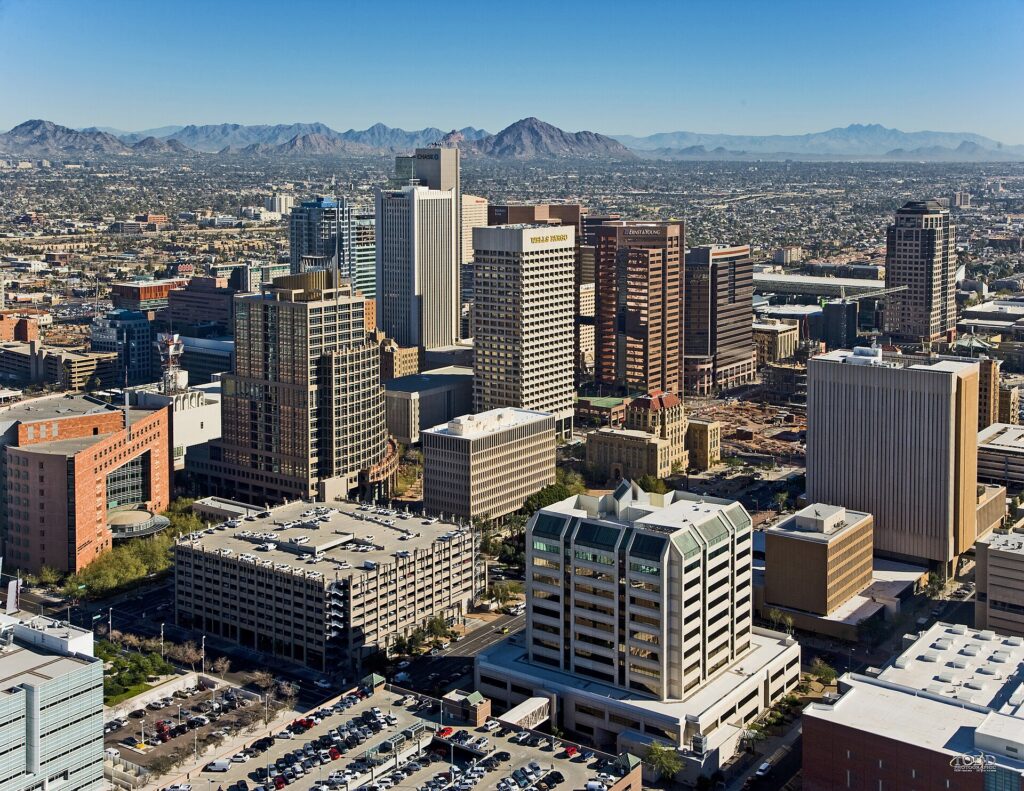
Phoenix, AZ

Food Truck Inspection Requirements in Laramie, WY: The 2026 Albany County Guide

Laramie is a college town with a serious food truck market. The University of Wyoming dominates the city’s economy and population – about 12,000 students, 2,500 faculty and staff, and a Cowboys football program that brings 25,000 plus visitors to War Memorial Stadium six Saturdays a fall. The city’s permanent population is around 32,000, but during the academic year and on game weekends Laramie’s effective foot traffic is much higher. Add in the Wyoming Territorial Park, the Laramie Jubilee Days rodeo in July, and a steady local event calendar, and a properly licensed food truck has more demand than the city’s permanent residents alone would support.

Laramie’s licensing structure is the unusual one in Wyoming. The City of Laramie itself is one of only six local health departments in the state – the city’s Environmental Health Division licenses and inspects food service operations within city limits. Albany County outside the city falls under Wyoming Department of Agriculture Consumer Health Services. So the licensing path for an operator in Laramie depends heavily on where you intend to park. We’re Zion Foodtrucks, based in Woodland Park, Colorado, about a two and a half hour drive from Laramie down I-25 and across US-287. We’ve worked with operators serving the UW market, and this guide covers the City of Laramie Environmental Health permit, the Albany County considerations, and the city vending license that runs alongside.

How Laramie and Albany County Food Truck Permits Actually Work

Three regulatory bodies touch a Laramie food truck. The City of Laramie Environmental Health Division at 405 Grand Avenue handles food service licensing and inspections inside city limits. They’re based in the Public Works building and reachable at (307) 721-5246. Albany County Public Health, based at 309 South 4th Street, handles county-wide public health programs. For food service operations outside the City of Laramie boundary, licensing goes through Wyoming Department of Agriculture Consumer Health Services in Cheyenne.

The City of Laramie also requires a vending license through the city clerk for any mobile vending operation, which is separate from the health permit. The vending application has a $50 nonrefundable application fee, a $100 annual food service license requirement, and an additional $25 fee for a 72-hour vending permit if you’re operating short term.

Fire safety inspection in Laramie sits with Laramie Fire Department under the city. Albany County Fire District handles county areas. Both reference the 2021 International Fire Code, NFPA 96 (commercial cooking ventilation), and NFPA 58 (LP-gas).

One unique consideration for Laramie: University of Wyoming has its own catering and food truck policy through UW Catering & Events. Food trucks operating on campus property need a UW agreement (the university requires right of first refusal before any outside catering is engaged), even if you have a current city food service license. Most game day food truck activity happens on private lots near the stadium, not on campus property itself.

Permits and Licenses Required to Operate a Food Truck in Laramie

  1. Wyoming business entity (LLC or corporation). Wyoming Secretary of State at sos.wyo.gov. About $102 to file an LLC, $60 minimum annual report.
  2. Wyoming sales/use tax license. Wyoming Internet Filing System at excise-wyifs.wy.gov. Free. Laramie’s combined sales tax rate is currently 6 percent (4 percent state, 2 percent Albany County).
  3. City of Laramie Environmental Health food service license. $100 annual fee, valid for one year. Required for any food service operation within Laramie city limits. Apply at the Environmental Health office, 405 Grand Avenue.
  4. Plan review approval. Required for new mobile food units before licensing. Submit through the City of Laramie Environmental Health office.
  5. City of Laramie vending license. $50 nonrefundable application fee. Annual or short-term (72-hour) options available. $25 for the 72-hour permit. Apply through the city clerk.
  6. Laramie Fire Department inspection. Pre-permit fire inspection. Schedule through the fire marshal’s office.
  7. Commissary letter. Required by City of Laramie Environmental Health unless your unit is fully self-contained.
  8. Food Protection Manager certification. ANSI accredited. Required for the person in charge.
  9. Food handler cards. Demonstration of knowledge required by Wyoming food code. Strongly recommended for all employees.
  10. Annual propane system inspection. NFPA 58 compliant.
  11. UL 300 fire suppression inspection. Tagged within six months at all times.
  12. Commercial general liability and auto insurance. Required for vending on city property and most private events.
  13. UW campus agreement. Required for any operation on university property. Contact UW Catering & Events for current process.

Estimated First-Year Laramie Food Truck Costs

  • Wyoming LLC formation and first annual report: $162
  • City of Laramie food service license: $100
  • Plan review (typically built into initial license): $0 separate fee
  • City of Laramie vending license application: $50
  • City of Laramie 72-hour vending permit (if applicable): $25
  • Laramie Fire Department inspection: $0 standard
  • Sales/use tax license: $0
  • ServSafe Food Protection Manager certification: $125
  • Food handler cards (3 employees): $30
  • Commissary kitchen rental (annual): $1,800 to $4,800
  • General liability insurance: $700 to $1,400
  • Commercial auto insurance: $1,300 to $2,400
  • UL 300 fire suppression semi-annual inspection: $200 to $400
  • Annual propane system inspection: $150 to $250
  • Hood and duct cleaning (quarterly): $600 to $1,200

Total first-year compliance lands in the $5,200 to $11,000 range, not counting the truck. Laramie’s commissary market is smaller than Cheyenne or Casper – you’ll typically lease off-hours kitchen capacity from a local restaurant, and the going rate sits around $250 to $450 per month for a few hours of weekly access.

Fire Safety Inspection: What Laramie Fire Department Looks For

Laramie Fire Department enforces the 2021 International Fire Code with NFPA 96 and NFPA 58 as the technical references. Their pre-permit inspection of a mobile food unit covers the same items as any IFC-modeled jurisdiction.

  • Type I hood meeting NFPA 96. Stainless construction, 6 inch overhang on all open sides of the cooking surface, listed grease filters at the prescribed angle.
  • UL 300 listed wet chemical fire suppression. Tagged within six months. Discharge nozzles aimed at every cooking surface and the exhaust plenum.
  • Manual pull station. In the path of egress, between cookline and door, drops gas and electric to cooking equipment when activated.
  • Mechanical gas shutoff valve. Tied to the suppression system.
  • K-Class fire extinguisher. Within 30 feet of the cookline, accessible without crossing the cookline.
  • 2A:10B:C extinguisher. At the primary egress.
  • Propane installation. 200 lb aggregate maximum. Cylinders secured in a vented compartment, NFPA 58 compliant fittings, regulators with overpressure protection, excess flow valves.
  • Listed LP-gas alarm. In the gas system area.
  • CO detector. If a generator is mounted on the truck.
  • Electrical compliance. GFCI on 120V circuits, no extension cords as permanent wiring.
  • Egress. Service window with positive latching, primary entry/exit door.

See a Zion Food Truck Fire Suppression System in Action

Read the video transcript: Pechanga Temecula
Hello and welcome design food trucks my friends. Today we have another beautiful food truck leaving us. This one is going down to Pachanga Casino in California. Now because this is going to California, it's of course built to California specs and is built to and warrantied to pass the code in California. Starting outside, of course, you can see the beautiful wrap which is obviously custom. A menu display which is of course in its lockable box. The service window which is self-closing. Idea is somebody would come up here, they would lift up from inside, pass the product or take money and it'll close by itself. required by code. This truck is brand new straight from the factory. Of course, uh floor is aluminum diamond plate. The walls are all stainless steel. You can see between every um every intersection of of walls, you would see a trim piece totally locking out any grease or moisture going into the walls. Of course, inside the walls is 1 in of insulation, 9/16 in of plywood. All equipment are bolted down to the floor. Some like this big guy over here is also bolted to the walls. Starting here is freezer refrigerator all in of course fryer. You can actually see the valve for the fire suppression system there. A four burner with oven at the bottom. range that is char broiler griddle and that is the generator box fairly large generator inside it's a 12 kow commence so it requires a larger generator box the fire suppression system right here is the handwash sink three compartment sink since this is going down to California as I mentioned it has drain boards as larger tanks in the bottom. Again, California spec. You can see the bottle, ABC bottle for the fire suppression. Sorry, the Yeah, it is a fire suppression bottle. You can see a K series as well. Out front, soap and towel dispensers and a on demand water heater. This one is going to operate inside the casino and it requires um continuous operation for a long time. Right here is a sandwich prep. All our equipment of course are in their own breakers to prevent any um if one equipment is going to break, it's not going to take out something else. This goes labeled. That's the transfer box. Right now it's on utility supply. If it's on generator supply, you just flip it to the other side. Talking about the generator, it is a large commence generator which will run this thing for several days actually for the gas tank that we have. That brings us to the end of the tour of this beautiful food truck. If you have any questions or if you would like something like this, please do let us know through our website zanfotrs.com. Thank you. Have a nice one.

City of Laramie Environmental Health Inspection

City of Laramie Environmental Health uses the FDA Food Code framework with Wyoming amendments. The inspection scope is consistent with what you’d see in any FDA-modeled jurisdiction. The City of Laramie inspector typically handles plan review and licensing for restaurants, mobile food units, and temporary food vendors. Items they always check on a mobile unit:

  • Handwash sink. Dedicated, hot water at minimum 100°F, soap, single-use towels. Cannot share with food prep or warewashing.
  • Three compartment sink. Compartments large enough for your largest equipment, with drainboards.
  • Fresh and waste water capacity. Wastewater tank at least 15 percent larger than the fresh water tank.
  • Refrigeration. All TCS food at 41°F or below. Calibrated probe thermometer.
  • Hot holding. 135°F or above for time-temperature controlled foods.
  • Cooking temperatures. 165°F poultry, 155°F ground meats, 145°F whole muscle and seafood.
  • Date marking. Refrigerated product over 24 hours requires a discard date no more than 7 days out.
  • Commissary log. Documentation of water filling, waste dumping, and food storage off-truck.
  • Person in charge. Demonstration of knowledge during the inspection.
  • Pest exclusion. Window screens, no openings around service window or door.

For temporary food events in Laramie – one off events at a private property, the Laramie Farmers Market, or smaller community gatherings – the city offers a temporary food license at $25 for the event or up to 14 days. That’s a meaningful tool for occasional operators or for caterers testing a Laramie market entry before committing to the annual license.

The Commissary Kitchen Requirement in Laramie

City of Laramie Environmental Health requires a commissary letter for any mobile unit that isn’t fully self-contained. The commissary must hold a current Wyoming food license (issued either by the city or by Wyoming Department of Agriculture, depending on the commissary’s location). Home kitchens are not allowed under any circumstance.

Laramie’s commissary options are real but limited. The most common arrangement is leasing off-hours capacity from a local restaurant – the bar/restaurant scene around 2nd Street and on Grand Avenue has a few operators who lease commissary space. UW Catering & Events facilities are not available to outside operators. Some Laramie operators commissary out of Cheyenne (about 50 minutes east) and run their truck from there to Laramie events, which works for occasional operators but doesn’t scale to a daily lunch service.

Wyoming State Considerations for Laramie Operators

Albany County is unusual: the City of Laramie operates its own local health program, but the rest of Albany County (Centennial, Rock River, Bosler, and the rural areas surrounding Laramie) falls under Wyoming Department of Agriculture Consumer Health Services. If you intend to serve events in those rural areas, your City of Laramie license technically doesn’t extend there. In practice, CHS recognizes a current Laramie license for occasional out-of-city work, but for sustained operations outside Laramie city limits you’d want a state CHS license. The application process for that goes through the Wyoming Department of Agriculture office in Cheyenne at (307) 777-7211.

Wyoming has no state income tax, which matters for any operator scaling beyond hobby revenue. Laramie’s combined sales tax rate of 6 percent applies to all prepared food sales, sourced to the location of delivery. Football Saturdays at War Memorial Stadium are technically on Albany County property (the stadium sits on UW property which is owned by the State of Wyoming), but the sales tax rate that applies is Albany County’s standard 6 percent.

Step-by-Step: How to Get Your Laramie Food Truck Licensed

  1. Form your Wyoming LLC. Online filing at sos.wyo.gov, about $102. Get an EIN from the IRS.
  2. Register for sales tax. Wyoming Internet Filing System. No fee.
  3. Call City of Laramie Environmental Health. (307) 721-5246. Ask for the mobile food unit plan review packet.
  4. Lock down your commissary. Letter on the commissary’s letterhead with their food license number.
  5. Submit the plan review. Floor plan, equipment list with NSF certifications, water and waste tank capacities, electrical and plumbing schematics, finish schedule, menu, food flow narrative, commissary letter.
  6. Build or buy your truck to spec. If you’re working with us at Zion, the plan review packet ships with the unit and is sized to clear the city’s environmental health office on first review.
  7. Schedule the Laramie Fire Department inspection.
  8. Schedule the city Environmental Health final inspection.
  9. Pay the city food service license fee. $100 annual.
  10. Apply for the city vending license. $50 application, plus annual or 72-hour fee depending on operation type.
  11. If operating on UW property, contact UW Catering & Events for the campus agreement process.
  12. Display your licenses. All permits, suppression tag, and propane inspection certificate visible inside the truck.

Common Reasons Food Trucks Fail Laramie Inspections

  • Plan review submitted without commissary. The most common stop-the-clock issue. Get the letter first.
  • Wastewater tank undersized. 15 percent rule applies.
  • Operating on UW campus property without a UW agreement. The city license doesn’t override the university’s right of first refusal policy.
  • Operating without the city vending license. Health permit alone isn’t enough. Both are required.
  • Suppression system off-tag. Six month inspection cycle.
  • K-Class extinguisher in the wrong location or missing. Within 30 feet of the cookline, accessible without crossing fire.
  • Cold holding equipment can’t make 41°F under load. Especially common during Laramie’s hot summer days.
  • Person in charge can’t answer questions. Inspector will probe on reportable illnesses, allergens, TCS food.
  • Vending in a residential zone without proper permitting. Laramie’s vending ordinance has zone restrictions.

Laramie-Specific Operating Context: Where to Park, When to Be There

Laramie’s food truck market is dominated by the academic calendar and the football schedule. The smart Laramie operator builds revenue around four anchors: lunch service near downtown and the UW campus, brewery and bar evenings, game day setup, and summer event catering.

  • UW Cowboys home football. Six home games typically run September through November at War Memorial Stadium. 25,000 plus capacity. Tailgate lots fill up the morning of, and food trucks operating on private lots adjacent to the stadium do extremely well. Most game day food truck activity is on private lots; UW manages official tailgate and event vendor space directly.
  • UW basketball season. The Arena-Auditorium hosts men’s and women’s basketball, gymnastics, and various events through the winter. Different demand profile – smaller events but year round.
  • UW commencement and major university events. May graduation, family weekend in October, recruitment events through spring.
  • Laramie Jubilee Days. July rodeo and community festival.
  • Laramie Farmers Market. Friday afternoons in summer at the historic depot area downtown. Vendors operate under the market’s permit framework.
  • Downtown Laramie events. Grand Avenue and the historic downtown area host outdoor events and concerts in summer.
  • Brewery patios. Altitude Chophouse, Bond’s Brewing, and others run food truck nights through the warm months. Brewery food truck partnerships in Laramie typically run as informal weekly arrangements rather than long-term contracts, which gives operators flexibility but also less revenue predictability.
  • Wyoming Territorial Park. Tourist-driven seasonal traffic in summer.
  • I-80 traveler stops. Laramie sits on I-80 with steady cross-country traveler traffic. Operators near the Snowy Range Avenue exit and the West Curtis Street exit see steady summer truck and traveler demand. Winter I-80 closures during storms can choke traveler revenue for days at a time.

Laramie Food Truck FAQ

Can I operate on the University of Wyoming campus?

Only with a UW agreement. UW Catering & Events has right of first refusal on any catering on university property, and outside food trucks need a written agreement to operate on campus. The most common path is being booked into a UW event by the event organizer, who handles the campus agreement on your behalf. Setting up unannounced on a campus parking lot will get you removed by UW PD.

What’s the deal with game day private lots?

Most game day food truck activity in Laramie happens on private lots near War Memorial Stadium. The stadium itself is at the corner of 22nd Street and Willett Drive. Lots on 22nd, 19th, and Ivinson within walking distance of the stadium are owned by various private parties. Operators book these directly with the property owner. Your city food service license and city vending license cover the vendor side; the lot owner handles property access. Some operators have multi-year agreements with specific lots.

Do I need a separate temporary permit for the Laramie Farmers Market?

If you have a current Laramie food service license, you operate at the farmers market under your existing permit. The market manager handles vendor placement and any market-specific fees. Cottage food vendors operate under Wyoming’s Food Freedom Act with separate rules and don’t need a city license, but a food truck always does.

Can I use a Cheyenne or Albany County (CHS) license to operate in Laramie?

Not for sustained Laramie city operations. The City of Laramie Environmental Health is its own jurisdiction, and operating inside city limits requires a city food service license. For occasional events or short-term operations, the city offers a $25 temporary food license valid for 14 days, which is the appropriate path for an out-of-city operator working a one-off Laramie event.

How does Laramie winter operation work?

Laramie winters are intense. Elevation 7,200 feet, January average lows around 5°F, and the wind off the high plains can hold the truck below operating temperature even in mid-day. Operators running year round use heated water bays, heat traced exterior plumbing, propane heat in the customer area, and parking strategy that keeps the truck out of the worst wind exposure. Most Laramie operators do an 8 to 9 month season, with December through February being the soft floor.

What’s the deal with the 72-hour vending permit?

Laramie offers a $25 vending permit valid for 72 hours, which is designed for operators doing a single weekend event or a short specific job. It pairs with the temporary food license. If you’re running a Laramie operation for more than a single weekend, the annual vending license is the right path.

Are there food truck zones or event areas I should know about?

Laramie’s downtown historic district and the Grand Avenue corridor are the most active street vending areas. Vending in residential zones has restrictions under the city ordinance, primarily covering the Neighborhood Mobile Vendor category that’s limited to packaged or ready-to-eat individual servings. Cooking and on-site food prep are restricted in residential zones. Commercial and mixed use zones are the right targets for active cooking operations.

Laramie Food Truck Official Resources and Contacts

  • City of Laramie Environmental Health Division: 405 Grand Avenue, Laramie, WY 82070 – (307) 721-5246 – cityoflaramie.org/213/Environmental-Health
  • City of Laramie, City Clerk (vending license): 406 Ivinson Avenue, Laramie, WY 82070 – (307) 721-5208 – cityoflaramie.org/146/Vending-Permits
  • Laramie Fire Department: (307) 721-5332
  • Albany County Public Health: 309 South 4th Street, Laramie, WY 82070 – (307) 721-2561 – publichealthlaramie.org
  • Wyoming Department of Agriculture, Consumer Health Services (county areas): 6607 Campstool Road, Cheyenne, WY 82002 – (307) 777-7211
  • Wyoming Department of Revenue, Excise Tax Division: 122 W. 25th Street, Cheyenne, WY 82002 – (307) 777-5200
  • Wyoming Secretary of State (business filings): Capitol Building, 200 W. 24th Street, Cheyenne, WY 82002 – (307) 777-7311
  • UW Catering & Events (campus operations): University of Wyoming, 1000 E. University Avenue, Laramie, WY 82071 – uwyo.edu/enterprises/catering-events
  • Visit Laramie (event calendar): visitlaramie.org

How Zion Foodtrucks Helps Laramie Operators

We’re based in Woodland Park, Colorado, about a two and a half hour drive from Laramie down through Cheyenne and west on US-287. We’ve delivered food trucks and trailers to operators across Wyoming, including units sized for the cold weather operating reality of high plains cities like Laramie. Every truck we deliver to a Laramie client ships with documentation City of Laramie Environmental Health and Laramie Fire Department will ask for: NSF certifications on food contact equipment, UL 300 listed wet chemical fire suppression with installation paperwork, NFPA 58 compliant propane installation with the inspection certificate, and an as-built schematic that drops cleanly into the city’s plan review packet. We size cold holding for game day surge, fresh and waste water for full Saturday capacity, and propane and electric for high altitude cold weather operation.

If you’re starting a Laramie truck or replacing an aging one, call us at (719) 722-2537 or email info@milehighfoodtrucks.com. We can put a build quote, a city plan review packet outline, and a delivery timeline together inside a single phone call.

Related Wyoming Food Truck Guides

Ready to build your truck?

We design and build custom food trucks and trailers compliant with the regulations on this page. From a single phone call to keys-in-hand in 6 to 8 weeks for most builds.

Built in Woodland Park, Colorado. Delivered to operators in CO, AZ, NE, MT, and WY.

Leave a Comment

Your email address will not be published. Required fields are marked *

Custom food truck builds delivered to: Colorado · Arizona · Nebraska · Montana · Wyoming