
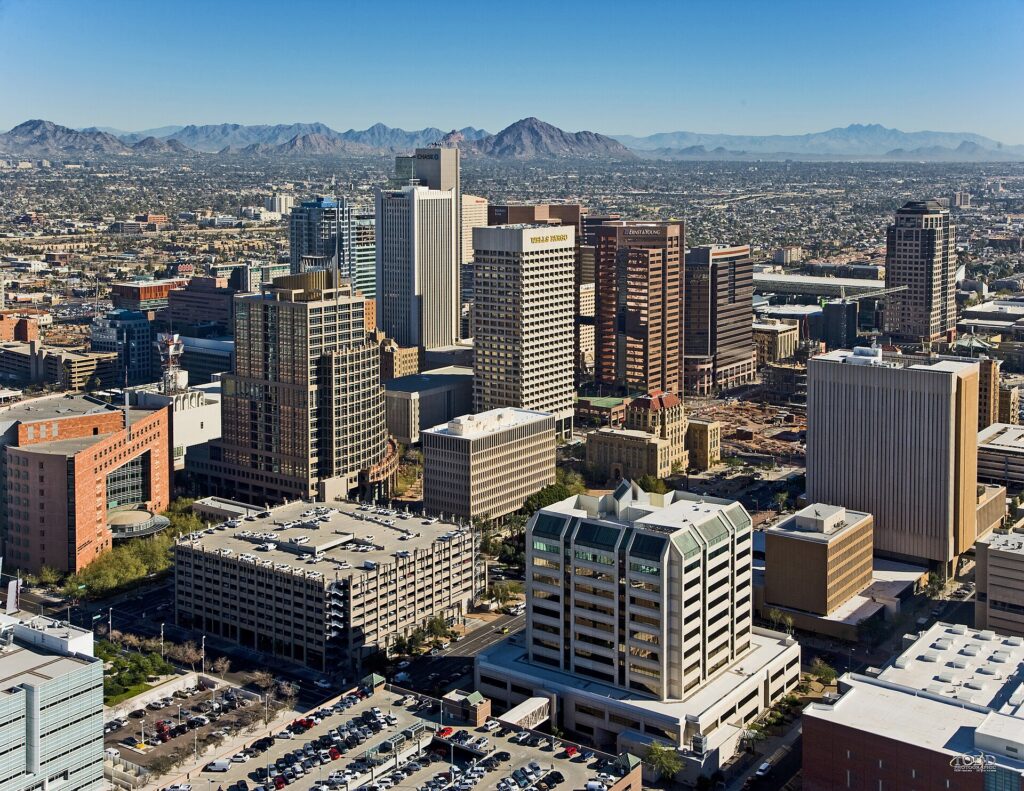
Sheridan sits in the foothills of the Big Horn Mountains in north central Wyoming. The city is small (population around 18,500) but the surrounding region pulls in serious tourism dollars: Big Horn National Forest is fifteen minutes west, Yellowstone is a two and a half hour drive northwest, and the Custer Battlefield National Monument sits just over the Montana border to the north. Sheridan has historically been ranch country and oil patch service economy, and in 2026 it’s also the kind of small western town that’s drawing a quiet wave of remote workers and second-home owners. The downtown along Main Street is one of the most photogenic in the state, with the historic Mint Bar, the Sheridan Inn (where Buffalo Bill recruited cast for his Wild West shows), and a steady summer event calendar that runs from the WYO Rodeo and the Sheridan WYO Rodeo Carnival in mid-July through the WyoFair in early August.
Sheridan is in CHS jurisdiction for food licensing – Sheridan County is not one of the six Wyoming counties that runs its own local health department. That means food licensing here goes through the Wyoming Department of Agriculture’s Consumer Health Services Division. Sheridan County Public Health supports public health programs and works alongside CHS on food safety. The City of Sheridan separately runs a mobile vendor permit framework. We’re Zion Foodtrucks, based in Woodland Park, Colorado, about a six hour drive from Sheridan up I-25 through Casper and Buffalo. We’ve worked with Wyoming operators serving the WYO Rodeo and Big Horn tourism markets, and this guide covers the licensing path for both the Sheridan city operator and the Sheridan County rancher running event catering.
Building a food truck for Sheridan? See what a fully-equipped, inspection-ready truck actually costs with our free build & cost calculator.
How Sheridan and Sheridan County Food Truck Permits Actually Work
Three regulators touch a Sheridan food truck. The Wyoming Department of Agriculture, Consumer Health Services Division, in Cheyenne issues your state food service license through their field staff covering northern Wyoming. CHS handles plan review, permitting, and at-least-annual inspection. Sheridan County Public Health at 224 South Main Street, Suite B-2, supports public health programs across the county and works with CHS on food safety education. The City of Sheridan runs a mobile vendor permit program through the city clerk’s office, with Special Use Permits available for downtown vendors and a separate Neighborhood Mobile Vendor category for residential zone operations.
The City of Sheridan vendor permit framework distinguishes between regular mobile vendors operating in commercial zones and Neighborhood Mobile Vendors operating in residential zones. The Neighborhood Mobile Vendor designation is limited to ready-to-eat or packaged food in individual servings from a mobile vehicle or pushcart. That distinction matters because cooking and on-site food prep are restricted to commercial zones; the Neighborhood Mobile Vendor is essentially the ice cream truck or the prepackaged sandwich vendor.
Fire inspection in Sheridan goes through the Sheridan Fire-Rescue department for in-city operations. Sheridan County Fire Protection Districts cover surrounding areas. Both reference the 2021 IFC, NFPA 96, and NFPA 58.
Permits and Licenses Required to Operate a Food Truck in Sheridan
- Wyoming business entity (LLC or corporation). Wyoming Secretary of State at sos.wyo.gov. About $102 to file an LLC.
- Wyoming sales/use tax license. Wyoming Internet Filing System at excise-wyifs.wy.gov. Free. Sheridan combined sales tax rate is currently 6 percent (4 percent state, 2 percent Sheridan County including a 1 percent specific purpose tax).
- Wyoming Department of Agriculture food service license. $100 annual fee. Plan review required for new mobile units. Apply by calling (307) 777-7211.
- City of Sheridan Mobile Vendor Permit. Required for any mobile vendor operating in city limits. Weekly or annual permits available. Apply through the city clerk; allow 21 business days for processing.
- City of Sheridan Special Use Permit (if applicable). For specific event-based operations or unusual locations.
- Fire department inspection. Sheridan Fire-Rescue for in-city operations.
- Commissary letter. Required by Wyoming food code unless the unit is fully self-contained.
- Food Protection Manager certification. ANSI accredited, required for the person in charge.
- Food handler cards. Demonstration of knowledge required.
- Annual propane system inspection. NFPA 58 compliant.
- UL 300 fire suppression inspection. Tagged within six months at all times.
- Commercial general liability and auto insurance. Required for vending on city or county property.
Estimated First-Year Sheridan Food Truck Costs
- Wyoming LLC formation and first annual report: $162
- Wyoming Department of Agriculture food service license: $100
- City of Sheridan Mobile Vendor Permit (annual): per current city fee schedule
- Sheridan Fire-Rescue inspection: $0 standard
- Sales/use tax license: $0
- ServSafe Food Protection Manager certification: $125
- Food handler cards (3 employees): $30
- Commissary kitchen rental (annual): $1,800 to $4,800
- General liability insurance: $700 to $1,400
- Commercial auto insurance: $1,300 to $2,400
- UL 300 fire suppression semi-annual inspection: $200 to $400
- Annual propane system inspection: $150 to $250
- Hood and duct cleaning (quarterly): $600 to $1,200
Total first-year compliance lands in the $5,200 to $11,000 range, not counting the truck itself. Sheridan’s commissary market is small but workable – typically off-hours leasing from local restaurants. The seasonal nature of the Big Horn tourism economy means many operators run a heavy summer schedule with reduced winter operations.
Fire Safety Inspection: What Sheridan Fire-Rescue Looks For
Sheridan Fire-Rescue follows the 2021 IFC with NFPA 96 and NFPA 58 incorporated. Mobile food unit inspections cover the standard items.
- Type I hood meeting NFPA 96. Stainless construction, 6 inch overhang on all open sides of cooking equipment, listed grease filters at the prescribed angle.
- UL 300 listed wet chemical fire suppression. Tagged within six months. Discharge nozzles aimed at all cooking surfaces and the exhaust plenum.
- Manual pull station. In the path of egress, drops gas and electric to cooking equipment.
- Mechanical gas shutoff. Tied to the suppression system.
- K-Class fire extinguisher. Within 30 feet of the cookline, accessible without crossing the cookline.
- 2A:10B:C extinguisher. At the primary egress.
- Propane installation. 200 lb aggregate maximum. Cylinders secured in vented compartment, NFPA 58 compliant fittings, regulators with overpressure protection, excess flow valves, listed LP-gas alarm.
- CO detector. If a generator is on or near the truck.
- Electrical compliance. GFCI on 120V circuits.
- Egress. Service window with positive latching, primary entry/exit door.
See a Zion Food Truck Fire Suppression System in Action
Wyoming Department of Agriculture Health Inspection
Sheridan County mobile food units are inspected by Wyoming Department of Agriculture Consumer Health Services field staff working out of the Cheyenne office or assigned to the northern Wyoming region. Inspection scope follows the FDA Food Code framework with Wyoming amendments. Field inspector visits typically happen at the licensee’s regular operating location during business hours, or at a scheduled time at the operator’s commissary.
- Handwash sink. Dedicated, hot water at 100°F minimum, soap, single-use towels.
- Three compartment sink. Compartments large enough for your largest equipment, drainboards.
- Fresh and waste water capacity. Wastewater 15 percent larger than fresh water.
- Refrigeration. All TCS food at 41°F or below, calibrated probe thermometer.
- Hot holding. 135°F or above for TCS food.
- Cooking temperatures. 165°F poultry, 155°F ground meats, 145°F whole muscle and seafood.
- Date marking. Refrigerated product over 24 hours marked with discard date.
- Commissary log. Documentation of water filling, waste dumping, and food storage off-truck.
- Person in charge demonstration of knowledge.
- Pest exclusion. Window screens, no openings around service window or door.
The Commissary Kitchen Requirement in Sheridan
Wyoming food code requires a permitted commissary for every mobile unit that isn’t fully self-contained. The commissary must hold a current Wyoming food license. Home kitchens are not allowed under any circumstance, even for very small operations or operations that only run a few weekends a season.
Sheridan’s commissary market is the smallest of the major Wyoming food truck cities, simply because the population base supports fewer commercial kitchens. Most Sheridan operators commissary out of a local restaurant kitchen leasing off-hours capacity. The going rate is $200 to $400 per month for a few hours of weekly access. Some Sheridan operators with brick and mortar restaurants run their own food trucks out of their integrated commissary, which is the cleanest model when it’s available. School kitchens with appropriate permits and church kitchens (where the church holds its own current Wyoming food license) are alternative options.
One option that’s worked for Sheridan operators: leasing capacity from a local catering company or banquet hall. The Sheridan area has several event venues with full commercial kitchens (the WYO Theater, the historic Sheridan Inn, the Bighorn Mountain Lodge area facilities) that have commissary potential when scheduled around their primary events.
Wyoming State Considerations for Sheridan Operators
Sheridan County is in CHS jurisdiction. Your state food service license is your primary food safety credential, with annual renewal at $100. CHS field staff handle inspections and complaint response. Sheridan County Public Health at 224 South Main Street works alongside CHS on food safety education and environmental health support but doesn’t issue the food service license.
Wyoming’s no state income tax structure benefits Sheridan operators with strong summer revenue. The Big Horn tourism market generates premium catering rates – ranch wedding catering in particular pays significantly above urban food truck rates. The combined Sheridan sales tax of 6 percent applies to all prepared food sales, sourced to the location of delivery. Catering at a ranch event in Big Horn County (one county west) is taxed at Big Horn County’s rate (currently 5 percent).
Step-by-Step: How to Get Your Sheridan Food Truck Licensed
- Form your Wyoming LLC. Online filing at sos.wyo.gov, about $102. Get an EIN.
- Register for sales tax. Wyoming Internet Filing System. Free.
- Call Wyoming Department of Agriculture Consumer Health Services. (307) 777-7211. Ask for the mobile food unit plan review packet.
- Lock down your commissary. Letter on the commissary’s letterhead with their license number.
- Submit the plan review. Floor plan, equipment list with NSF certifications, water and waste tank capacities, electrical and plumbing schematics, finish schedule, menu, food flow narrative, commissary letter.
- Build or buy your truck to spec. Working with us at Zion means the plan review packet ships with the unit, sized to clear CHS on first review.
- Schedule the Sheridan Fire-Rescue inspection.
- Schedule the CHS final inspection. After fire approval. Truck must be at the inspection location with water filled, equipment running.
- Pay the CHS license fee. $100 annual.
- Apply for the City of Sheridan Mobile Vendor Permit. Through the city clerk. Allow 21 business days for processing.
- Apply for a Special Use Permit if needed. For event-based or specific location work.
- Display all licenses inside the truck.
Common Reasons Food Trucks Fail Sheridan Inspections
- Plan review submitted without commissary letter. CHS won’t process incomplete applications.
- Wastewater tank undersized. 15 percent rule.
- Suppression tag past six months.
- K-Class extinguisher missing or in the wrong location.
- Cold weather propane install inadequate. Sheridan winters are serious. Single small cylinder vaporization fails on cold mornings.
- Operating in residential zones with cooking equipment. The Neighborhood Mobile Vendor category is for ready-to-eat or packaged food only.
- City Mobile Vendor Permit not applied for in time. 21 business day processing time means you need to submit well before your planned start date.
- Cold holding equipment can’t make 41°F under load. Especially during summer ranch wedding catering when the truck is parked in full sun.
- No food handler documentation visible.
Sheridan-Specific Operating Context: Where to Park, When to Be There
Sheridan’s market is heavily seasonal and event-driven, with the Big Horn tourism economy and the WYO Rodeo as the dominant summer revenue events. The summer season runs from Memorial Day through mid-September with the heaviest concentration of revenue events landing in July and August. Operators who anchor their year around the WYO Rodeo, ranch wedding catering, and Big Horn Mountain weekend traffic do well; operators relying solely on city retail vending have a harder time scaling.
- Sheridan WYO Rodeo and WYO Rodeo Carnival. Mid-July, one of the longest-running rodeos in the country. Vendor space inside the Sheridan WYO Rodeo grounds is booked through the rodeo board; demand throughout the city is significant during rodeo week.
- WyoFair (Sheridan County Fair). Early August at the Sheridan County Fairgrounds.
- Big Horn Mountain tourism. Day visitors and weekenders driving up Highway 14 toward the Big Horn National Forest, Burgess Junction, and the alpine lakes. Saturday and Sunday traffic in summer is steady.
- Ranch wedding catering. Sheridan area ranches host high-end weddings drawing destination guests. Pay rates are premium – $40 to $80 per plate is not unusual for full-service wedding catering. The Ranch at UCross, the Bighorn Mountain Lodge, and various private ranches host weekly summer events.
- Downtown Sheridan events. Main Street’s third Thursday events and summer concert series.
- Sheridan Brewing and other brewery patios. Steady food truck nights in the warm season.
- Sheridan College. Northern Wyoming Community College’s Sheridan campus runs steady lunch traffic during the school year, with student housing and the main academic buildings clustered near the north Coffeen Avenue corridor.
- Polo and equestrian events. Big Horn Equestrian Center hosts polo through the summer; the Big Horn Polo Club is one of the oldest in the country and draws an unusually wealthy crowd that supports premium catering pricing for matches and post-game events.
- Custer Battlefield trade routes. Travelers heading to the Little Bighorn Battlefield National Monument across the Montana border come through Sheridan.
- Hunting season. Fall hunting brings out-of-state hunters and outfitters into the area for elk, mule deer, and antelope seasons.
Sheridan Food Truck FAQ
Can I cater a ranch wedding outside Sheridan city limits?
Yes. Ranch wedding catering is one of the highest revenue food truck activities in Sheridan County. Your CHS state license covers any work in Sheridan County and statewide CHS jurisdictions. The ranch event is private property and doesn’t require any city or county permitting beyond your standard licenses. The host typically pays directly for the catering. Insurance documentation is usually requested by the venue.
How do I structure a hunting season catering operation?
Hunting season catering in Sheridan and Big Horn counties typically involves outfitter contracts where the operator feeds hunters at a base camp or lodge during multi-day hunting trips. Pricing is contract-based, often in the $35 to $60 per person per day range covering breakfast and dinner. The licensing setup is your standard CHS state license; the venue is private property under outfitter management. Insurance requirements are typically driven by the outfitter’s commercial general liability policy. Cold weather operation matters because elk and mule deer seasons run into late October and November.
What’s the deal with the Neighborhood Mobile Vendor category?
The City of Sheridan distinguishes between general Mobile Vendors (commercial zones) and Neighborhood Mobile Vendors (residential zones). Neighborhood Mobile Vendors are limited to selling ready-to-eat or packaged food in individual servings – think ice cream truck or prepackaged sandwich vendor. Active cooking and on-site food prep are restricted to commercial zone vending. If you’re running a hot food truck, you operate as a regular Mobile Vendor in commercial zones, not a Neighborhood Mobile Vendor.
How does the WYO Rodeo vendor process work?
The Sheridan WYO Rodeo board manages vendor space inside the rodeo grounds during the mid-July run. Applications open earlier in the year. Vendors inside the rodeo are subject to rodeo board contracts and pricing. Outside the rodeo grounds, the city is open market with your standard Mobile Vendor Permit. Many operators who don’t get rodeo grounds space book brewery patios, downtown lots, and private property locations during the run.
How does Sheridan winter operation work?
Sheridan winters are intense. January average lows around 8°F, regular periods below zero, and the wind off the Big Horn front can hold the truck below operating temperature even in mid-day. Most Sheridan food truck operators run a 7 to 8 month season, with December through March either at minimal operation or shut down. Indoor event catering through the winter is a way to keep revenue flowing without operating the truck on ice.
Can I commissary out of a Sheridan-area ranch?
Only if the ranch holds a current Wyoming food license for the kitchen. Most ranch kitchens are residential and don’t qualify under state food code. The exception is operating ranches with a separately licensed commercial event kitchen, which is rare but does exist (some destination ranches hold full commercial licensing).
What’s the deal with Big Horn tourism vendor opportunities?
Big Horn National Forest is federal land. Concessions inside the National Forest are governed by USFS contracts and require federal special use permits, which is a different track from state and city food licensing. Outside the National Forest boundary, on county roads and at events at private venues, your standard CHS license framework applies. Some events at scenic overlooks and trailhead areas operate under temporary event permits issued by the relevant managing authority.
Are there food truck zones in Sheridan?
Sheridan’s commercial corridors along Main Street, Coffeen Avenue, and West Brundage Lane are the primary active vending zones. Downtown Main Street has time-limited parking and specific event vending zones for the third Thursday events and summer concerts. The Sheridan College area on Coffeen Avenue and the I-90 service area near exit 25 are commercial zones suitable for active vending. Residential zones are limited to Neighborhood Mobile Vendor category operations.
Sheridan Food Truck Official Resources and Contacts
- Wyoming Department of Agriculture, Consumer Health Services: 6607 Campstool Road, Cheyenne, WY 82002 – (307) 777-7211 – agriculture.wy.gov/consumer-health-services
- Sheridan County Public Health: 224 South Main Street, Suite B-2, Sheridan, WY 82801 – (307) 672-5169 – sheridancountywy.gov/departments/public_health
- City of Sheridan Customer Service (vendor permits): Sheridan City Hall – (307) 674-6483 – sheridanwy.gov
- Sheridan Fire-Rescue: (307) 674-6477
- Sheridan County Fire Protection Districts: (307) 672-3320
- Wyoming Department of Revenue, Excise Tax Division: 122 W. 25th Street, Cheyenne, WY 82002 – (307) 777-5200
- Wyoming Secretary of State (business filings): Capitol Building, 200 W. 24th Street, Cheyenne, WY 82002 – (307) 777-7311
- Sheridan WYO Rodeo (vendor relations): sheridanwyorodeo.com
- Sheridan County Fairgrounds (WyoFair): 1753 Victoria Street, Sheridan, WY 82801
How Zion Foodtrucks Helps Sheridan Operators
We’re based in Woodland Park, Colorado, about a six hour drive from Sheridan up I-25 through Casper and Buffalo. We’ve delivered food trucks and trailers to Wyoming operators serving ranch wedding catering, the WYO Rodeo, and the Big Horn tourism market. Every Sheridan-bound truck we deliver ships with documentation Wyoming Department of Agriculture Consumer Health Services and Sheridan Fire-Rescue will ask for: NSF certifications on food contact equipment, UL 300 listed wet chemical fire suppression with installation paperwork, NFPA 58 compliant propane installation engineered for cold weather operation, and an as-built schematic that drops cleanly into the CHS plan review packet. We size cold holding for hot summer days at outdoor events, fresh and waste water for full day catering capacity, and propane for both summer and winter operating conditions.
If you’re starting a Sheridan operation or replacing an aging unit, call us at (719) 722-2537 or email appujacob@zionfoodtrucks.com. We can put together a build quote, a CHS plan review packet outline, and a delivery timeline in a single phone call. We deliver to Sheridan directly.
Related Wyoming Food Truck Guides
- Food Truck Permits in Wyoming: Complete 2026 Guide
- Food Truck Inspection Requirements in Cheyenne, WY: The 2026 Laramie County Guide
- Food Truck Inspection Requirements in Casper, WY: The 2026 Natrona County Guide
- Food Truck Inspection Requirements in Laramie, WY: The 2026 Albany County Guide
- Food Truck Inspection Requirements in Gillette, WY: The 2026 Campbell County Guide
- Food Truck Inspection Requirements in Rock Springs, WY: The 2026 Sweetwater County Guide
- Food Truck Inspection Requirements in Jackson, WY: The 2026 Teton County Guide
- Colorado HB 25-1295 Explained: What the New Food Truck Reciprocity Law Means
Zion Foodtrucks builds custom food trucks, trailers, and concession trailers from our shop in Monument, Colorado and delivers them ready to pass inspection across the Mountain West. Owner Jacob Varghese and our team work with first-time owners every day, sourcing the vehicle and handling the full build so you do not have to. Questions about permits or your build? Call or text Jacob at 719-722-2537 or see our custom build services.
Free Food Truck Permit & Inspection Checklist
We put together a printable checklist covering every permit and inspection a mobile food business typically needs. Tell us where to send it and it is yours.
Next steps: free build & cost calculator · 2026 food truck cost guide · food truck financing
Ready to build your truck?
We design and build custom food trucks and trailers compliant with the regulations on this page. From a single phone call to keys-in-hand in 6 to 8 weeks for most builds.
Built in Woodland Park, Colorado. Delivered to operators in CO, AZ, NE, MT, and WY.