
Recent Delivery: 14ft Smashburger Food Truck
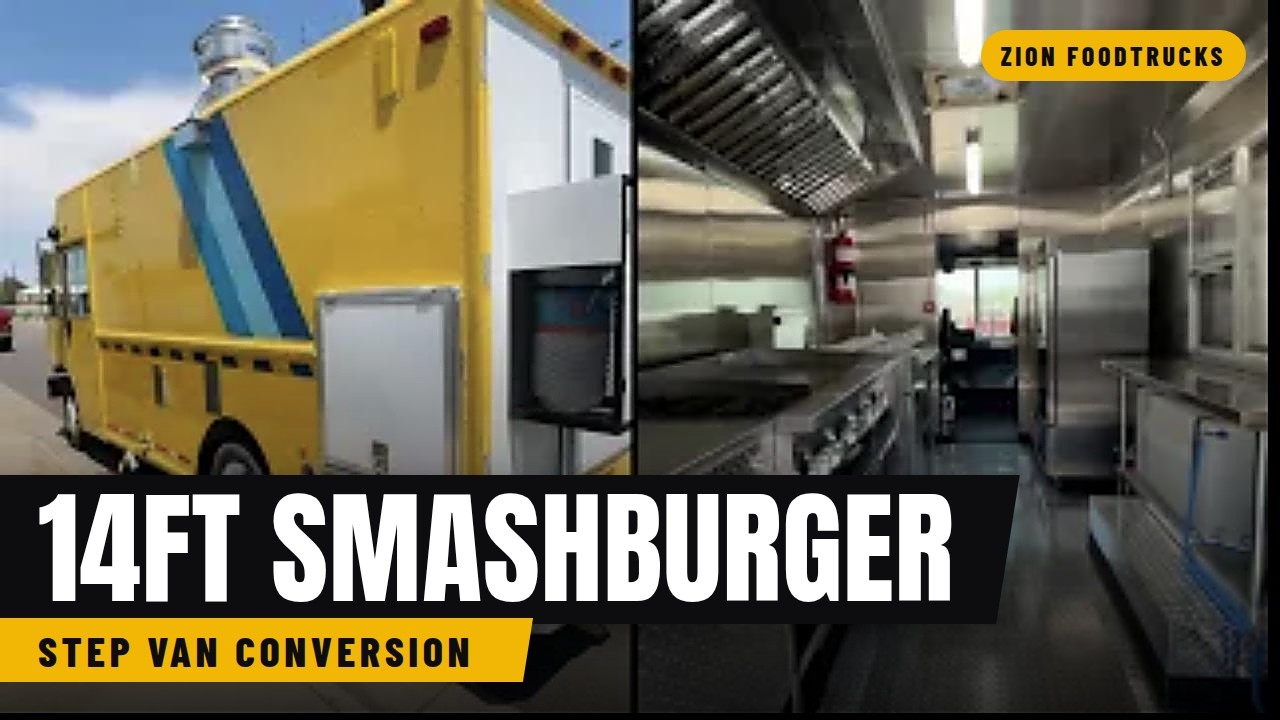
Read the full build story on the Rapid City smashburger truck delivery →
Statewide guide: the complete South Dakota food truck permits guide for 2026 covers the $38 state licence, plan review, the commissary waiver for self contained trucks, every city permit, the Sturgis Rally and sales tax.
Rapid City sits at the front door of the Black Hills, and that location decides almost everything about how a food truck earns here. Mount Rushmore, Crazy Horse, Custer State Park, Badlands National Park and Deadwood all pull traffic through town between May and September. Then the rally lands. The Sturgis Motorcycle Rally runs about thirty miles up the road, and the South Dakota Department of Transportation counted 537,459 entering vehicles across the ten days of the 85th rally in 2025, well above the five year average of roughly 483,000. For a food vendor, that is not a busy week. That is a different business operating out of the same box.
We are Zion Foodtrucks. We build custom food trucks and concession trailers in Colorado, we have completed more than 1,000 builds over 19 years, and we deliver finished units to Rapid City and across the Black Hills. Most of what we get asked for in this market comes down to one question: can the unit survive a rally week at full tilt and still make sense in October, when the tour buses are gone and you are parked outside a brewery on a forty degree evening. Those two jobs pull the design in opposite directions, and the units that work here are the ones built to handle both on purpose.
The Rapid City season is a cliff, not a curve
Operators moving here from a year round metro market misread the calendar constantly. In a lot of cities the food truck year is a gentle slope. Around Rapid City it is closer to a step function. Memorial Day through Labor Day carries the majority of the revenue, August carries the majority of that, and rally week alone can carry a quarter of the year for a vendor with a good location.
What that means mechanically is that your unit spends most of its life running well under capacity and a handful of days running far above what a normal spec can hold. Building to the average is how vendors end up shutting the window at 8pm on the biggest night of the year because the fryer cannot recover, the fresh tank is dry, or the generator is cycling under load. We size the critical systems for the peak and then make sure the unit is still practical, cheap to run and warm enough to work when the peak is over.
What rally week actually demands from a unit
Vendors who have worked Sturgis describe the same pattern: long service hours, deep lines that do not break, a menu that has to stay tight, and no realistic chance to leave the lot and resupply mid shift. The design conversations we have with rally vendors always come back to four things.
Throughput and line flow
Rally throughput is won at the layout stage, not with more equipment. We build the line so a two or three person crew can move without crossing paths: order and pay at one end, assembly in the middle, handoff at the other. Double service windows on the long wall let you split a queue instead of stacking it. A dedicated expo shelf, a separate drink or dessert window and a pass through for prepped product keep the cook off the register. On a 22 to 26 foot unit we typically run a straight production line down one side with cold and dry storage opposite, so restock during service means turning around instead of walking the truck.
Water capacity
South Dakota requires safe water and adequate wastewater capacity on every mobile unit, and rally lots often have no hookup at all. Standard tankage runs out fast at rally volume. We regularly build Black Hills units with oversized fresh tanks and correspondingly larger grey tanks, sized so a full service day does not end early because of a full waste tank. Where the menu is water heavy, we plan for a scheduled water and waste service partner during the event rather than pretending one tank set will carry ten days.
Power that holds under real load
Rally lots mean generator power for most vendors. We size the generator to the actual simultaneous draw, not the nameplate sum, and we build a dedicated generator compartment that is vented, sound treated and reachable for fueling without opening the kitchen. Where a vendor plans to run electric holding cabinets, refrigeration and a hood at once, we often split the propane and electric load deliberately so cooking stays on gas and the generator carries refrigeration, holding and lighting. Shore power connection is standard on our builds too, because the same truck will be plugged in at a downtown lot in September.
Cold storage and hot holding
The single most common regret we hear after a first rally is not enough cold storage and not enough hot holding. Potentially hazardous foods have to stay below 41 degrees or above 140 degrees, and a line that is producing to order all day cannot make temperature and volume at the same time. We build in undercounter refrigeration plus a reach in, and we make room for holding cabinets or a steam table so the crew can bank product between rushes and serve down the line instead of cooking every ticket cold.
Where Rapid City trucks work the other fifty weeks
A rally only unit is a bad investment. The vendors who do well here have a shoulder season and winter plan before they order.
- Downtown and Main Street Square. Food Truck Friday runs a midday lunch window at the Square through early summer, and the Thursday evening concert series brings trucks in through June and July. Downtown lunch service is a different job from rally service: fast tickets, small footprint, tight parking.
- Neighborhood and park series. Family food truck nights at Canyon Lake Park run weekly into September, and Founders Park draws truck crowds. These are lower volume, higher repeat customer nights that build your local name.
- Breweries and taprooms. Rapid City taprooms lean on trucks for food, and a standing weekly slot is one of the steadiest bookings available here.
- Ellsworth Air Force Base and Box Elder. The base sits about ten miles northeast of Rapid City and is in the middle of a large modernization tied to the B-21 mission, which is pulling construction crews, contractors and new households into the area. Construction site vending is specifically allowed as an accessory use under city code, and it is one of the few genuinely year round options in this market.
- Central States Fair and the August stack. The fair runs in late August, right behind the rally, which is why so many local operators treat August as a single long push and plan staffing and prep around it.
- Private catering and weddings. Black Hills wedding and corporate catering fills a lot of shoulder season weekends, and it usually pays better per hour than a public lot.
Why operators here order custom
The used market in western South Dakota is thin, and what does come up for sale is usually a rally veteran that has been run hard. The specific problem with buying used here is that the previous owner’s menu is welded into the truck. Hood size, gas line sizing, tank capacity, window placement and electrical are all built around somebody else’s line, and reworking them costs more than doing it right once.
The second reason is licensing. South Dakota reviews mobile unit layout plans before construction, and the state’s requirements are specific: a plumbed three compartment sink with drainboard, a Type I metal hood with removable grease filters over any equipment producing smoke, steam or grease vapors, a fully enclosed unit, and screened or movable service openings. A unit built to those requirements from the drawings forward gets licensed. A used unit bought sight unseen from out of state often does not, and you find out in June.
What we build, and how we build it for the Black Hills
We build both trucks and concession trailers, and we source the vehicle ourselves so you are not chasing a chassis before your build can start. Typical builds run around six weeks. A custom food truck starts at $55,000 and a custom trailer runs $40,000 to $55,000, depending on equipment, tankage and finish. We deliver the finished unit to Rapid City.
Four season detail matters more here than in most markets. Rapid City sits above 3,000 feet, winter is real, and Black Hills wind and hail are hard on a unit that is parked outside all year. On builds headed this way we spec insulated walls and ceiling, sealed and insulated floors, heated and protected plumbing runs with drain points so you can winterize quickly, an interior heat source that is properly vented, exterior lighting that works at 5pm in December, and a roof and seam package built to shed weather rather than collect it. Awnings and canopies get real anchoring, since the city code requires them to be secure in wind for good reason.
A Black Hills build we just finished

In August 2026 we shipped a 14ft smashburger truck to a customer near Rapid City. It started as a 2010 Freightliner step van and came out as a full commercial kitchen: an 8ft hood with ANSUL suppression, a 36 inch griddle, a 40lb fryer, a reach-in fridge and freezer, a 12,500 watt dual fuel generator and a 50 amp shore power inlet, with extra insulation behind the stainless for a Black Hills winter.
The write-up covers the whole build, and it also sets out what it actually takes to be legal here: the state license fees, the 30 day plan review rule that catches builders out, the commissary waiver, what RCMC 17.50.212 really says about where you can park, and what the Sturgis rally costs a vendor. Read the full build and the South Dakota licensing guide.
Licensing in Rapid City, at a glance
South Dakota licenses food service at the state level, so your primary license comes from the South Dakota Department of Health rather than a county health department. Plan review comes first: layout plans go to the state for approval before construction or major renovation begins. The state also expects a Certified Food Service Manager, and mobile units are expected to operate from a commissary or fixed food establishment unless the unit itself has approved warewashing and storage on board. That last point is worth deciding early, because it changes the sink, water and storage spec.
On top of the state license, Rapid City has its own mobile food vendor rules in the municipal code. The short version: you must keep continuous state licensure, you may vend only on private or public property with the owner’s consent, and you cannot spill into the adjoining right of way with your unit, tables or trash cans. Vending is allowed as an accessory use on commercial and industrial parcels, on city property including parks, on construction sites, and in residential areas only in connection with a special event at a non residential structure. You cannot vend in the public right of way, including on street parking, except as part of a city approved special event with a street closure. Near downtown, you cannot operate within 300 feet of an event in the Central Business District without written permission from that event’s sponsor. Parks require permission or a vendor permit from Parks and Recreation, and vending on city property or in the right of way requires proof of insurance naming the city as an additional insured. The code also requires a trash bin and a recycling bin of at least 13 gallons each, limits signage to the unit plus two nearby banners, and prohibits amplified sound used to attract attention.
For the rally and other big events, the rules change with the property line. The Department of Health issues a temporary food service license for event vending and asks for applications ahead of time, with an on site inspection at each location. Inside Sturgis city limits, the city sells a vending license priced by booth square footage and requires a fixed location, with no mobile sales permitted. Outside city limits, Meade County issues its own transient vendor license per location. Because it is a different jurisdiction from Rapid City with its own deadlines and fees, confirm current requirements directly with the City of Sturgis, Meade County and the Department of Health well before August. If you are planning stops around the wider region, our South Dakota service area page covers how we work across the state.
Frequently asked questions
Can one truck realistically handle Sturgis and normal Rapid City service?
Yes, if you spec it for the peak. The parts that need to be oversized are water, waste, refrigeration, holding and generator capacity. Those additions do not hurt you the rest of the year, they just sit unused. Building around a normal week and hoping to stretch is the version that fails.
Should I buy a truck or a trailer for a rally focused operation?
Trailers make sense for rally vending because Sturgis vending is done from a fixed licensed location anyway, and a trailer gives you more square footage per dollar and lets you leave the tow vehicle free. A truck is better if your business is mostly downtown lunch, breweries and catering, where you are moving daily and parking matters.
How far ahead should I order to be ready for August?
Work backward. Builds run about six weeks, state plan review happens before construction, and event licenses have their own lead times. Ordering in the winter for an August rally is comfortable. Ordering in June is not.
Do I need a commissary in Rapid City?
The state expects mobile units to operate from a commissary or fixed food establishment unless the unit has approved warewashing and adequate storage on board. Many operators here build the unit to stand on its own, but confirm your specific setup with the Department of Health during plan review.
What sells at the rally versus downtown?
Rally crowds reward a short menu built for speed and portability, served over long hours. Downtown lunch and brewery service reward variety and repeat customers. The practical answer is one kitchen with two menus, and we lay out the line so the rally menu can run at full speed without stripping equipment out.
Do you deliver to Rapid City?
We do. We build in Colorado and deliver finished, ready to license units to Rapid City, Box Elder, Sturgis, Spearfish, Deadwood and the rest of the Black Hills.
If you are planning a Black Hills operation, tell us your menu, your rally plan and your winter plan, and we will spec a unit that carries all three. Reach out for a quote and we will walk through the layout with you before anything gets built.