
Recent Delivery: 18ft Native American Food Truck
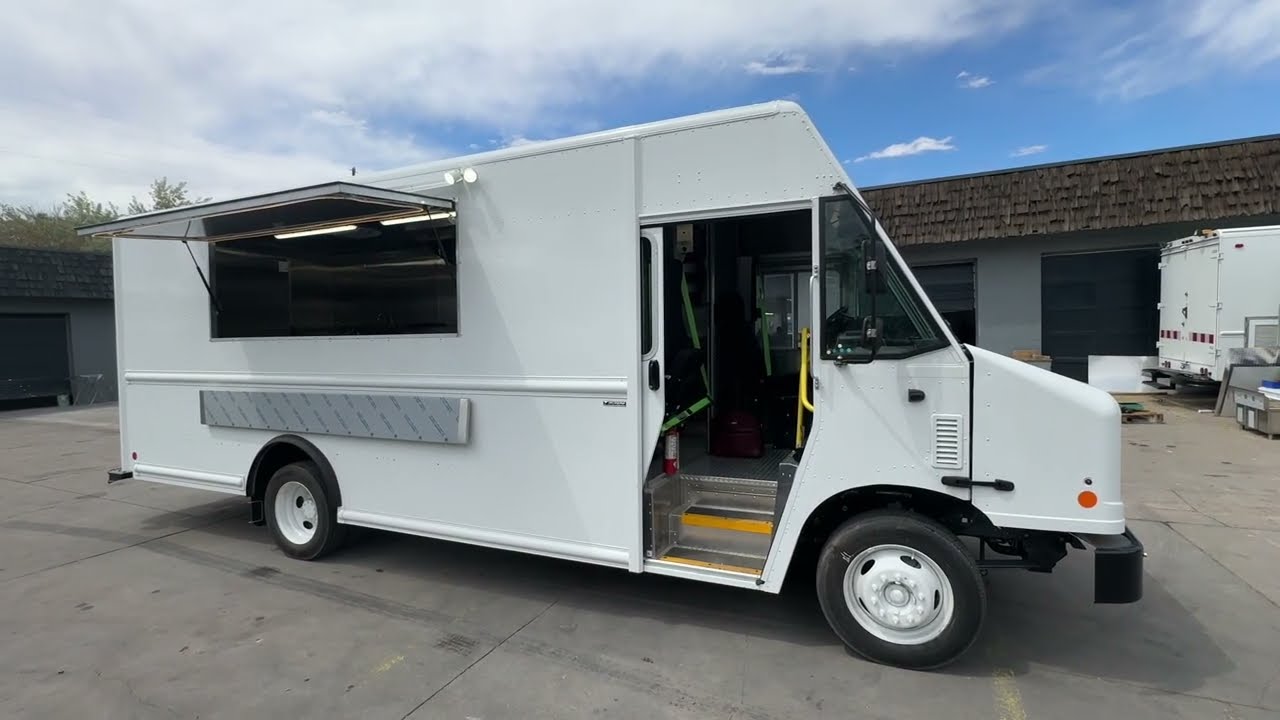
Read the full build story on the Wichita Native American food truck delivery →
Wichita has the deepest food truck scene in Kansas, and it is one of the more welcoming big cities in the state to start in, but the approval process catches first-timers because it runs through three separate authorities with three separate rulebooks. This guide is the complete version: the exact state and city licenses, the real 2026 fees, what the fire marshal actually checks, where you are legally allowed to park, what it costs in the first year, and where the business actually is once you are rolling. If you read one page before you build a truck for Wichita, make it this one.
Planning your food truck build? See what a fully-equipped, inspection-ready truck actually costs with our free build & cost calculator.
The three layers of approval
Three offices, three jobs, and you need all three:
- Kansas Department of Agriculture (KDA), Food Safety and Lodging. Kansas runs retail food at the state level, so KDA, not a county health department, licenses your mobile food unit and inspects it. That one license is good across the entire state.
- City of Wichita. Wichita requires its own Mobile Food Vendor License under Chapter 3.15 of the city code, one per vehicle, and sets the rules for where and when you can operate.
- Fire safety inspection. Wichita ties your city license to an annual fire inspection, coordinated through the Central Kansas Fire Marshal’s mobile food vendor coalition.
The order matters: get the KDA license and your insurance squared away first, because the city application asks for proof of both. The statewide framework is in our Kansas food truck permits guide.
Step 1: Your Kansas Department of Agriculture license
This is the foundation. KDA licenses your truck as a mobile food establishment and schedules a pre-licensing inspection rather than a separate plan-review track, so the build itself is what gets approved. You submit the application, a Mobile Unit Log listing the events and locations you plan to work, and your fees.
The 2026 fees are set by category. A truck that cooks, cools, or reheats is Category I, which runs a $300 one-time application fee plus a $250 annual license, so $550 the first year and $250 a year to renew. A bakery or repackaging unit (Category II) is $545 the first year, and a prepackaged or self-serve-only unit (Category III) is $465. Every KDA license expires March 31 and the fees are not prorated, so a truck licensed in February pays a full year for a single month. Renew online before April 30 or you lose the license and have to repay the application fee. KDA can be reached at (785) 564-6767.
The single biggest advantage of the Kansas system: that one KDA license covers food safety across the whole state. You can base in Wichita and work Kansas City, Topeka, Lawrence, or Manhattan on the same license, adding only each city’s local vendor license and fire sign-off.
Step 2: The City of Wichita Mobile Food Vendor License
On top of the state license, Wichita requires its own Mobile Food Vendor License under Chapter 3.15 of the city code (Ordinance 50-382). It is issued per vehicle, is non-transferable, and runs on the calendar year, January 1 through December 31. The fees, per the city’s May 2024 information sheet, are $350 a year per vehicle, not prorated, or $50 per vehicle for a special event licence covering up to ten consecutive days, with no more than three special event licences and 15 days a year.
To apply you need a valid Kansas sales tax number, a Kansas driver’s license, and a certificate of general liability insurance with at least a $500,000 combined single limit per occurrence and a $1,000,000 aggregate. The applicant has to be at least 18 and certify a sex-offender background check of staff. The license is enforced jointly by the Fire Department, Public Works, the Traffic Engineer, the Zoning Administrator, the building code office, and the Police Department, which is worth knowing because any of them can flag a problem.
Step 3: The fire safety inspection
Wichita requires an annual fire safety inspection, and the specifics in the ordinance are where cooking trucks most often get held up. The code requires:
- A propane system carrying no more than 100 pounds of LP gas, with cylinders secured and protected from impact.
- A Type I hood with an automatic fire suppression system wherever you produce grease-laden vapors (a Type II hood is enough for steam or warming only), with the Type I hood and suppression serviced every six months.
- At least one 2A-10BC fire extinguisher, serviced annually.
- A 10-foot separation between units using flammable liquids or gas, and 20 feet from building openings, reducible to 10 feet with written consent from the property owner.
Wichita-area inspections are coordinated through the Central Kansas Fire Marshal’s mobile food vendor coalition, which is a real convenience: one passing inspection is honored across the participating Central Kansas jurisdictions, with spot checks at events, so you are not re-inspected every time you cross a city line in the region. Our fire suppression guide walks through building this side correctly.
Health and build requirements
The KDA inspection follows the Kansas Food Code, and the build is what passes or fails it. The specifics that matter:
- A commissary as your base of operation, providing an employee toilet, a handwash sink, a warewashing sink, and a servicing area. A home kitchen does not qualify.
- A potable water tank with an inlet no larger than three-quarters of an inch, capped, filled only with food-grade hoses, and positioned to avoid contamination.
- An onboard water heater delivering water over 100 degrees for handwashing and warewashing, with cold water under pressure at minimum for the hand sink.
- A dedicated hand wash sink separate from the warewashing sink, plus the three-compartment sink your menu requires.
- Refrigeration that holds cold food at or below 41 degrees, with raw and ready-to-eat stored separately, working thermometers, sanitizer and test strips, and NSF-rated cleanable surfaces.
- A Mobile Unit Servicing Area with overhead protection where you fill water, dump wastewater, and clean.
Exact tank gallon sizing and the gray-to-fresh ratio are set by the inspector under the Food Code rather than a single published number, so confirm your build with KDA before you finalize it. This is exactly why we build to the code from the first drawing, see what goes into a compliant build.
Where you can legally park in Wichita
The zoning rules under Chapter 3.15 are specific, and a great spot is worthless if you are not allowed to be there:
- You must stay 150 feet from the front door of any open restaurant when operating on public property, unless that restaurant gives written consent.
- You must stay 500 feet from a permitted community event during its hours, unless the promoter waives it.
- No vending between 1 a.m. and 6 a.m.
- The unit has to be stationary and legally parked, never blocking traffic, bike lanes, driveways, or leaving less than five feet of sidewalk for ADA access.
- On private property or non-right-of-way public property, you need written permission from the owner.
- Park vending is allowed only under the parks code (Chapter 9.03.200), and you cannot dump wastewater on the ground or into storm drains.
- Larger events are permitted separately under Chapter 3.11.
What it actually costs the first year
Apart from the truck itself, here is the realistic first-year math for a Wichita cooking truck:
- KDA license: $550 the first year, $250 to renew.
- City of Wichita Mobile Food Vendor License: $350 a year per vehicle, or $50 per special event licence (up to three a year).
- Fire compliance: the inspection through the coalition, plus annual extinguisher service and six-month hood and suppression service.
- Insurance: general liability at the required $500,000 per occurrence and $1,000,000 aggregate.
- Commissary: the largest ongoing cost, billed hourly or monthly (see below).
The state and city license floor alone is roughly $950 a year before insurance and commissary. For the bigger financial picture, see how much a food truck can make and our financing guide.
Step by step, in order
- Register your business and get a Kansas sales tax number from the Secretary of State and Department of Revenue.
- Line up a licensed commissary and get the agreement signed.
- Apply to KDA with your Mobile Unit Log and pass the pre-licensing inspection.
- Put your general liability insurance in place at the required limits.
- Apply for the City of Wichita Mobile Food Vendor License with your sales tax number, license, and insurance.
- Pass the Central Kansas Fire Marshal coalition inspection.
- Keep your Mobile Unit Log current and your hood and extinguisher service tags up to date.
Plan on roughly six to eight weeks start to finish, most of it waiting on inspections and the commissary agreement.
Common reasons Wichita trucks get held up
- Applying for the city license before the KDA license and insurance are in hand, since the city asks for both.
- No Type I hood or UL-rated suppression where there are grease vapors, or a suppression tag past its six-month service.
- A propane setup over the 100-pound limit or without proper securing and clearances.
- Missing the 2A-10BC extinguisher or letting its annual tag lapse.
- Picking a spot inside the 150-foot restaurant buffer without written consent.
- No signed commissary agreement, or an incomplete Mobile Unit Log, which stalls the KDA inspection.
- Refrigeration that cannot hold 41 degrees through a 100-degree July afternoon.
Where the business actually is in Wichita
The single biggest opportunity on the calendar is the Wichita Riverfest, a nine-day festival in late May and early June with a food court running 11 a.m. to 11 p.m. and vendors along Douglas Street, drawing huge crowds. Beyond that, the Douglas Design District and Old Town are the core gathering districts, with locally owned shops, bars, and breweries that draw evening foot traffic, and Visit Wichita keeps a running food truck guide that is worth getting listed in. The season clusters from roughly May through October, with a real slowdown from November through March, so plan your cash flow and your catering pipeline around that.
For a commissary, central Wichita has shared commercial kitchens built for trucks, including options south of Kellogg with a hot line, bake space, and gated overnight truck parking in the range of $16 to $22 an hour. Confirm any commissary is currently licensed with KDA before you sign, since these come and go.
Building for south-central Kansas
Two things drive how a Wichita truck should be built. First, the summer: regular 95 to 100-degree heat with high humidity is brutal on refrigeration and on your crew, so we oversize cooling and refrigeration and ventilate hard to hold safe temperatures on the worst days. Second, the wind: Wichita sits in Tornado Alley, so we build for secure tie-down and storage and a low, stable setup, and we steer owners toward an off-season plan since the outdoor calendar thins out in winter. Our generator size guide covers powering all of it.
How Zion builds trucks that pass in Wichita
We build every unit to the Kansas Food Code and the Wichita fire requirements from the first drawing: correctly sized and plumbed water and waste systems with a sub-three-quarter-inch inlet and a 100-degree water heater, a dedicated hand wash and three-compartment setup, a Type I hood with serviceable UL-rated suppression where there is a cook line, a propane system inside the 100-pound limit with proper securing and clearances, the 2A-10BC extinguisher mounted, and NSF surfaces throughout. We build for the heat and wind too. A custom truck starts at $55,000 and a trailer runs $40,000 to $55,000, ready in about six weeks. Here is a recent all-electric truck we delivered to a Kansas City operator:
Key Wichita contacts
- Kansas Department of Agriculture, Food Safety and Lodging: (785) 564-6767, for your state license, Mobile Unit Log, and inspection.
- City of Wichita: for the Mobile Food Vendor License under Chapter 3.15 and the zoning rules.
- Central Kansas Fire Marshal mobile food vendor coalition: for the fire inspection honored across participating jurisdictions.
Food truck guides for other Kansas cities
Building somewhere else in Kansas? We have permit and inspection guides for Manhattan, Topeka, Lawrence, Overland Park, Olathe, Kansas City, KS.
Related guides
- Kansas food truck permits (statewide guide)
- Food truck fire suppression systems
- Do I need a commissary kitchen?
- What equipment goes in a food truck?
Frequently asked questions
Is the city license really per vehicle?
Yes. Wichita’s Mobile Food Vendor License is issued per vehicle and is non-transferable, so a two-truck operation pays the city fee twice. The state KDA license is also per unit.
How much insurance does Wichita require?
A general liability certificate with at least $500,000 combined single limit per occurrence and a $1,000,000 aggregate, and you need it before the city will issue your license.
Can I park next to a restaurant downtown?
Not within 150 feet of an open restaurant’s front door on public property, unless that restaurant gives written consent. There is also a 500-foot buffer around permitted community events during their hours.
Do I need a separate state license to work Kansas City or Topeka?
No. Your KDA license covers food safety statewide. You add only each city’s local vendor license and fire sign-off, and the Central Kansas coalition can carry your fire inspection across participating jurisdictions.
When does everything expire?
The KDA license expires March 31 (renew before April 30), and the Wichita city license runs the calendar year, January 1 to December 31. Track both so you do not lapse mid-season.
Is a commissary required?
Yes. Kansas requires a licensed commissary with a toilet, handwash and warewashing sinks, and a servicing area, documented in your Mobile Unit Log. A home kitchen does not count.
Ready to build a Wichita food truck?
We build custom trucks and trailers for Wichita operators, sourced and built to pass KDA and the Central Kansas fire inspection the first time and to handle a Kansas summer. Tell us what you are planning on our contact page, or start with our guide to starting a food truck business.
Zion Foodtrucks builds custom food trucks, trailers, and concession trailers from our shop in Monument, Colorado and delivers them ready to pass inspection across the Mountain West. Owner Jacob Varghese and our team work with first-time owners every day, sourcing the vehicle and handling the full build so you do not have to. Questions about permits or your build? Call or text Jacob at 719-722-2537 or see our custom build services.
Free Food Truck Permit & Inspection Checklist
We put together a printable checklist covering every permit and inspection a mobile food business typically needs. Tell us where to send it and it is yours.
Next steps: free build & cost calculator · 2026 food truck cost guide · food truck financing
Already Have a Truck? We Do the Compliance Work Too
Passing an inspection is one thing, staying current is another. We handle the recurring items out of our Colorado shop:
- LP gas pressure testing, $350. Required annually, and again after any modification.
- Fire suppression inspection and service, $300. The code interval is every 6 months, not annual, which catches a lot of operators out.
- Hood and exhaust cleaning, with the written report and logbook entry inspectors ask to see.
Booked together they are one visit and one day off the road instead of three. Call or text 719-722-2537.
Ready to build your truck?
We design and build custom food trucks and trailers compliant with the regulations on this page. From a single phone call to keys-in-hand in 6 to 8 weeks for most builds.
Built in Woodland Park, Colorado. Delivered to operators in CO, AZ, NE, MT, and WY.