
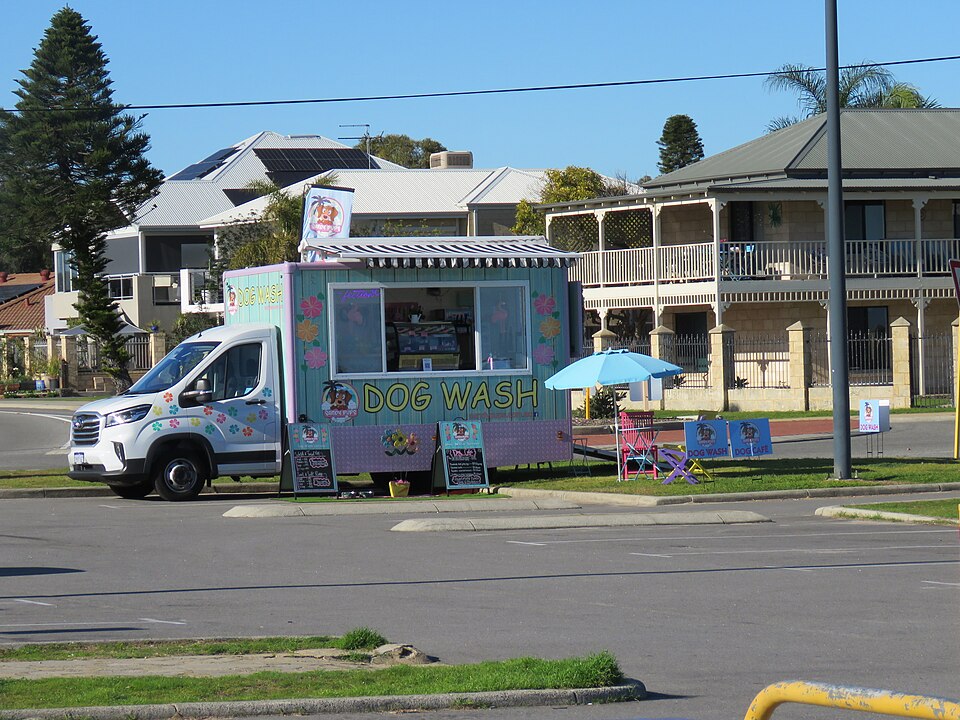
A custom mobile grooming rig is not a single product, it is a set of choices, and the right combination depends entirely on your dogs, your route, and your budget. We build each van or trailer around your workflow rather than handing you a fixed floor plan, so it helps to understand what you can actually specify and how each decision affects the others. This is the full menu, with the reasoning behind each choice, so you can spec a rig that fits how you really groom.
Get a Free Quote →Call 719-722-2537
Van or trailer, and how big
The first decision is the platform. A self-contained van is simple to drive and park, which suits dense city routes and tight driveways, and it is one unit to insure and maintain. A grooming trailer separates the salon from the tow vehicle, which gives you more interior floor space, easier access to the equipment for service, and the freedom to replace the tow vehicle later without rebuilding the salon. Size then follows from two things: how many dogs you want to bath in a day, and the largest breeds you handle. A groomer doing compact dogs on a packed city route needs something different from one handling large breeds in a rural service area. We help you pick the platform and the length that match your route instead of paying to haul around space you will not use. For a deeper look at the tradeoffs, see our comparison of mobile versus a stationary salon.
The bathing system
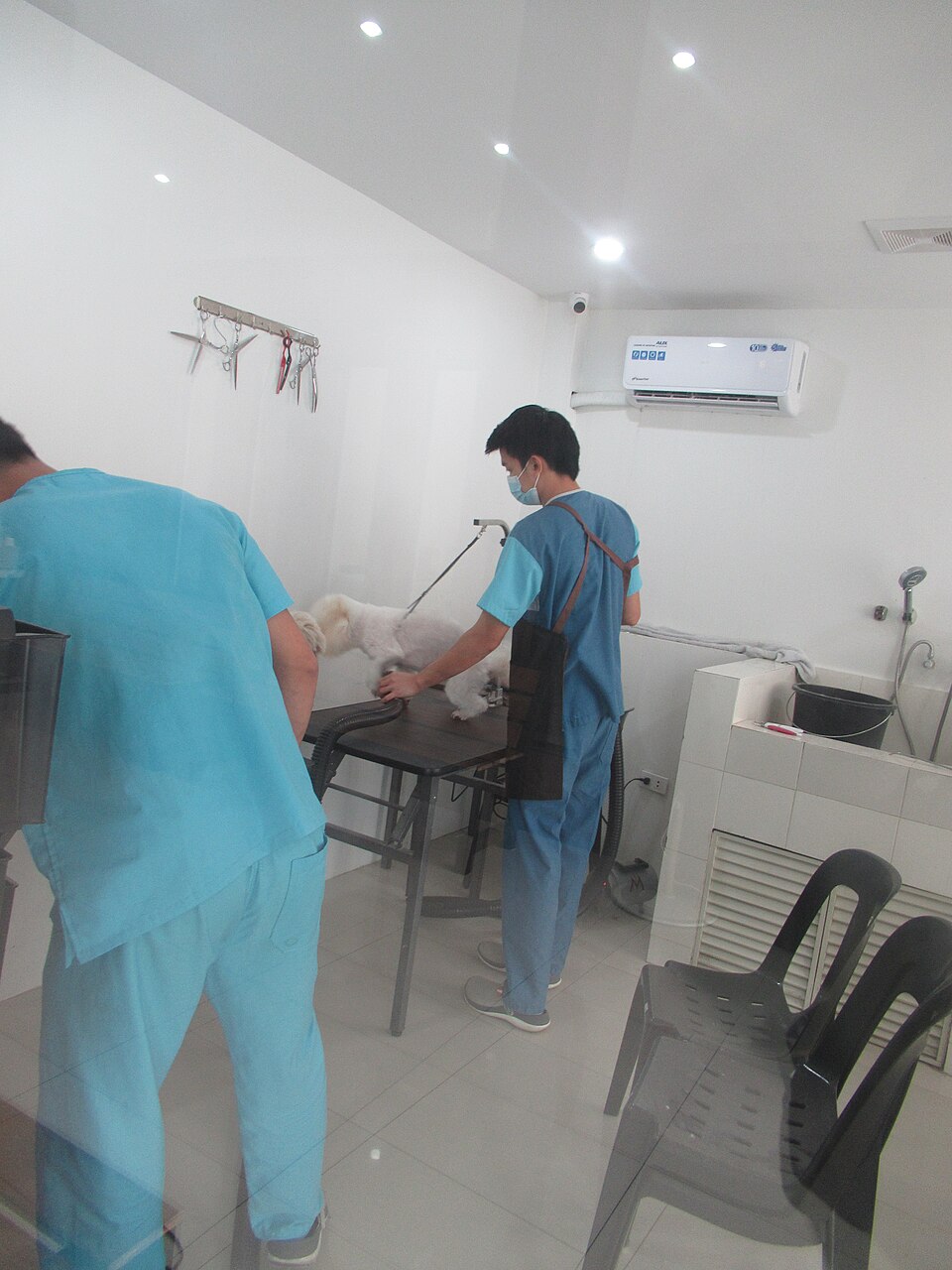
The bath is the heart of the rig, and it is where you will spend much of your day. You can spec a hydrobath that recirculates warm water and shampoo through a hose for speed and water efficiency, or a standard tub for simplicity and a lower cost. Either one can be fitted with a ramp or a powered lift so you are not hoisting a wet large dog by hand, which protects both your back and the dog. Around the bath we build in non-slip surfaces, proper drainage routed to the gray tank, splash protection, and enough hot-water capacity to keep the water comfortable through a full day of dogs. The bath choice and your dog mix drive the water system, which we size using our water capacity guidance.
Power: generator, lithium, or hybrid
Power is the single biggest engineering decision in the build, because two pieces of equipment dominate everything else. The high-velocity dryers and the air conditioning draw far more than the lighting, the water pump, and the clippers combined, and they often need to run at the same time. That is why lithium batteries alone, which are excellent for the quiet light loads, struggle to carry dryers and AC through a full working day. The three real options are a commercial generator sized with headroom for the dryers and AC, a lithium and inverter system for operations where the heavy loads are limited, or a hybrid that runs the quiet loads off lithium and fires the generator for the dryers and AC. The number of dryers you choose drives this directly, so we decide power and dryers together. Our guide to generator sizing walks through the load math so the choice is informed, not guessed.
Climate control and insulation
Climate control is not a comfort feature, it is animal safety. The rig has to hold a safe temperature for a dog in a Mountain West summer and a cold winter morning alike, which means properly sized air conditioning, real heat, good insulation, and ventilation to manage humidity from the bath. We build the envelope and the HVAC to keep the interior safe and comfortable in any season, because a parked van heats and cools far faster than a building.
Water tanks and the grooming station
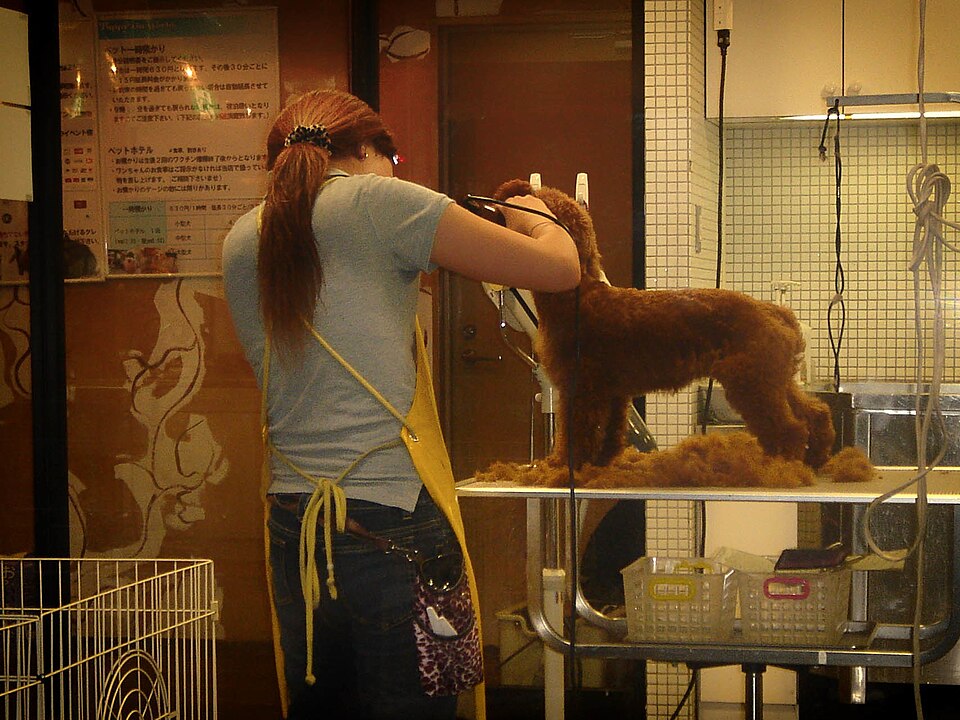
You choose your fresh and gray water tank sizes to match your daily dog count, with the gray tank sized a little larger so it never fills before the fresh empties, plus a water heater for warm baths all day. The grooming station is the rest of your workflow: the table and restraint, ergonomic working height, bright shadow-free lighting, storage for blades, shears, and product, and durable flooring. Every contact surface is built to be wiped down and sanitized between dogs, because a mobile salon lives or dies on cleanliness and a clean rig is part of what lets you charge a premium.
Electrical, shore power, and the details
Underneath the visible equipment sits the electrical system that ties it together: the panel, the inverter and battery if you spec them, GFCI protection around water, interior and exterior lighting, and often a shore-power inlet so you can plug in and charge or run the rig from a pedestal when one is available. These details are easy to overlook in a quote and expensive to add later, so we spec them up front.
Exterior and branding
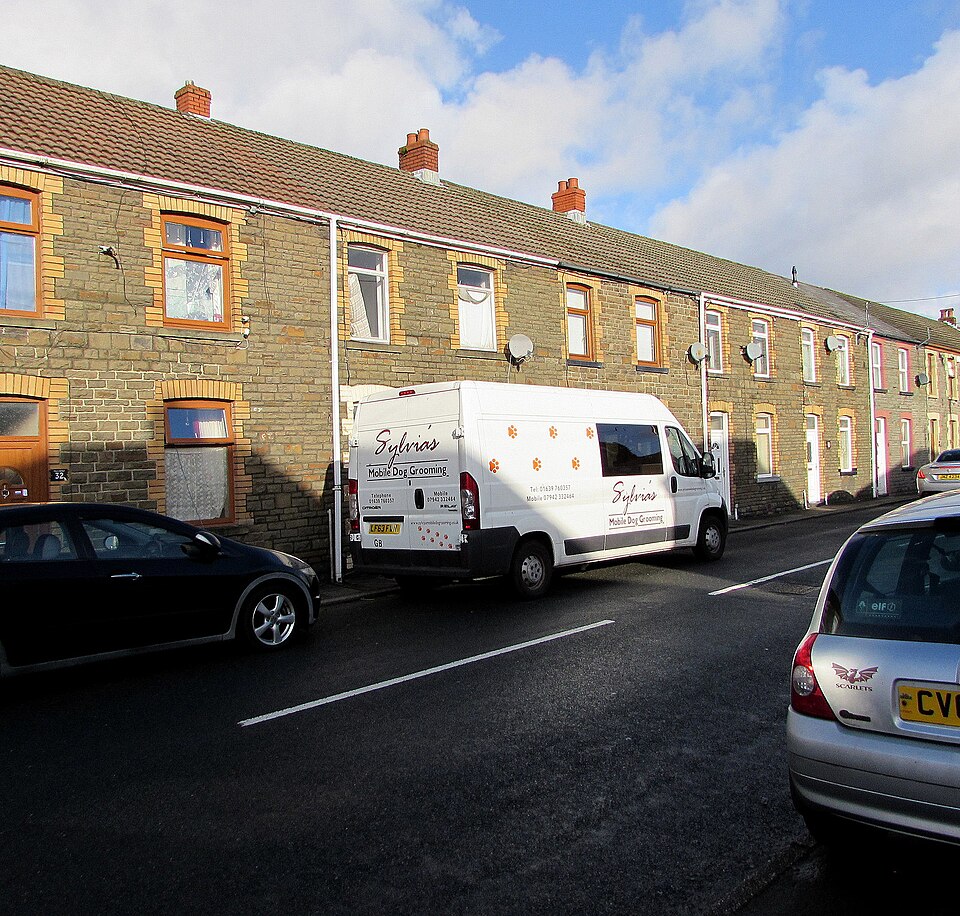
Finally, the outside of the rig is rolling advertising. We coordinate the exterior wrap so the van shows up as your brand in every neighborhood on your route, with your name, your services, and your phone number where people can see them. For a mobile groomer, a well-wrapped van is some of the most cost-effective marketing there is, working for you at every stop and every red light.
We build it around you
Tell us your dog sizes, how many you want to bath in a day, and the routes you run, and we turn these options into a floor plan and a clear written quote. There is no fixed catalog to squeeze into. See the full custom mobile pet grooming van and trailer builds to start, and use our cost calculator to see how the choices move the price.
Build options FAQ
What can I customize on a mobile grooming van?
Almost everything that affects how you work: van or trailer and size, the bathing system (hydrobath or tub, with a ramp or lift for large dogs), the number of high-velocity dryers, the power system (generator, lithium, or hybrid), heating and air conditioning, fresh and gray water tank sizes, the grooming table and restraint, storage, lighting, flooring, ventilation, and the exterior wrap. We build around your dogs and your route rather than dropping you into a fixed plan.
How do I choose between a hydrobath and a standard tub?
A hydrobath recirculates warm water and shampoo through a hose, which speeds up bathing and can use water more efficiently, while a standard tub is simpler and familiar. Your dog sizes, your daily volume, and your water capacity decide which fits. We size the water and hot-water system to whichever you choose.
How many dryers should I plan for?
It depends on your volume and breeds. A high-velocity dryer is one of the heaviest electrical loads in the rig, so the number of dryers directly drives the power system you need. We match the dryer count to the generator or hybrid power you choose so the dryers can run alongside the air conditioning without tripping anything.
Generator, lithium, or hybrid power?
All three work, and the right answer depends on your loads. The dryers and the air conditioning are far hungrier than lighting, the pump, and clippers, so lithium alone struggles to run dryers and AC for a full day. A generator handles the heavy loads, and a hybrid uses lithium for the quiet light loads and a generator for the heavy ones. Our generator sizing guide walks through the math.
How big should the water tanks be?
Size the fresh tank to your daily dog count and the gray tank a bit larger so it never overflows before the fresh runs out. Many rigs carry fifty to one hundred gallons of fresh water plus a larger gray tank and a water heater. We size yours to how many dogs you plan to bath between refills.
Can you wrap the van in my branding?
Yes. We coordinate the exterior wrap so the rig shows up as your brand, which on a mobile route is rolling advertising in every neighborhood you serve.
Get a Free Quote →Call 719-722-2537
Keep reading: our pet mobile build overview, what a pet mobile costs, the cost calculator, generator sizing, water capacity, and what a route earns.