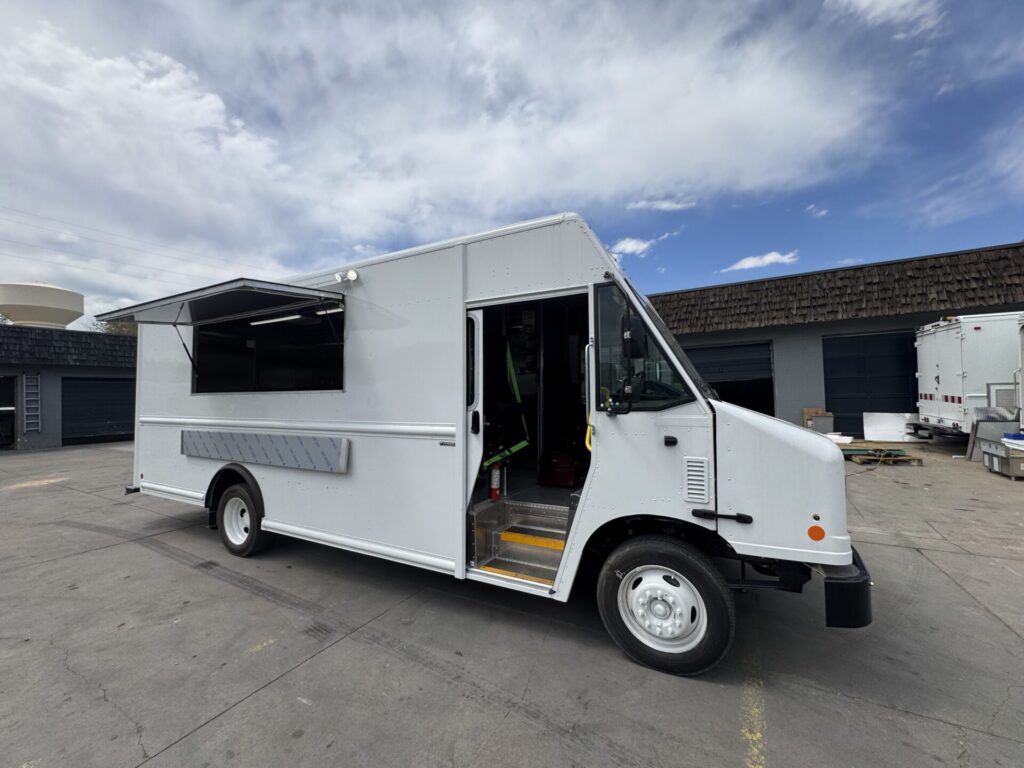
The cooking line on this 18ft Native American food truck was designed before anything else. The operator out of Wichita, Kansas knew exactly what was going to roll out of the service window: Indian tacos, frybread, three sisters dishes, stews, and the kind of plated meals that get pre-cooked and held hot during a powwow or festival rush. Every decision on the build started there and worked outward.
What that means in practice is the heart of this truck is not the chassis spec or the wrap or the service window. It is a six-burner range with an integrated 24 inch griddle, a dedicated stockpot burner, a refrigerated prep table, a four pan steam table, and full UL 300 fire suppression sitting under the hood. The rest of the build wraps around that line.
Designing the cooking line around the menu
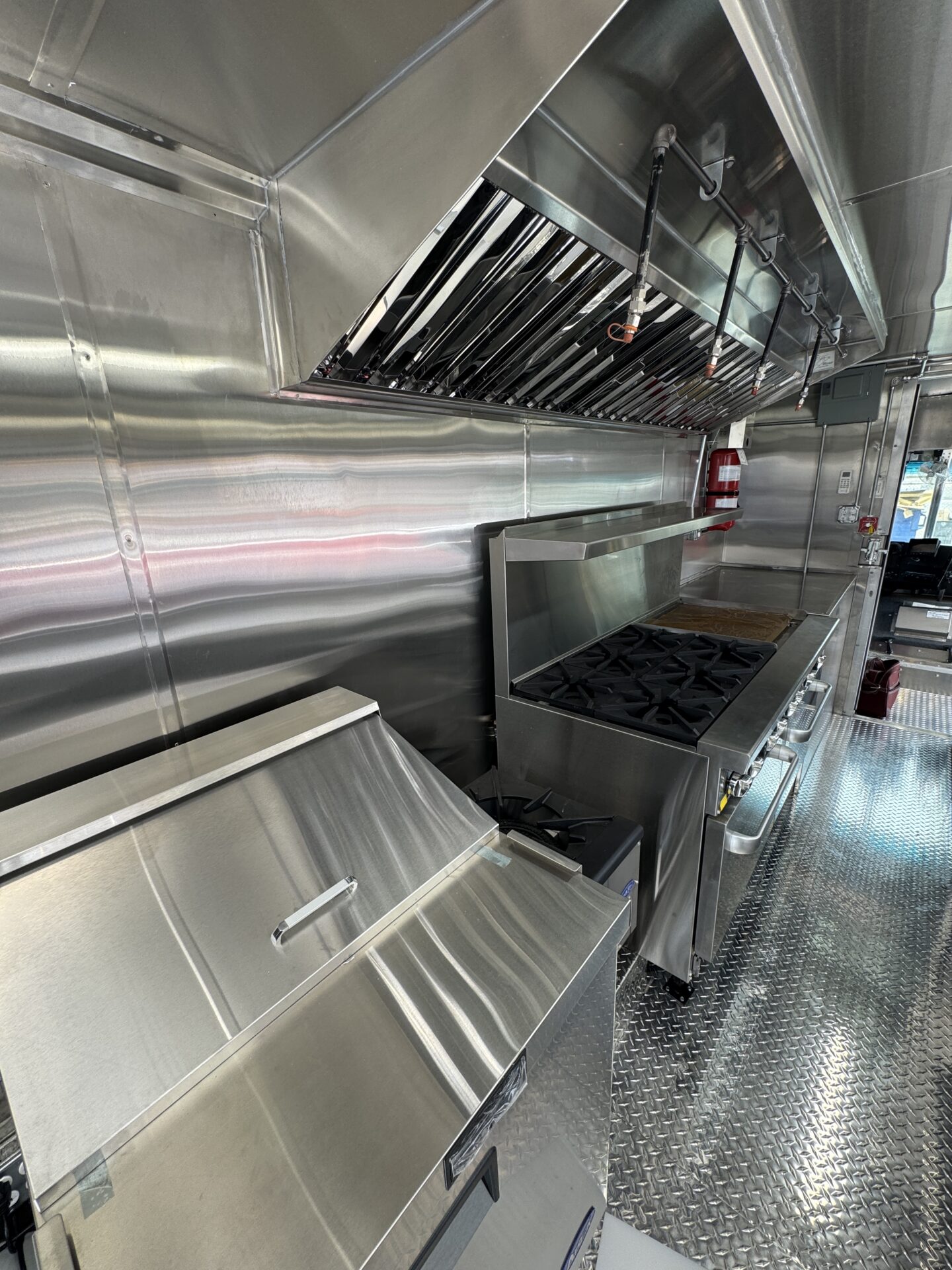
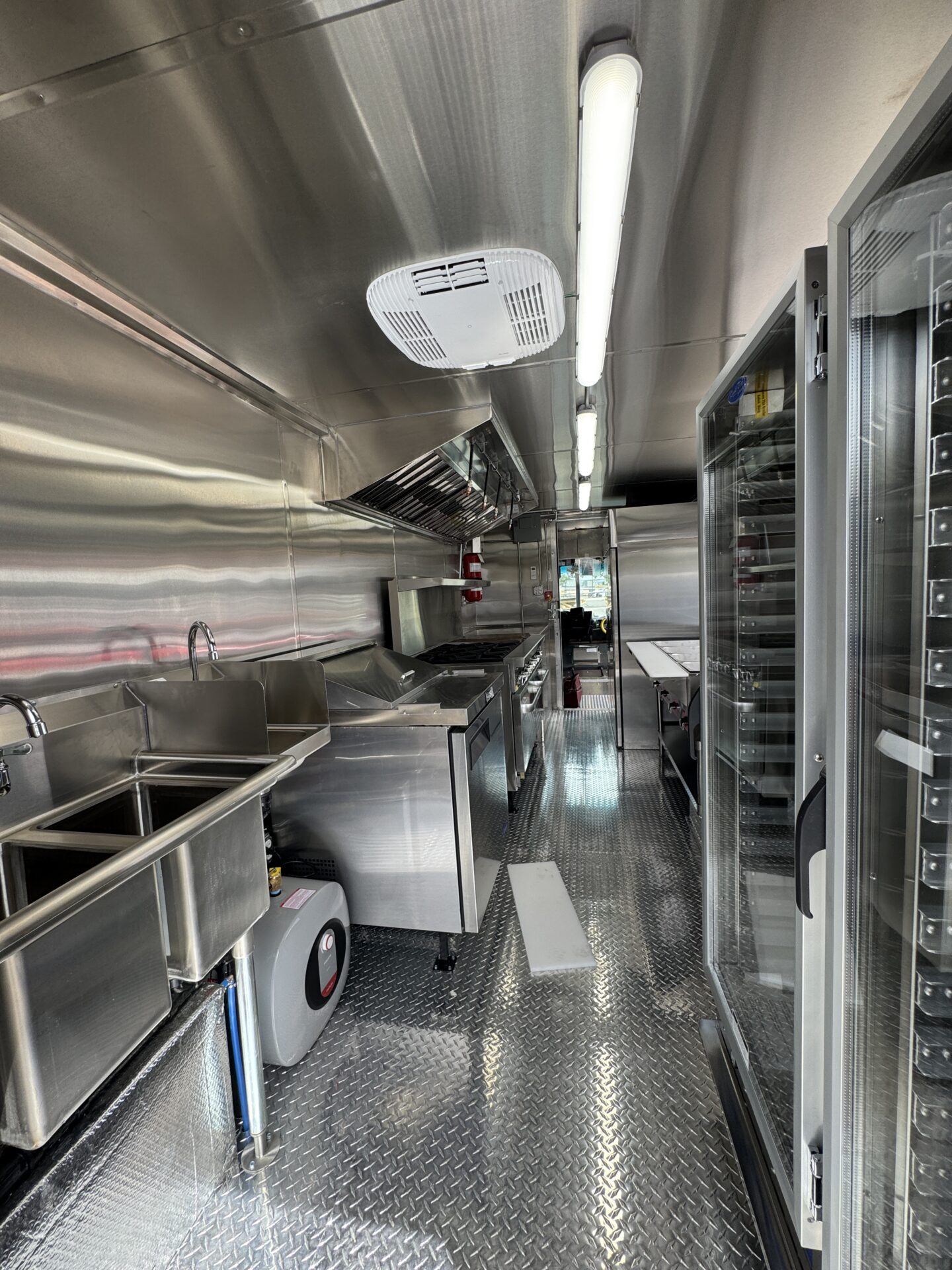
A six-burner range with a built-in 24 inch griddle is the workhorse for this style of menu. The griddle handles frybread, seared ground beef for Indian tacos, breakfast service if the operator pushes morning hours, and quesadillas. Right next to it, six open burners stay lit through service with a stew pot or two, a smaller pan of red sauce, a pot of beans, and whatever else needs to live at a low simmer. On a busy day none of those six burners cools off.
Next to the range is a dedicated stockpot burner. That is for the big pots that do not fit on a regular range: mutton stew, hominy stew, frybread oil if the operator wants to push frybread as a standalone item, big batch chili. A stockpot burner is one of those pieces of equipment that you do not think about until you do not have one, and then it changes how you can run service.
The 27 inch refrigerated pizza prep table sits right next to the cooking line. The reach-in below holds bulk product cold. The top rail holds the assembly mise en place: ground beef in one pan, beans in another, shredded cheese, lettuce, diced tomato, salsa, sour cream, wojapi if the operator runs a sweet variation. A line cook can plate an Indian taco in under thirty seconds with that setup and a hot frybread coming off the griddle.
A full-size standup commercial refrigerator anchors the cold side. That handles bulk storage for the day: prepped protein, dairy, drinks, fruit for wojapi prep, anything that does not fit in the under-counter reach-ins. Having a real upright fridge separate from the prep table means the operator can pull a 25-pound box of ground beef without rearranging the line.
The steam table is what changes service
The four pan steam table on the service side is the piece of equipment most first-time operators leave out, and then regret. Here is what it does: when service starts, the operator pulls everything that needs to be hot off the cooking line and stages it in the steam table. Cooked beef. Stewed beans. Three sisters. Red sauce. Hominy. Whatever the menu calls for. The cooking line goes back to firing fresh frybread, fresh griddle items, and fresh stockpot batches, while the service window plates straight out of the steam table.
That separation between cook line and service line is what lets a one or two person crew run a real rush. A festival lunch wave can hit 150 plates in 90 minutes. Without a steam table, every plate ties up the cooking line. With a steam table, the cooking line is replenishing while the service line is plating. Different rhythms, same kitchen, much higher throughput.
Stainless steel everywhere, not FRP
Most of our trucks go out with a stainless steel wall behind the cooking line and FRP wall panels everywhere else in the cabin. FRP is what most operators want. It is food-safe, it is what health inspectors expect, and it costs less than stainless. This truck was different. The operator wanted all stainless steel walls throughout, top to bottom, both sides of the cabin.
The argument for stainless everywhere comes down to two things. One, it cleans like glass. A pressure wash and a wipe-down and the whole cabin looks new again. Heavy duty operators with high volume menus end up wishing they had it. Two, it lasts longer than FRP under hard use. FRP can scratch and stain over years; stainless does not. The trade-off is the upfront cost and a bit more reflectivity inside the cabin when the lights are on. For this build the math made sense.
Floor is aluminum diamond plate, the standard we install on every truck. LED lighting runs through the cabin and around the outside of the truck for exterior service after dark.
Why Wichita is a strong market for this build
Wichita is named for the Wichita and Affiliated Tribes, who lived along the Arkansas River when the city was founded as a trading post. Today the city is home to the Mid-America All-Indian Museum on the west bank of the Arkansas and serves as a regional hub for tribal communities across Kansas, Oklahoma, and the southern plains. Powwow season runs from late spring through early fall across the region, and the demand for Native American food at those events is consistent.
The city itself is around 400,000 people, with McConnell Air Force Base on the southeast side and a deep aviation manufacturing economy. The food truck scene in Wichita centers on the Old Town district, downtown lunch hours, and a weekend brewery and event circuit. A Native American truck has a real, underserved lane in this market, especially one that can travel for powwow and tribal event circuits across Oklahoma and into Nebraska.
On the licensing side, Kansas runs a statewide food safety license through the Kansas Department of Agriculture that covers food safety for mobile food units across the state. The City of Wichita adds its own city license and fire inspection layer on top. Our Wichita food truck permits page walks through what each license costs and how to time the application around the March 31 KDA expiration date.
Service window, plumbing, and power
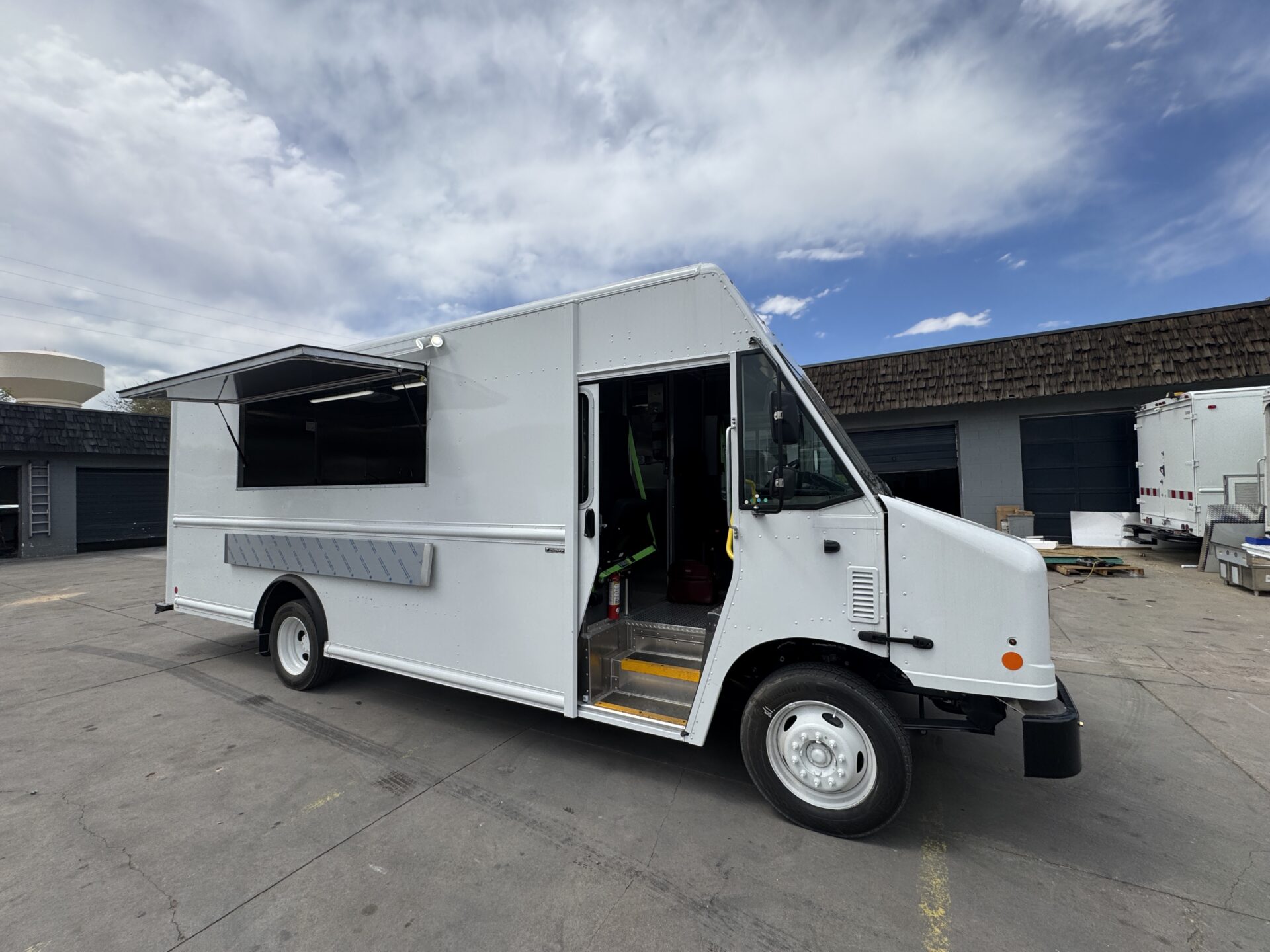
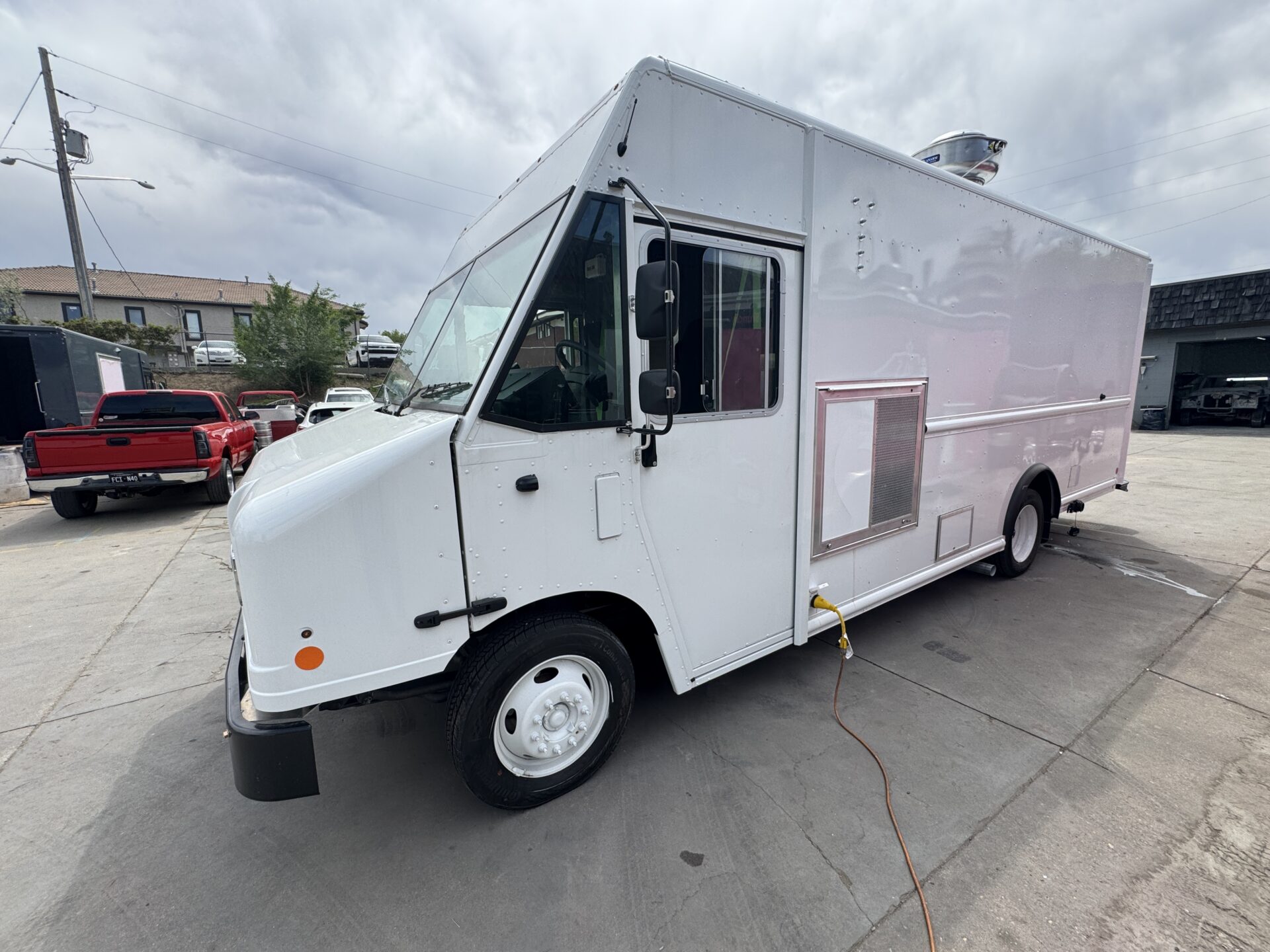
The service window is the standard 5ft opening with a flip-up awning door, self-closing inset doors below the awning, and a bug screen for warm weather. Placement puts the service line within a step of the steam table on the inside, so one operator can take an order, plate, and hand out without crossing the cabin.
Plumbing is built to pass Kansas Department of Agriculture and Sedgwick County Health inspection on the first walk-through. Hand wash sink at the line with soap and paper towel dispensers, three compartment sink for utensils, 8 gallon water heater feeding both. Fresh water tank is 30 gallons under the truck; grey tank is 40 gallons under the truck. Both are sized for a real day of service plus a margin.
Power on this truck is a 12kW Cummins generator. Cummins is the upgrade over Onan when an operator wants longer service intervals and a smoother load curve under heavy cooking. Twelve kilowatts is the right size for a cooking line of this scale: range, griddle, prep table compressor, full-size fridge compressor, steam table elements, hood vent, lighting, and water heater all run with margin to spare. Our food truck generator size guide covers the sizing math for builds like this.
Fire suppression on this truck is a full UL 300 wet chemical system over the cooking line, integrated with the hood vent. Class K extinguisher at the line for grease fires plus an ABC extinguisher for the cabin. That setup passes fire marshal inspection in Kansas and in every state the operator might travel to.
Full equipment list
- Stainless steel cooking wall
- Stainless steel wall panels throughout (no FRP)
- Aluminum diamond plate floor
- LED lighting inside and outside
- 6-burner range with integrated 24 inch griddle
- Dedicated stockpot burner
- 27 inch refrigerated pizza prep table
- Full-size standup commercial refrigerator
- Four pan steam table
- Hood vent over the cooking line
- UL 300 wet chemical fire suppression system
- Class K and ABC fire extinguishers
- 5ft service window with awning door, self-closing inset doors, and bug screen
- Hand wash sink with soap and paper towel dispensers
- Three compartment sink
- 8 gallon water heater
- 30 gallon fresh water tank, undermount
- 40 gallon grey water tank, undermount
- 12 kW Cummins generator
Walk-in tour
More recent builds
Other recent trucks worth a look. The 14ft bagel food trailer for Yard Sale Bagels in Bozeman is another high-volume hot sandwich concept on a tight cooking-line plan. The 12ft all-electric truck for Crumbl Cookie in Salt Lake City is the same client philosophy from the other end of the spectrum, no cooking equipment at all, all merchandising. The 16ft celiac-safe food trailer in Aurora is another build organized around a specific menu’s needs.
If you are just starting to think about a build, our 2026 guide to starting a food truck business covers the financial and operational basics, and what equipment goes in a food truck walks through the kitchen layout logic in more detail.
Ready to build yours?
We build food trucks and trailers out of Woodland Park, Colorado for operators across the Mountain West, the southern plains, and beyond. If you have a menu in mind and need a truck designed around it, call 719-722-2537 or head to our contact page to start the conversation.