

Recent Delivery: 10ft Sprinter Coffee Van
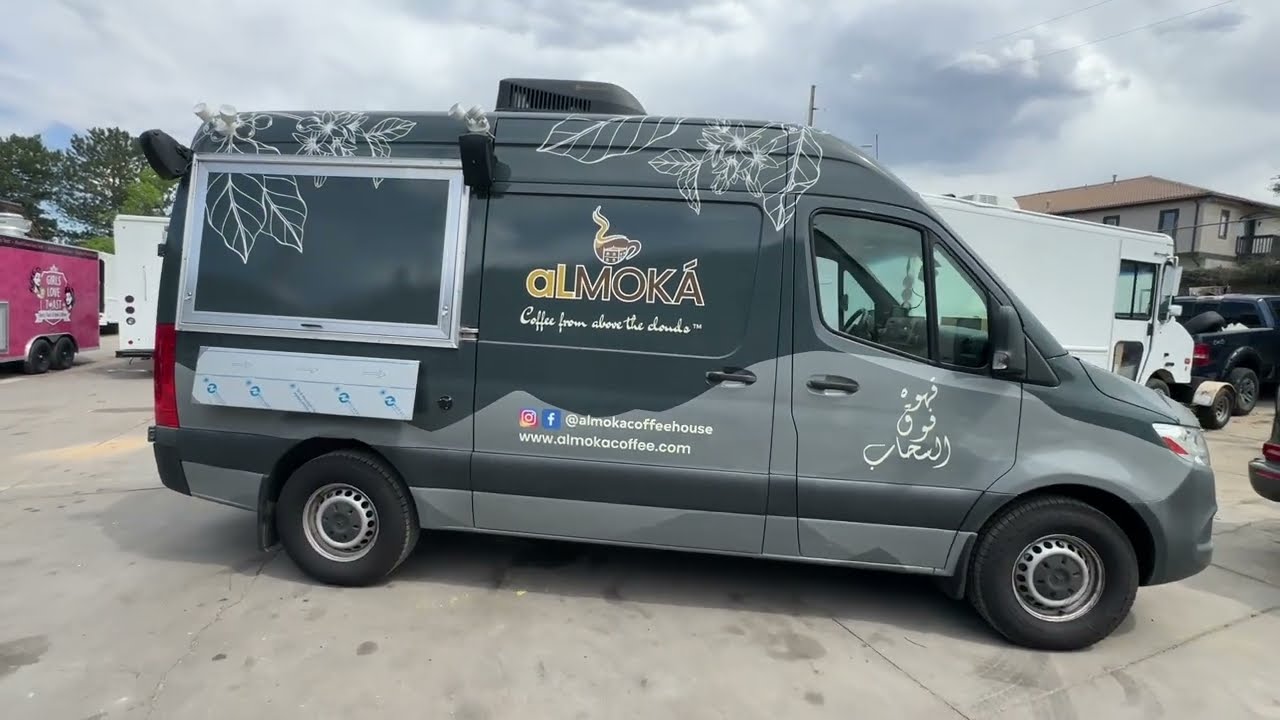
Read the full build story on the alMOKA Sprinter coffee van we delivered for Chicago →
Chicago is one of the biggest food truck markets in the country and one of the most tightly regulated. The rules here are strict enough that they shape the truck you build and the way you work every single day, so it pays to understand them before you spend a dollar. This is a working guide to getting licensed in Chicago and Northern Illinois, what the operating rules actually mean on the street, and where trucks make their money. We build custom trucks for operators across the Midwest and the Mountain West, and we get asked about Chicago more than almost any city, because it is both a huge opportunity and an easy place to get tripped up.
Getting licensed: the two Chicago mobile food classes
Chicago licenses mobile food through the Department of Business Affairs and Consumer Protection, and the first decision you make is which of two license classes you fall under. A Mobile Food Dispenser license covers a truck that serves prepared or prepackaged food and drinks without cooking on board, and it runs 700 dollars for a two-year term. A Mobile Food Preparer license covers on-board cooking and prep, and it runs 1,000 dollars for two years, and it also requires a City of Chicago Food Sanitation Manager certificate. For a lot of concepts the cheaper Dispenser class is enough, and any real on-board cooking pushes you to the Preparer class. That single choice is the most important licensing call an operator makes here, so get it right for your menu before you apply.
Two requirements apply no matter which class you are in. Chicago requires a commissary, so the city will not issue a license without a shared or commercial kitchen agreement, and home kitchens are not allowed. The city also requires a working GPS device on the truck under the municipal code, which the city uses to track where trucks operate. Build both of those into your plan from the start, because you cannot get licensed without them.
The operating rules that shape your day
The rule every Chicago operator plans around is the 200-foot rule. You cannot vend within 200 feet of the entrance of a brick-and-mortar food establishment on the public way, which rules out a lot of the busiest blocks. On top of that, you are limited to two hours in any one location, so a truck has to keep moving through the day. There are also standard spacing rules, like staying clear of crosswalks and traffic signals and not blocking a bike lane. The city carves out designated Mobile Food Vehicle stands, including the well-known stand near Daley Plaza, where trucks can park as an exception to the 200-foot rule, and those stands are worth building your schedule around. The overnight hours between roughly midnight and 5 a.m. are treated differently, but for daytime vending, plan on the 200-foot and two-hour rules driving everything.
This is exactly why a compact vehicle wins in Chicago. A smaller truck or a Sprinter van slips into a tight legal curb space and repositions before the two-hour clock runs out, while a big rig struggles to find a spot that satisfies all the spacing rules at once. We factor the city’s rules into the footprint when we build for a Chicago operator.
Health and fire inspections
The Chicago Department of Public Health handles the food-safety side, including a plan review of your build and a joint inspection alongside the fire department before you open. If your truck runs a fuel-fired generator or carries propane, the Chicago Fire Department requires a fire safety permit, which comes with a blueprint review fee of 150 dollars and a permit fee of 100 dollars, both non-refundable, and the city expects a trained propane handler on board whenever the truck is operating. We build the mechanical and suppression pieces to pass that joint inspection the first time, and we make sure the propane and electrical systems are documented the way the inspectors want to see them.
Rockford and Northern Illinois
If you are working the Rockford side of Northern Illinois rather than the city, the licensing runs through the county. The Winnebago County Health Department licenses mobile food vendors, with a lower risk tier around 170 dollars per unit for prepackaged or lower-risk service and a higher tier around 285 dollars per unit for trucks serving hot or cold potentially hazardous foods. A prepared-food or espresso truck usually lands in the higher tier. The county requires an approved commissary just like the city does, and the permit is tied to one unit. Confirm your risk tier directly with Winnebago County before you file, since it depends on exactly what you serve.
What it costs the first year
Add up the pieces and the city and fire fees alone land somewhere around 1,000 to 1,500 dollars in the first two-year cycle, between the Dispenser or Preparer license and the fire department’s blueprint and permit fees. That is before commissary rent, the Food Sanitation Manager certificate, vehicle inspections, insurance, and your Illinois business registrations, so a realistic all-in first-year regulatory and commissary spend runs into several thousand dollars. None of that includes the truck itself. We give every Chicago buyer a straight walk-through of these numbers so there are no surprises after the build.
Where food trucks actually work in Chicago
The daytime money in Chicago is downtown and on the big campuses. The Loop and River North office towers drive weekday lunch traffic, and the medical and university campuses generate steady demand, from UIC and its medical district to the University of Chicago in Hyde Park and Northwestern in Streeterville. Those are the crowds a mobile kitchen can meet at the curb, as long as you can find a legal stand nearby.
The market calendar fills in the weekends. Chicago’s farmers market season runs from May into November, with the Daley Plaza market on Thursdays and Green City Market in Lincoln Park running deep into the fall, plus the historic Maxwell Street Market on scheduled Sundays. Out in Rockford, the Rockford City Market runs Friday evenings from mid-May through late August downtown, which is a natural home stand for a Rockford-based brand. Beyond the public markets, private events are a huge and less-regulated slice of the business. Weddings, corporate mornings, and conferences book trucks and mobile bars constantly, and a truck that can park discreetly and set up fast is exactly what event planners want.
Frequently asked questions
How much is a Chicago food truck license?
A Mobile Food Dispenser license, for serving without on-board cooking, runs 700 dollars for two years. A Mobile Food Preparer license, for on-board cooking, runs 1,000 dollars for two years and also requires a Food Sanitation Manager certificate. Both are issued by the Chicago Department of Business Affairs and Consumer Protection.
What is the Chicago 200-foot rule?
A Chicago food truck cannot vend within 200 feet of the entrance of a brick-and-mortar food establishment on the public way, and it can stay in one spot for no more than two hours. Designated Mobile Food Vehicle stands, such as the one near Daley Plaza, are the main exceptions to the 200-foot rule.
Do you need a commissary for a food truck in Chicago?
Yes. Chicago will not issue a mobile food license without a commissary or shared-kitchen agreement, and home kitchens are not allowed. The truck must also carry a working GPS device under the municipal code.
Does Chicago require a fire permit for a food truck?
If the truck runs a fuel-fired generator or carries propane, the Chicago Fire Department requires a fire safety permit, with a 150 dollar blueprint review fee and a 100 dollar permit fee, and a trained propane handler on board during operation. The health department and fire department inspect the truck jointly.
How do food truck rules differ in Rockford?
Outside Chicago, in the Rockford area, the Winnebago County Health Department licenses mobile food, with risk tiers around 170 dollars for lower-risk service and 285 dollars for hot or cold potentially hazardous foods, per unit. A commissary is still required. Confirm your tier with the county based on your menu.
More resources before you build
- 10ft Sprinter Coffee Van We Built for Chicago (alMOKA)
- What Permits Do I Need (State by State)
- How to Start a Food Truck Business (2026 Guide)
- How to Choose a Food Truck Builder
- Food Truck Insurance Guide
Planning a truck for Chicago or Northern Illinois? We build for the city’s rules, from a compact footprint that works the two-hour clock to the fire and mechanical documentation the inspectors want to see. Reach us at zionfoodtrucks.com or call 719-722-2537.
Jacob Varghese
Zion Foodtrucks
719-722-2537
Ready to build your truck?
We design and build custom food trucks and trailers compliant with the regulations on this page. From a single phone call to keys-in-hand in 6 to 8 weeks for most builds.
Built in Woodland Park, Colorado. Delivered to operators in CO, AZ, NE, MT, and WY.