

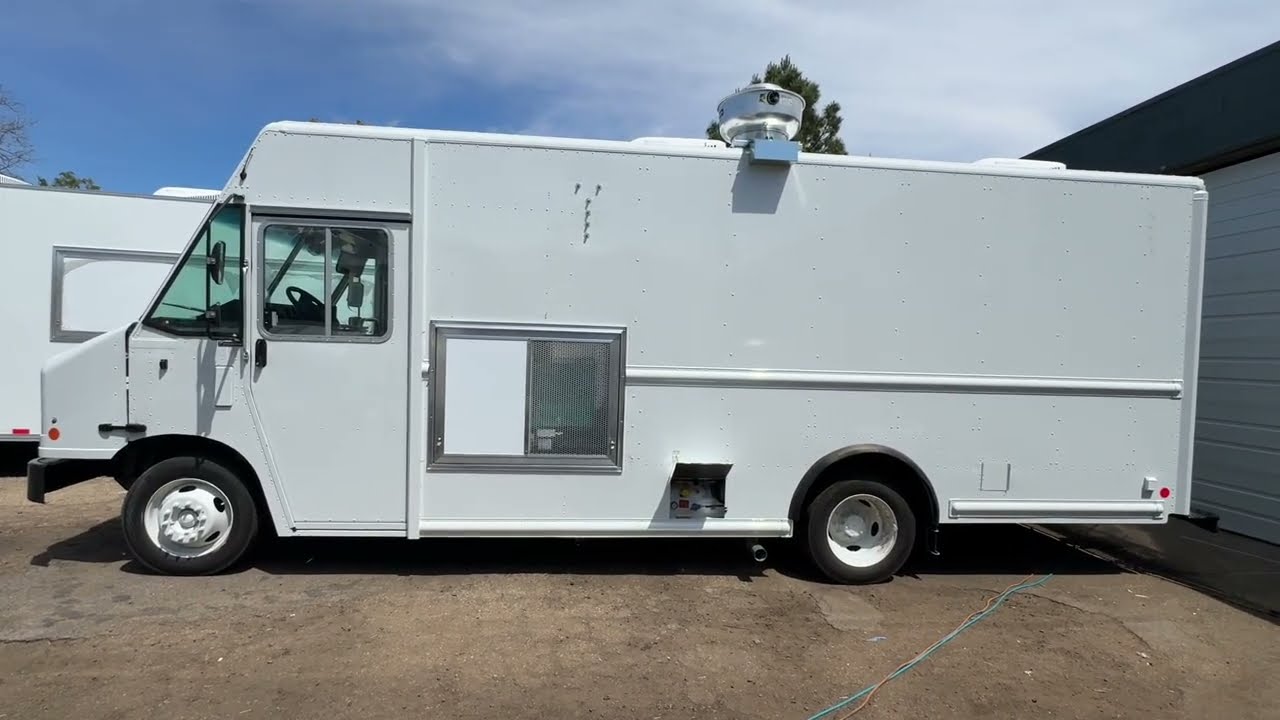
A lot of the best wedding venues in the Flathead Valley have one thing in common: no commercial kitchen. The barns, the ranches, the lakeside lodges near Glacier, they are gorgeous places to get married and difficult places to feed 150 people a hot plated dinner. That gap is exactly what this truck was built to fill. It is an 18ft wedding and event catering food truck we finished for an operator in Kalispell, Montana, and it is built to roll up to a ranch venue, set up in an hour, and put out a full catered menu with no kitchen on site.
Catering is a different job than street vending, and the build reflects that. Here is how we set this truck up to plate weddings and private events across a cold mountain climate, and why the Flathead Valley is one of the better markets in the country for a catering truck.
A cook line built to plate a full catered menu
The difference between a vending truck and a catering truck shows up in the cook line. This one carries a 36-inch griddle, a two-burner stove, and a 40-pound fryer, which together let the crew sear, saute, and fry at the same time for a multi-course menu. For holding, there is a four-pan steam table, so you can keep four hot entrees or sides at safe temperature and plate a seated dinner without anything going cold on the pass. That holding capacity is the whole game in catering, where the food gets cooked ahead and served all at once, not made to order one ticket at a time.
Cold storage is deep for the size: a 27-inch refrigerated chef base under the cooking equipment, a 48-inch refrigerated sandwich prep table, and a full-size standup refrigerator. A catering job means bringing everything with you, sometimes for a remote venue an hour from the nearest store, so the reach-in capacity has to carry the whole event. The shell is a stainless steel cooking wall with stainless on the other walls, an aluminum diamond plate floor, and LED lighting inside and out, with a 5-foot service window that has an awning door, self-closing doors, and a bug screen.
Air conditioning with heat, for a four-season catering business
The piece that makes this a true four-season catering truck is the air conditioner with heat. Northwest Montana runs a short, intense summer and a long, cold winter, and a catering operator who only works July and August is leaving most of the year on the table. With a climate unit that both cools and heats, the crew can work an indoor barn reception in the heat of a July afternoon and a shoulder-season event in October when the nights drop below freezing. Paired with cold-weather-rated plumbing, it lets the truck take bookings well outside the summer window that limits a lot of Montana food trucks.
Power comes from a 12kW Cummins generator, sized to run the refrigeration, the steam table, the climate unit, and the lighting together at a remote venue with no shore power. At Kalispell’s elevation of about 3,000 feet, the propane appliances and generator need only minimal altitude adjustment, unlike our high-country Colorado builds, so the equipment runs close to its rated output here.
Water, and how a catering truck passes inspection in Montana
The plumbing is a hand wash sink, a three-compartment sink for wares, and an 8-gallon water heater, fed by a 30-gallon fresh tank and draining to a 40-gallon grey tank, both mounted under the truck. For catering, water capacity matters because you are often parked somewhere without a hookup for the length of an event.
Montana licenses mobile food through the state Department of Public Health and Human Services, with the license administered locally by the Flathead City-County Health Department. A large mobile unit like this one, which does extensive prep and hot holding, runs a higher state license tier than a small prepackaged cart, and the current annual fee for a large mobile unit is in the 225 dollar range. The county requires a plan review before you open, and that approval is time-limited, so you schedule your licensing inspection before it lapses. A commissary is required, and a private residence does not count, so you need a commercial kitchen agreement for prep, water, and warewashing. If you want to work Kalispell’s city parks or city-hosted events, the city Parks and Recreation department issues a vending permit, currently 100 dollars annual or 25 dollars for a single event, plus proof of liability insurance. On the fire side, Montana has adopted the 2021 International Fire Code, and a truck with a griddle and fryer needs hood suppression, a Class K extinguisher for cooking oils, and a propane system to code. Confirm the current fees with the Flathead City-County Health Department at 406-751-8130 and the City of Kalispell before you file, since the local dollar amounts are set locally.
Why the Flathead Valley is a premier catering market
The Flathead Valley is one of the top destination-wedding regions in the Mountain West, and that is the heart of the opportunity for this truck. The wedding venues here read like a tour of northwest Montana: The Lodge at Whitefish Lake and Grouse Mountain Lodge in Whitefish, The Nest on Swan River in Bigfork, ranch and barn venues like Star Meadows Ranch and Triple B Ranch, and the Glacier-gateway venues around Columbia Falls and Coram. Many of them are working ranches and barns without a full commercial kitchen, which is precisely why a self-contained catering truck wins the booking. Peak wedding season runs June through September, tight to the short mountain summer, so the calendar is packed and the crew that can plate a clean dinner is in demand.
The tourism engine behind all of this is enormous. Glacier National Park drew roughly 3.14 million visitors in 2025, its third-busiest year on record, and that traffic feeds weddings, corporate retreats, and events across the valley. Beyond weddings, the event calendar gives a catering truck steady work: the Whitefish Arts Festival runs July 3 through 5 in 2026, Whitefish Huckleberry Days runs August 7 through 9, and the Northwest Montana Fair and Rodeo runs August 12 through 16 at the fairgrounds in Kalispell. Between destination weddings, festivals, corporate retreats near Whitefish Mountain Resort, and Flathead Lake summer events, there is enough high-value catering work here to keep a well-built truck booked through the season and, with the climate unit, into the shoulder months.
Full equipment list
- Stainless steel cooking wall, with stainless steel on the other interior walls
- Aluminum diamond plate floor
- LED lighting throughout the interior and exterior
- 36-inch griddle
- Two-burner stove
- 40-pound fryer
- 27-inch refrigerated chef base
- 48-inch refrigerated sandwich prep table
- Full-size standup refrigerator
- Four-pan steam table
- Hood suppression system with Class K and A/B/C extinguishers
- 5-foot service window with awning door, self-closing doors, and bug screen
- Hand wash sink and three-compartment sink
- 8-gallon water heater
- 30-gallon fresh water tank and 40-gallon grey water tank, mounted under the truck
- Air conditioner with heat
- 12kW Cummins generator
Walkthrough video
Frequently asked questions
What makes a food truck good for wedding catering?
Holding capacity and cold storage. A catering truck cooks ahead and serves all at once, so a four-pan steam table to hold hot entrees, deep refrigeration to carry a whole event, and a griddle, stove, and fryer to run a multi-course menu are what let it plate a seated dinner for 100 to 200 guests at a venue with no kitchen.
Why does this truck have an air conditioner with heat?
So it can cater year-round in a cold climate. Northwest Montana has a short summer and long winter, and a climate unit that both cools and heats lets the crew work a hot July barn reception and a freezing October event. With cold-weather plumbing, it extends the season well beyond the summer window that limits many Montana trucks.
Who licenses a food truck in Kalispell, Montana?
Montana licenses mobile food through the state Department of Public Health and Human Services, administered locally by the Flathead City-County Health Department, which also requires a plan review before you open and a commissary agreement. To work city parks or events, the City of Kalispell issues a separate vending permit.
Do you need a commissary for a catering truck in Montana?
Yes. Flathead City-County requires an approved commissary for prep, potable water, wastewater disposal, and warewashing, and a private residence does not qualify. You need a commercial kitchen agreement to get licensed.
Does altitude affect a food truck in Kalispell?
Barely. Kalispell sits at about 3,000 feet, so propane appliances and the generator need only minimal adjustment and run close to their rated output. That is a real contrast with our Colorado mountain builds, where 6,000-plus feet forces meaningful derating.
How long does Zion take to build a catering truck?
A custom build like this runs about six weeks in our shop, and we source the truck so you do not have to. We build for operators across Montana and the wider Mountain West and ship finished trucks to their home valley.
More resources before you build
- How to Start a Food Truck Business (2026 Guide)
- What Equipment Goes in a Food Truck
- Food Truck Business Plan
- How Much Money Can a Food Truck Make
- What Permits Do I Need (State by State)
If you are planning a catering truck, a wedding and events build, or any truck meant to work private events, we would be glad to talk it through. We source the truck, build it out, and get it road and inspection ready. Reach us at zionfoodtrucks.com or call 719-722-2537.
Jacob Varghese
Zion Foodtrucks
719-722-2537