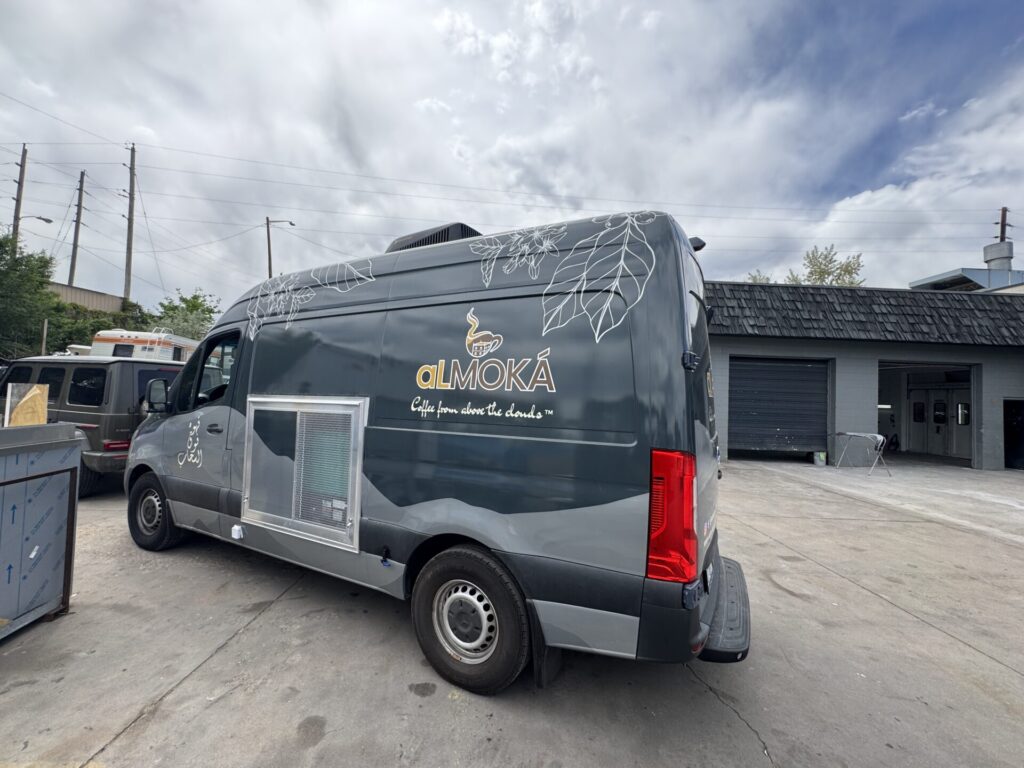
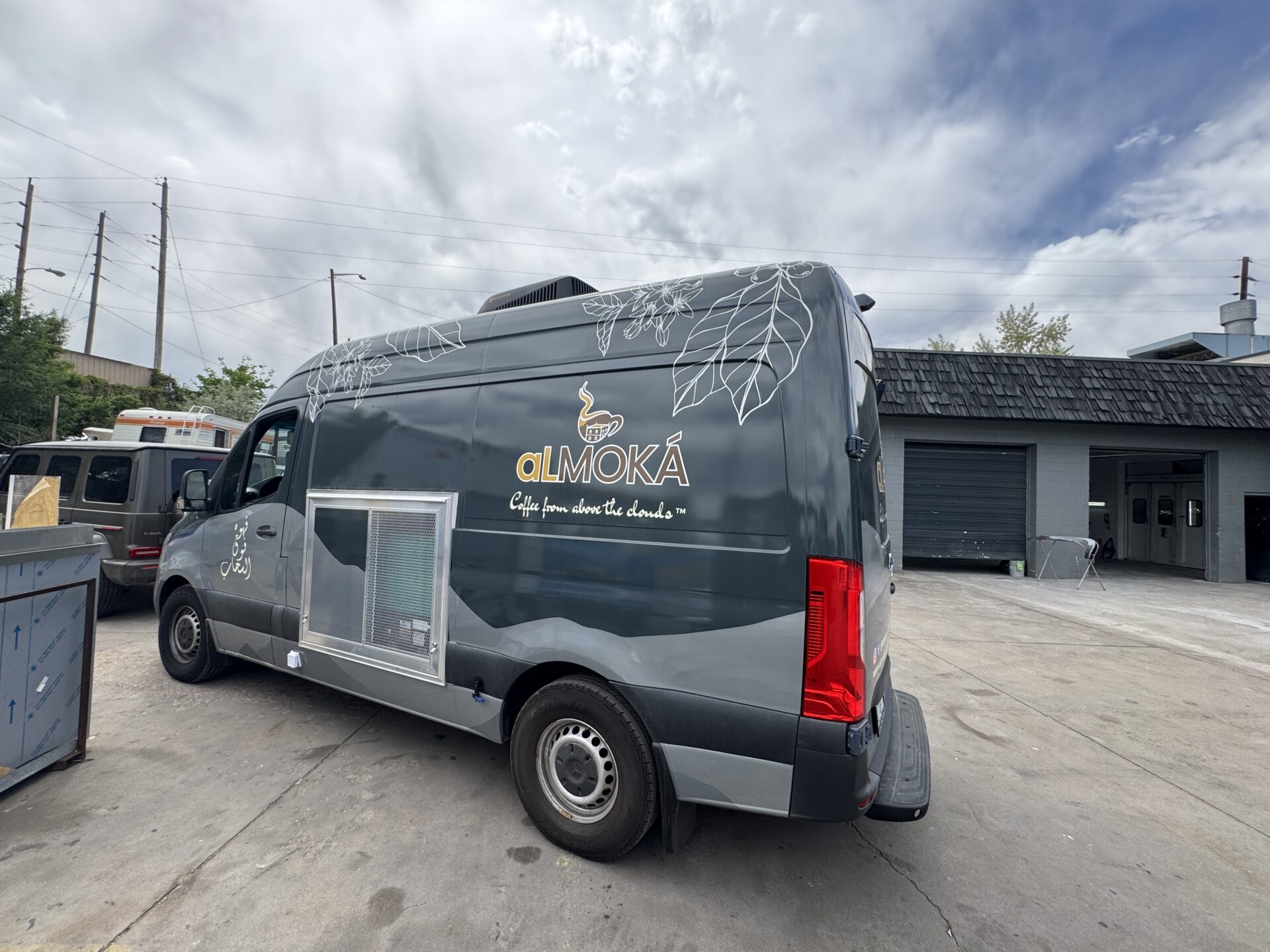
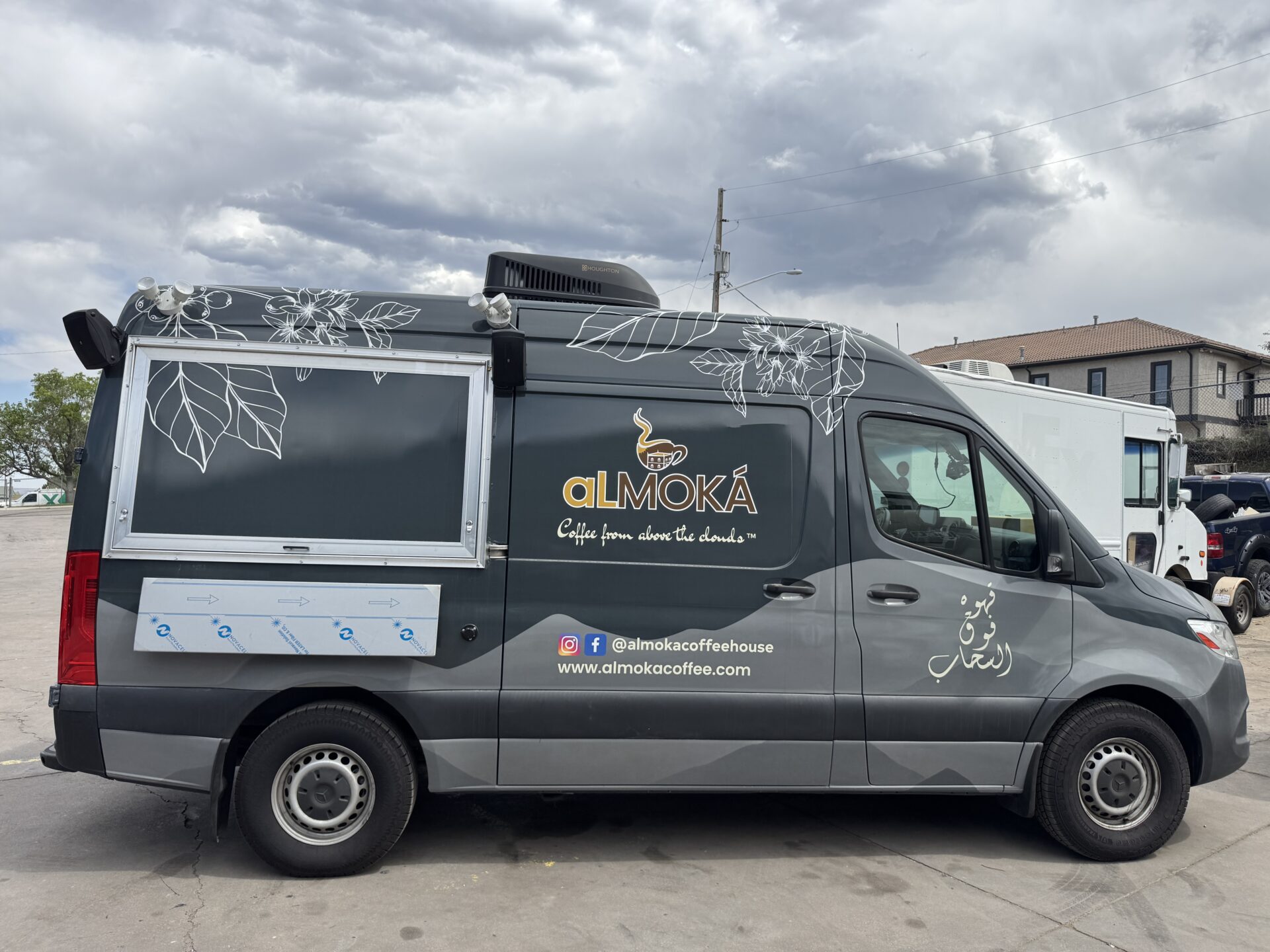
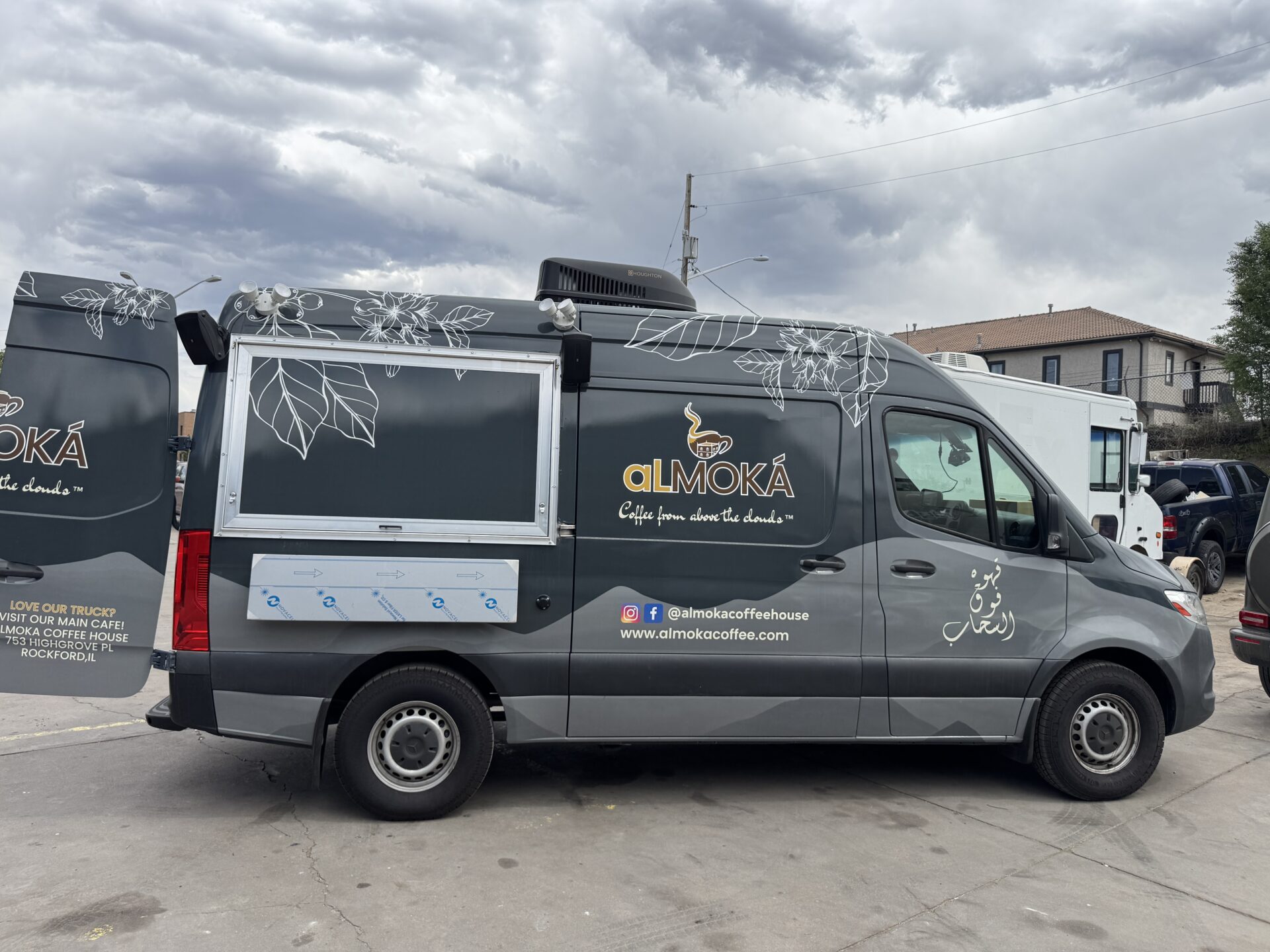
The first thing you notice about this build is the wrap. Dark charcoal grey base with white botanical line art curling across the side panels, a gold alMOKÁ logotype across the back doors with Arabic script set above it, and the tagline along the lower side: “Coffee from above the clouds.” It is the kind of design that gets photographed at every event the truck pulls up to, which is exactly the point. alMOKÁ Coffee runs a brick-and-mortar cafe at 757 14th Street in Rockford, Illinois, and the brand needed to travel.
This is a 10ft Mercedes Sprinter van conversion built to take that brand to brewery lots, farmers markets, weddings, and the Chicago metro lunch crowd. The chassis is a working van underneath all of that aesthetic. The buildout inside is a working coffee bar.
Why the Sprinter chassis works for a coffee build
Most of our trucks roll out on step van chassis. The Sprinter is a different animal. The roof is taller in the cargo area, the side step-in is lower, the driving experience is closer to a regular passenger vehicle, and the visual silhouette reads differently to customers. A Sprinter coffee van pulled up next to a brewery lot looks more like a cafe than a truck. That matters for a coffee brand where the aesthetics carry as much weight as the espresso.
The trade-off with a Sprinter is interior length. The usable cargo space on a long-wheelbase Sprinter runs about 10 feet front-to-back, less than a 14 or 18 foot step van. For a coffee build that is fine. The cooking line on a coffee operation is short by definition. The espresso machine, the water boiler, a small under-counter fridge with milk, a toaster oven for pastries, and the service window are the whole inventory. We fit all of that inside 10 feet with room for the operator to move.
The espresso bar layout
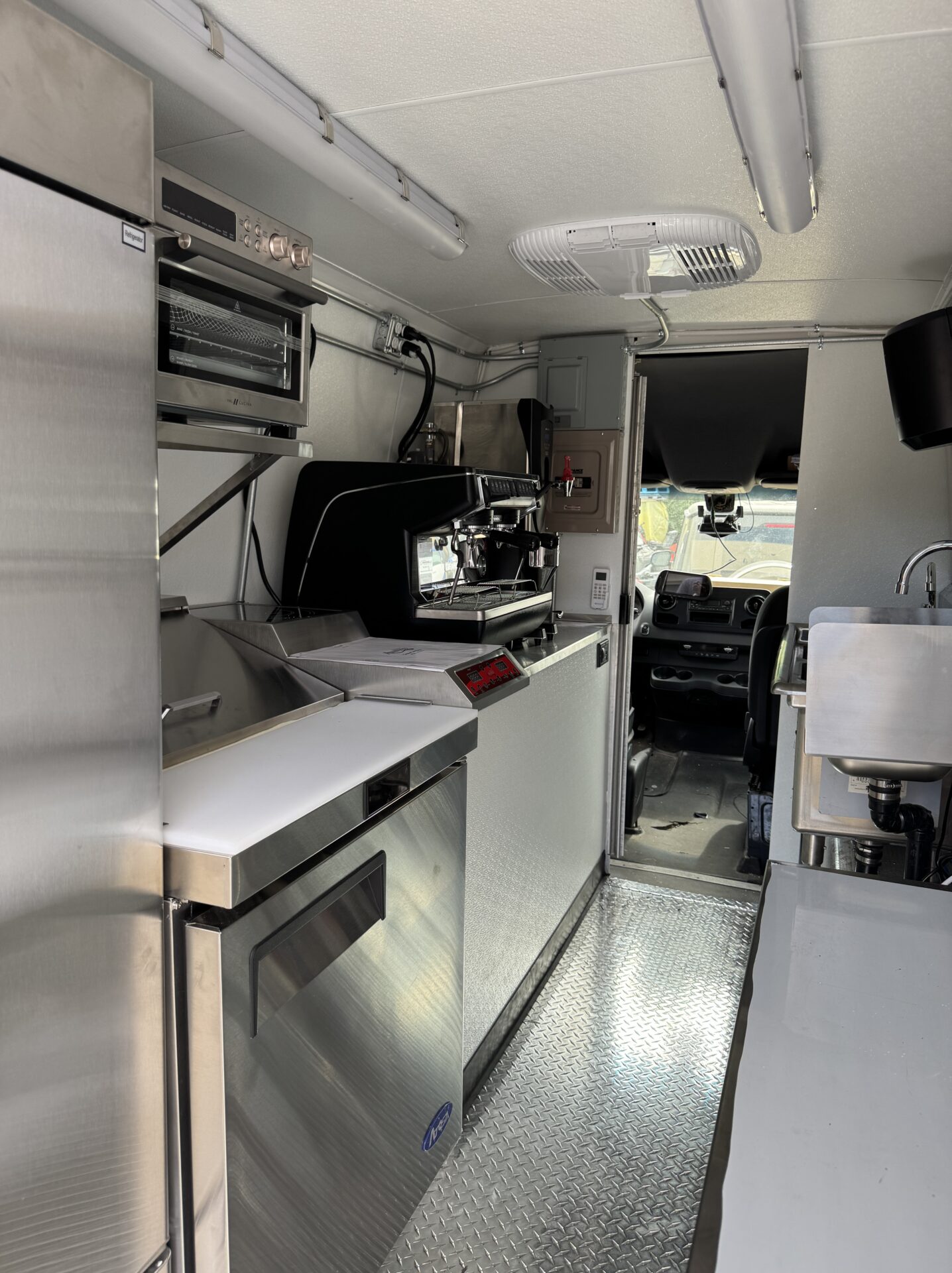
The cooking wall behind the espresso bar is stainless steel. That is the section that sees milk splash, espresso splatter, and steam wand condensation. Stainless wipes clean and resists rust where moisture meets metal. The rest of the cabin walls are FRP panels, which gives the cleaner aesthetic alMOKÁ wanted while staying inside health code on the non-splash zones. Floor is aluminum diamond plate throughout, the same standard we put in every truck.
The espresso machine is the heart of the operation. A commercial multi-group machine with a steam wand on each side handles double-shot pulls and milk steaming concurrently. The water boiler next to it serves the tea, the Americanos, and any pour-over requests faster than waiting for the espresso machine’s hot water tap. Two hot water sources mean a barista can pull a shot, steam milk, and pour Americanos without bottlenecking on a single dispenser.
The standup full-size refrigerator holds milk in commercial quantities, plus prepared cold drinks, oat milk and alternative milks, and any grab-and-go items the operator wants stocked. The toaster oven is for pastries: a quick warm-up on a croissant or muffin coming out the window with a coffee. Together that is the entire kitchen, and it fits in roughly a third of the cabin length.
Service window placement
The 5ft service window is on the curbside, sized so a customer can see the barista pull the shot. That visibility is part of the brand. Coffee customers like watching the process. The window has a flip-up awning door that doubles as overhead cover, self-closing inset doors below the awning, and a bug screen for warm-weather service when the truck is parked in a lot for hours.
The layout inside puts the espresso machine directly at the window, with the water boiler and pastry oven within arm’s reach. One barista can take the order, build the drink, and hand it out without ever crossing the cabin. Two baristas can run the same setup with one on the bar and one on order intake and payment for higher-volume events.
The Chicago and northern Illinois market
alMOKÁ is based in Rockford, about 90 miles northwest of downtown Chicago. The territory the truck will work covers Rockford itself, the suburbs along I-90 (Belvidere, Crystal Lake, Algonquin), Schaumburg and the northwest suburbs, and the city of Chicago for special events and brewery pairings. The northern Illinois coffee scene leans specialty, with strong consumer demand for pour-over, single-origin espresso, and Yemeni and Ethiopian-origin coffees that match alMOKÁ’s wheelhouse.
Operating a food truck in Chicago specifically requires a Mobile Food Vehicle license through the city’s Department of Business Affairs and Consumer Protection. The licensing process and the city’s famous 200-foot rule (no parking within 200 feet of a brick and mortar restaurant) are covered in detail on our Chicago food truck permits and market guide.
Plumbing, power, and the standard build
The plumbing is built to pass health inspection on the first walk-through. Hand wash sink with soap and paper towel dispensers at the espresso bar, a three compartment sink for cleaning portafilters, steam pitchers, and small wares, and an 8 gallon water heater feeding both. Fresh water tank is 30 gallons mounted under the chassis; grey water tank is 40 gallons also undermount. Both are sized for a full day of espresso service with a margin for cleaning cycles.
Power on this build is a 12 kW Cummins generator. That is more capacity than a coffee-only build strictly needs (espresso machines pull around 4 to 5 kW under steam, the refrigerator and toaster oven add another 1 to 2 kW), but the Cummins headroom means the operator can run the truck for a long event without thermal throttling, plus it leaves room for adding a second espresso machine or a small fryer in a future build phase. Our generator size guide covers the math for builds like this.
LED lighting runs through the cabin and along the exterior, including under the awning so the service area stays bright for evening events.
Full equipment list
- Mercedes Sprinter van chassis (long wheelbase)
- Stainless steel cooking wall behind the espresso bar
- FRP wall panels throughout the rest of the cabin
- Aluminum diamond plate floor
- LED lighting through the cabin and along the exterior
- Commercial espresso machine
- Water boiler for tea and Americanos
- Standup full-size refrigerator
- Toaster oven for pastries
- 5 foot service window with awning door, self-closing inset doors, and bug screen
- Hand wash sink with soap and paper towel dispensers
- Three compartment sink
- 8 gallon water heater
- 30 gallon fresh water tank, undermount
- 40 gallon grey water tank, undermount
- 12 kW Cummins generator
- Custom dark grey wrap with white botanical art and gold alMOKÁ branding
Walk-in tour
Visit alMOKÁ
If you are in northern Illinois and want to try the coffee that built this truck, visit the brick-and-mortar at 757 14th Street in Rockford or follow almokacoffee.com and @almokacoffeehouse for the truck schedule.
More recent builds
Other recent trucks worth a look. The 14ft shuttle bus to coffee truck conversion for Estes Park is a different chassis approach to a similar coffee menu. The 12ft all-electric BrightDrop for Crumbl Cookie in Salt Lake City is another van-style chassis build. The 18ft Native American food truck for Wichita is on the opposite end of the menu spectrum, a full hot cooking line.
If you are doing the math on a coffee operation specifically, our how much does a coffee truck cost in 2026 guide walks through the unit economics. For first-time owners, the 2026 guide to starting a food truck business covers the financial basics.
Frequently asked questions
Why a Sprinter chassis instead of a step van for a coffee build?
The Sprinter reads more like a cafe than a truck when it pulls up to a brewery lot or a farmers market, which matters for a coffee brand. The roof is taller in the cargo area than most step vans, the side step-in is lower, and the driving experience is closer to a regular passenger vehicle. The trade-off is interior length, but for a coffee build that does not need a long cooking line, 10 feet is plenty.
Can a 10ft cabin really fit a full espresso bar?
Yes. Coffee operations have a short cooking line by definition: the espresso machine, the water boiler, a small under-counter fridge with milk, and a toaster oven for pastries. All of that fits inside 10 feet with room for the operator to move. The service window placement puts the espresso machine within arm reach of the customer.
What is the right generator for a commercial espresso machine?
12 kW is comfortable headroom for a coffee build. Espresso machines pull around 4 to 5 kW under heavy steaming load, the refrigerator and toaster oven add another 1 to 2 kW, and the rest is lights, water heater, and inverter headroom. A smaller 7 to 9 kW unit can work for a single-group machine setup, but most operators prefer the headroom.
How does a coffee van pass health inspection?
Same checklist as any food truck: three compartment sink and hand wash sink with sufficient hot water, sealed and washable wall surfaces, aluminum diamond plate floor, NSF-listed cooking equipment, and proper hood ventilation over any cooking equipment. Coffee builds usually fly through inspection because the equipment list is smaller and the food safety risks are lower than a hot food build.
Can the truck operate in downtown Chicago?
Yes, with the right BACP license and an awareness of the 200-foot rule. Most Chicago coffee operators run a rotation through the city Designated Food Truck Stands during the week plus brewery and event service on weekends. Private property gigs are exempt from the 200-foot rule and form the backbone of most Chicago-area food truck schedules.
Ready to build yours?
We build food trucks, trailers, and van conversions out of Woodland Park, Colorado for operators across the Mountain West, the southern plains, the Midwest, and beyond. If you have a coffee concept or any other menu in mind and need a truck designed around it, call 719-722-2537 or head to our contact page to start the conversation.