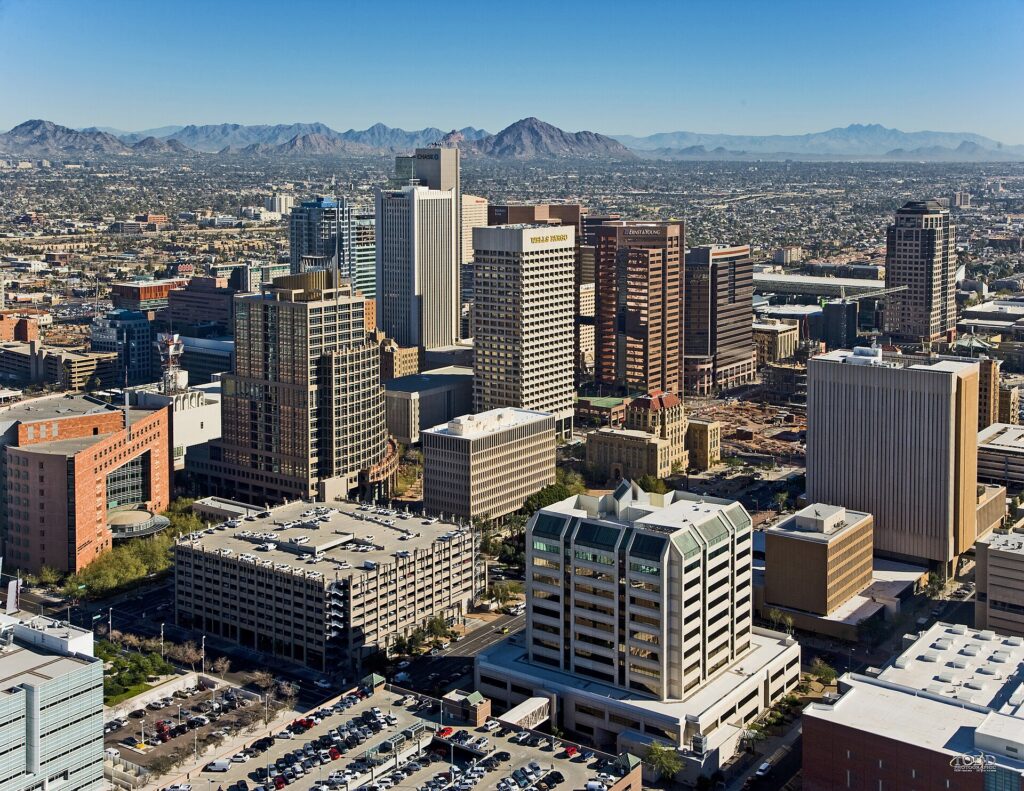
Cheyenne is a different food truck market than almost anywhere else in Wyoming. The population is small (about 65,000 in the city) but it’s the state capital, it sits a five minute drive from F.E. Warren Air Force Base (one of three Minuteman III missile bases in the country), and for ten days every July the city’s population effectively triples for Cheyenne Frontier Days. State employees, military and contractor catering, and a steady summer event calendar make Cheyenne a quietly profitable market for operators who get the licensing right the first time. The licensing piece is where most operators stumble, because Cheyenne is one of the six Wyoming jurisdictions that runs its own local health program through the Cheyenne-Laramie County Public Health Department.
This guide walks the full Cheyenne licensing stack: the city business license through the City Clerk, the mobile food unit permit through Cheyenne-Laramie County Public Health (CLCPH), the fire marshal inspection, and the state level pieces (sales tax, business entity, food handler) that you’ll layer on top. We’re Zion Foodtrucks. We build mobile units in Woodland Park, Colorado, about two hours south of Cheyenne, and we’ve delivered to operators feeding F.E. Warren and other Cheyenne accounts. We know which boxes the CLCPH environmental health office checks first and which ones get used to reject a plan review.
How Cheyenne and Laramie County Food Truck Permits Actually Work
Cheyenne sits inside Laramie County. Both are served by Cheyenne-Laramie County Public Health (CLCPH), one of only six local health departments in Wyoming. That means food licensing here doesn’t go through the Wyoming Department of Agriculture – it goes directly through CLCPH. The Environmental Health office at 100 Central Avenue, Suite 261 handles plan review, mobile food unit permits, inspections, and complaints.
The City of Cheyenne layers a separate business license requirement on top of the health permit, regulated by Chapter 8.40 of the Cheyenne Municipal Code (which the City Council updated in 2023 to formally cover mobile food trucks and mobile food units). The City Clerk’s office in Room 101 of the Municipal Building at 2101 O’Neil Avenue handles those applications, primarily through their online portal at cheyennewy.viewpointcloud.com.
Fire safety inspection is its own track, run by the Cheyenne Fire and Rescue Department fire marshal’s office. The fire side references the 2021 International Fire Code, NFPA 96 for hood and grease ducts, and NFPA 58 for propane. CLCPH won’t issue a permit until the fire marshal has signed off, and the city won’t issue the business license until the health permit is in hand. So sequencing matters.
Permits and Licenses Required to Operate a Food Truck in Cheyenne
- Wyoming business entity (LLC or corporation). File with the Wyoming Secretary of State at sos.wyo.gov. About $102 for online LLC filing, $60 minimum annual report.
- Wyoming sales/use tax license. Free, applied for through the Wyoming Internet Filing System at excise-wyifs.wy.gov or by calling Wyoming Department of Revenue at (307) 777-5200. Cheyenne’s combined sales tax rate is currently 6 percent (4 percent state, 2 percent Laramie County).
- Cheyenne-Laramie County Public Health Mobile Food Unit Permit. Apply through the Environmental Health office at 100 Central Avenue, Suite 261, Cheyenne. Initial license fee is $200 with a $100 annual renewal. Plan review is required for any unit that hasn’t been licensed by CLCPH before.
- City of Cheyenne Mobile Food Vendor Business License. Apply through the City Clerk at cheyennewy.viewpointcloud.com. The mobile food vendor license fee is $75 per year.
- Cheyenne Fire and Rescue Inspection. Pre-permit fire inspection covering hood and Ansul, propane, electrical, egress, extinguishers. No fee in most cases for the standard inspection. Schedule by calling Cheyenne Fire and Rescue at (307) 637-6311.
- Commissary letter. CLCPH requires a commissary agreement on the licensed commercial kitchen’s letterhead, including their food license number.
- Food Protection Manager certification. ANSI accredited (ServSafe Manager, Prometric, or 360training). Required for the person in charge during operating hours.
- Food handler cards. Recommended for all employees. CLCPH expects food handlers to demonstrate knowledge during inspection.
- Commercial general liability and auto insurance. Required for vending on city property and for most events including Frontier Days vendor space.
- Annual propane system inspection. NFPA 58 inspection by a registered LP-gas inspection agency.
Estimated First-Year Cheyenne Food Truck Costs
- Wyoming LLC formation and first year report: $162
- CLCPH initial mobile food unit permit: $200
- Plan review (built into initial permit): $0 separate fee in most cases
- City of Cheyenne mobile food vendor license: $75
- Cheyenne Fire and Rescue inspection: $0 standard inspection
- Sales/use tax license: $0
- ServSafe Food Protection Manager certification: $125
- Food handler cards (3 employees): $30
- Commissary kitchen rental (annual estimate): $1,800 to $4,800
- General liability insurance: $700 to $1,400
- Commercial auto insurance: $1,300 to $2,400
- UL 300 fire suppression semi-annual inspection: $200 to $400
- Annual propane system inspection: $150 to $250
- Hood and duct cleaning (quarterly recommended for high volume): $600 to $1,200
Total Cheyenne first-year compliance costs land in the $5,400 to $11,400 range, not counting the truck itself. The Frontier Days vendor space is its own line item if you book through the CFD concessionaire (typically several thousand dollars for the ten day run, depending on your spot).
Fire Safety Inspection: What Cheyenne Fire and Rescue Looks For
Cheyenne enforces the 2021 International Fire Code with NFPA 96 and NFPA 58 incorporated. The fire marshal’s pre-permit inspection of a mobile food unit takes about 30 to 45 minutes if everything is right. It takes a lot longer if it isn’t. Here’s what they actually check:
- Hood system. Type I hood meeting NFPA 96 construction standards over all grease producing equipment. Hood must extend 6 inches beyond cooking surface on all open sides. Captive air, properly sized exhaust fan with grease cup, and listed grease filters.
- Wet chemical fire suppression. UL 300 listed system (Ansul R-102, Pyro-Chem PCL-300, or Range Guard). Discharge nozzles aimed at the cooking surfaces and the plenum. Must be tagged within the last six months.
- Manual pull station. Located in the path of egress, between the cookline and the door. Operates the suppression system and shuts down both gas and electric to the cooking equipment.
- Mechanical gas shutoff. Tied to the suppression system – when the system discharges, gas to all cooking equipment must drop automatically.
- K-Class fire extinguisher. Mounted within 30 feet travel distance of the cookline, accessible without crossing the cookline. Tagged within the last 12 months.
- 2A:10B:C extinguisher. Additional general purpose extinguisher mounted near the truck’s primary exit.
- Propane installation. Cylinders stored upright, secured against tipping and theft, in a vented compartment at the rear of the truck or trailer. Maximum 200 lb aggregate. NFPA 58 compliant fittings, regulators with overpressure protection, and excess flow valves at the cylinder.
- LP-gas alarm. Listed alarm installed in the vicinity of the gas system, audible from the operator station.
- CO detector. If you run a generator, a UL 2034 listed CO alarm is expected inside the unit.
- Electrical. Service panel with proper labeling, GFCI protection on all 120V outlets, no extension cords as permanent wiring.
- Egress. Service window with positive latching, primary entry/exit door, and clear path to both at all times.
See a Zion Food Truck Fire Suppression System in Action
Recent Cheyenne Build
We built this 16ft food truck for Sodexo, the global facilities and catering services company, for deployment at F.E. Warren Air Force Base in Cheyenne. Sodexo runs catering for thousands of bases, hospitals, and corporate campuses, and they came to us specifically for the engineering quality and code compliance we ship.
Cheyenne-Laramie County Public Health Inspection
The CLCPH environmental health inspector handles the food side. Wyoming follows the FDA Food Code framework, and CLCPH inspections are essentially identical to what you’d see in any FDA-modeled jurisdiction. Specific items they always check:
- Handwash sink. Dedicated, supplied with hot water at minimum 100°F, soap, single-use towels. Cannot share plumbing with food prep or warewashing.
- Three compartment sink. For warewashing. Compartments large enough to fully submerge your largest piece of equipment, with drainboards on both sides.
- Fresh and waste water capacity. Wastewater tank at least 15 percent larger than fresh water tank. Both clearly labeled and accessible for service.
- Refrigeration. All TCS food held at 41°F or below. Calibrated probe thermometer required.
- Cooking and reheating temperatures. 165°F poultry, 155°F ground meats, 145°F whole muscle proteins, 145°F seafood, 165°F reheating.
- Date marking. Anything refrigerated more than 24 hours marked with a discard date no more than 7 days out.
- Commissary log. Daily log showing where you fill water, dump grey water, and store/prep food. CLCPH will ask to see it.
- Person in charge demonstration of knowledge. The inspector will ask the operator on duty about reportable illnesses, allergens, and TCS food handling.
- Cross-contamination controls. Color coded cutting boards or scheduled separation, raw to cooked separation in storage and prep.
- Pest exclusion. Window screens, no gaps in service window or door seals.
CLCPH inspects mobile food units annually at minimum, with reinspections within 10 to 30 days when violations are noted. Cheyenne-Laramie County Board of Health raised inspection fees in 2018 to better fund the environmental health program; the structure has been broadly stable since then. Specific re-inspection fees apply when a follow up visit is required to clear a violation.
The Commissary Kitchen Requirement in Cheyenne
One quirk of CLCPH’s permit policy: their language states that mobile units must contain all required equipment and cannot be commissary-dependent for prep. In practice, what this means is that your truck has to be capable of all required hot holding, cold holding, and warewashing on board, and the commissary functions as a base of operations for water filling, waste dumping, deep cleaning, and overnight food storage. The commissary letter is still required, and CLCPH does verify with the commissary operator.
Commissary options in Cheyenne are limited but workable. Several commissaries exist along the Lincolnway corridor and on Yellowstone Road. Restaurant kitchens that lease off-hours capacity are the most common arrangement – typically $200 to $500 a month for a few hours of access, water/waste service, and walk-in cooler space. Church kitchens can technically work but they need to be separately licensed by CLCPH as a food service facility, which most are not. Don’t try to commissary out of a home; CLCPH will catch it and revoke the permit.
Wyoming State Considerations for Cheyenne Operators
Cheyenne is the state capital, which means a couple of state regulators sit a few blocks from each other. Wyoming Department of Agriculture Consumer Health Services is at 6607 Campstool Road. They don’t issue your license here (CLCPH does), but their food code interpretations and statewide guidance still apply. Wyoming Department of Revenue at 122 W. 25th Street handles your sales tax registration, and the Secretary of State’s business filings office is at the Capitol Building on West 24th Street. If you have a question that crosses jurisdictions, you can usually get it answered by walking between offices in less than an hour.
Wyoming has no state income tax, which is a meaningful operating advantage if you’re moving from Colorado or Utah. Cheyenne’s combined sales tax rate of 6 percent applies to all prepared food sales. There’s no separate restaurant tax or food and beverage tax in Cheyenne, unlike some Colorado cities. Sales tax is remitted to the Wyoming Department of Revenue, not the city or county.
F.E. Warren Air Force Base sits on the western edge of Cheyenne. Operating on the base itself requires base contractor agreements (Sodexo holds the primary food services contract for many functions there), but feeding contractor and family events at the off-base contractor compounds and at the dependent housing areas just outside the gate is a steady source of business for Cheyenne operators.
Step-by-Step: How to Get Your Cheyenne Food Truck Licensed
- Form your Wyoming LLC. Online filing at sos.wyo.gov, about $102. Get an EIN from the IRS.
- Register for sales tax. Wyoming Internet Filing System, no fee. Allow about 10 business days.
- Call Cheyenne-Laramie County Public Health environmental health. (307) 633-4090. Ask for a plan review packet for a mobile food unit. They’ll send you the requirements.
- Submit the plan review. Floor plan, equipment list with NSF certifications, water and waste tank capacities, electrical and plumbing schematics, finish schedule, menu, food flow narrative, and your commissary letter.
- Build or buy your truck to spec. If you’re working with us at Zion, the plan review packet ships with the unit and is sized to clear CLCPH on the first review.
- Schedule the fire marshal inspection. Cheyenne Fire and Rescue at (307) 637-6311. Truck must be set up like you’re operating – propane connected, generator running, suppression system charged.
- Schedule the CLCPH final inspection. After fire approval. Truck must be at the inspection location with water filled, equipment running, and the operator on hand to demonstrate knowledge.
- Pay the CLCPH license fee. $200 initial, $100 annual.
- Apply for the City of Cheyenne mobile food vendor business license. cheyennewy.viewpointcloud.com. $75 per year. Requires the CLCPH permit number on the application.
- Display your licenses. CLCPH permit, Cheyenne business license, suppression tag, and propane inspection certificate visible inside the truck.
Common Reasons Food Trucks Fail Cheyenne Inspections
- Plan review submitted without a commissary letter. CLCPH won’t accept the plan review without it. The letter must be on the commissary’s letterhead with their license number.
- Wastewater tank undersized. 15 percent rule. We’ve seen plan reviews come back with this flagged on the second day.
- Hood doesn’t extend 6 inches beyond the cooking surface. The fire marshal will reject the install if the hood overhang is short.
- Suppression tag past six months. Easy to forget. Get on a calendar with your suppression contractor.
- K-Class extinguisher mounted behind the cookline. Has to be accessible without crossing fire.
- Generator exhaust dumping into the customer queue area. Not directly cited in the food code, but the fire marshal flags it under general safety.
- Operating without the city business license. CLCPH license alone isn’t enough. The city ordinance requires the separate vendor license. Code enforcement does run sweeps during Frontier Days.
- Operating in downtown 2-hour parking spots without a CLCPH permit. Cheyenne has a specific provision allowing permitted mobile food trucks to exceed the signed 2-hour limit, but only with the CLCPH permit visible.
Cheyenne-Specific Operating Context: Where to Park, When to Be There
Cheyenne’s market is event and shift driven. The big calendar items every operator should plan around:
- Cheyenne Frontier Days. July 17-26 in 2026. The 130th annual run. Frontier Park sees over 200,000 visitors over ten days. Vendor space inside the park is booked through the CFD Food Concessionaire process – applications open in fall 2025 and close by spring. Outside the park, Lions Park and the downtown core see steady food truck demand for the entire run. Hotels and Airbnbs sell out city wide.
- State legislative session. Mid-January through early March. State employees and lobbyists pack downtown. Lunch service near the Capitol Building on West 24th and the Herschler Building does well.
- F.E. Warren AFB events. Family days, retirement ceremonies, contractor BBQs. Most are catered by base contractors but overflow demand for off-base events (especially in the Camp Stool Road and Yellowstone Road areas) is steady.
- Cheyenne LCCC events. Laramie County Community College on College Drive runs steady event traffic, especially in fall and spring.
- Capitol Square events. The Capitol Square area off Carey Avenue runs lunchtime food truck rotations during the warm months, organized through the City of Cheyenne and downtown business association.
- Holiday City breweries. Cheyenne has a small but active brewery scene including Black Tooth Brewing, Accomplice Beer, and others. Brewery patios in the warm months are reliable food truck nights.
- Superday at Lions Park. June community festival.
- Wyoming Brewers Festival. Cheyenne Depot Plaza in summer.
Cheyenne Food Truck FAQ
Can I operate a food truck at Cheyenne Frontier Days without going through CFD?
Inside Frontier Park during the festival you have to be booked through the CFD Food Concessionaire. CFD runs a closed concession process. Outside the park, downtown and the surrounding area is open market with the CLCPH permit and Cheyenne business license. Many operators who don’t get into the park book brewery, parking lot, and private property locations during the run.
How do I park downtown without getting a parking ticket?
Cheyenne’s downtown core has 2-hour signed parking on most blocks. Chapter 8.40 of the city code allows a permitted mobile food unit to remain parked in a single space within downtown beyond the 2-hour limit, but you have to display the city mobile food vendor license. Without it, parking enforcement will ticket you.
Do I need separate permits for Lions Park or the Cheyenne Civic Center?
City parks operate under the Cheyenne Parks and Recreation department. For city park events you need either a special event permit (if it’s your event) or to be booked through the event organizer. The CLCPH and city business licenses cover the food and vendor side; the park use is its own permission.
Is Wyoming food handler training required for every employee?
Wyoming state law doesn’t mandate a specific food handler card for every employee, but it does require demonstration of knowledge from anyone working with food. CLCPH inspectors will ask employees questions during inspection, and a food handler card is the easiest way to show you’ve trained your team. We recommend everyone on the truck have a current ANSI accredited food handler certificate.
How much does it cost to operate at F.E. Warren Air Force Base?
Operating on base requires either a contractor relationship with Sodexo (or whichever base food services contractor holds the relevant slot) or a specific event permit through the base’s morale, welfare, and recreation office. Off-base events catering F.E. Warren personnel don’t require any base permission. The trucks we’ve delivered to Cheyenne for Sodexo-affiliated operators are running off-base and on-base events depending on the booking.
Can I operate year round in Cheyenne?
You can. Cheyenne winters are cold (single digits and high winds in January are normal) but trucks running propane heat in the customer area and properly insulated water and waste lines work through it. December has Christmas market events, the Capitol holiday lighting, and corporate party catering. January and February slow down, March picks back up. Most Cheyenne operators run a 10-month season with December as the soft floor.
What’s the freeze depth I should worry about for water lines?
Cheyenne’s design freeze depth is around 36 inches, which doesn’t matter for your truck since your water lines aren’t underground. What does matter is heat trace and insulation on exterior plumbing runs. We build our cold weather Wyoming trucks with self-regulating heat trace on water and waste lines and a heated water bay. Operators who skip that pay for it the first time the temperature drops below 10°F overnight.
Cheyenne Food Truck Official Resources and Contacts
- Cheyenne-Laramie County Public Health, Environmental Health: 100 Central Avenue, Suite 261, Cheyenne, WY 82007 – (307) 633-4090 – clcpublichealth.org
- City of Cheyenne, City Clerk: 2101 O’Neil Avenue, Room 101, Cheyenne, WY 82001 – (307) 638-4310 – cheyennecity.org
- City of Cheyenne business license portal: cheyennewy.viewpointcloud.com
- Cheyenne Fire and Rescue: (307) 637-6311
- Wyoming Department of Revenue, Excise Tax Division: 122 W. 25th Street, Herschler Building, Cheyenne, WY 82002 – (307) 777-5200
- Wyoming Department of Agriculture, Consumer Health Services: 6607 Campstool Road, Cheyenne, WY 82002 – (307) 777-7211
- Wyoming Secretary of State (business filings): Capitol Building, 200 W. 24th Street, Cheyenne, WY 82002 – (307) 777-7311
- Cheyenne Frontier Days Office (vendor relations): 4610 N. Carey Avenue, Cheyenne, WY 82001 – cfdrodeo.com
- Visit Cheyenne (event calendar): cheyenne.org/events
How Zion Foodtrucks Helps Cheyenne Operators
We’re based in Woodland Park, Colorado, about a two hour drive from Cheyenne. We’ve built and delivered food trucks to operators serving F.E. Warren Air Force Base through Sodexo, the global facilities and catering services contractor. Sodexo runs catering for thousands of military bases, hospitals, and corporate campuses, and they came to us specifically because we ship trucks that pass health and fire inspection on the first walkthrough. Every Cheyenne unit we deliver includes a CLCPH-ready plan review packet, NSF certifications on every food contact surface, UL 300 listed wet chemical suppression with installation paperwork, and an NFPA 58 compliant propane install with the inspection certificate already in hand.
If you’re starting a Cheyenne truck and want a unit that clears CLCPH and Cheyenne Fire and Rescue cleanly, call us at (719) 722-2537 or email info@milehighfoodtrucks.com. We can have a quote, a plan review packet outline, and a delivery timeline put together inside a single phone call. We deliver to Cheyenne directly. We can also handle warranty service runs north when needed.
Related Wyoming Food Truck Guides
- Food Truck Permits in Wyoming: Complete 2026 Guide
- Food Truck Inspection Requirements in Casper, WY: The 2026 Natrona County Guide
- Food Truck Inspection Requirements in Laramie, WY: The 2026 Albany County Guide
- Food Truck Inspection Requirements in Gillette, WY: The 2026 Campbell County Guide
- Food Truck Inspection Requirements in Rock Springs, WY: The 2026 Sweetwater County Guide
- Food Truck Inspection Requirements in Sheridan, WY: The 2026 Sheridan County Guide
- Food Truck Inspection Requirements in Jackson, WY: The 2026 Teton County Guide
- Colorado HB 25-1295 Explained: What the New Food Truck Reciprocity Law Means
Ready to build your truck?
We design and build custom food trucks and trailers compliant with the regulations on this page. From a single phone call to keys-in-hand in 6 to 8 weeks for most builds.
Built in Woodland Park, Colorado. Delivered to operators in CO, AZ, NE, MT, and WY.
