A 9-pan dough proofer is the kind of equipment you find in a bakery, not a food truck. This 14ft Korean food truck headed for Castle Rock, Colorado needed one. The whole menu is built around hotteok, the Korean street-food sweet pancake that runs on a yeasted dough. Pull a batch from the proofer at exact temperature and time, drop the dough disks on the 48 inch griddle, fill each one with brown sugar and cinnamon mix, finish the crust, plate, and hand out the window. Everything else on the truck flows from that single decision to put a proofer on board.
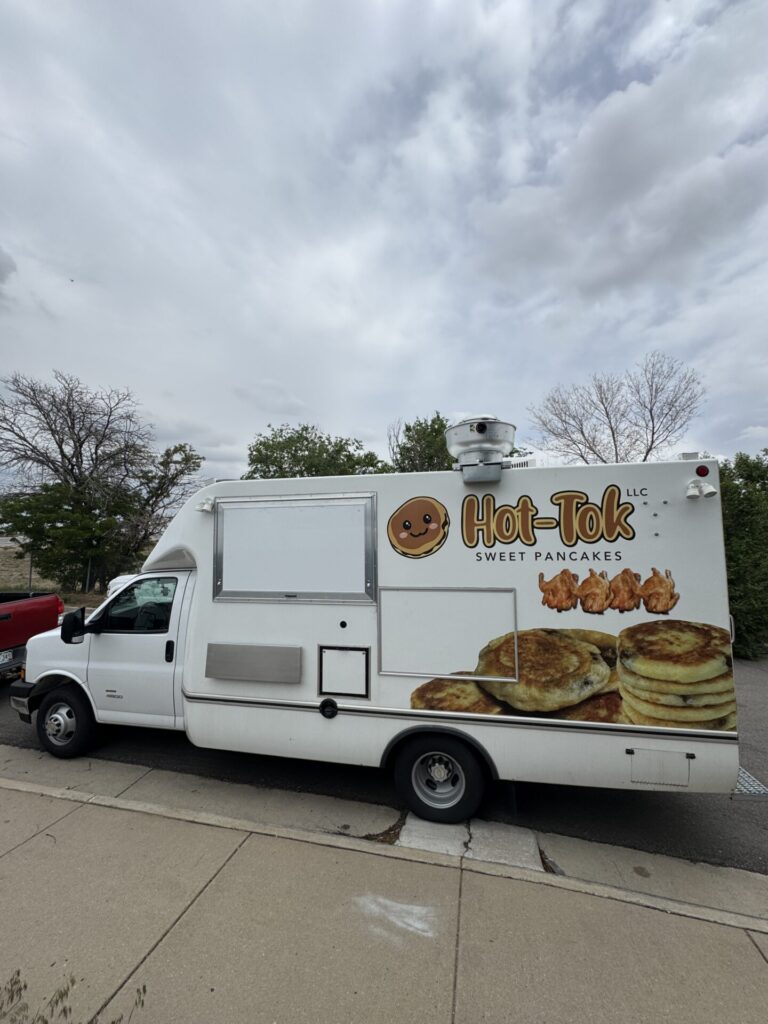
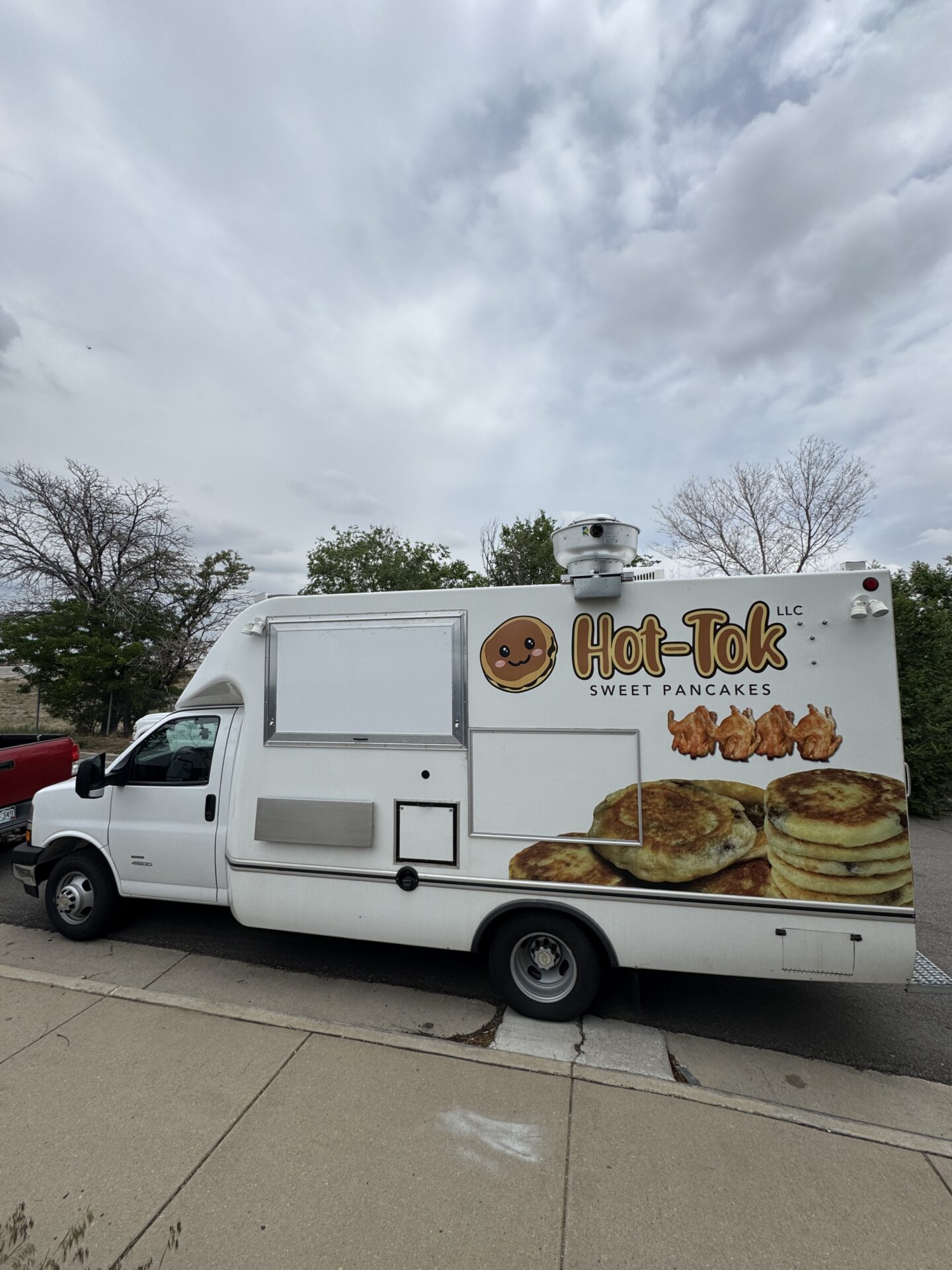
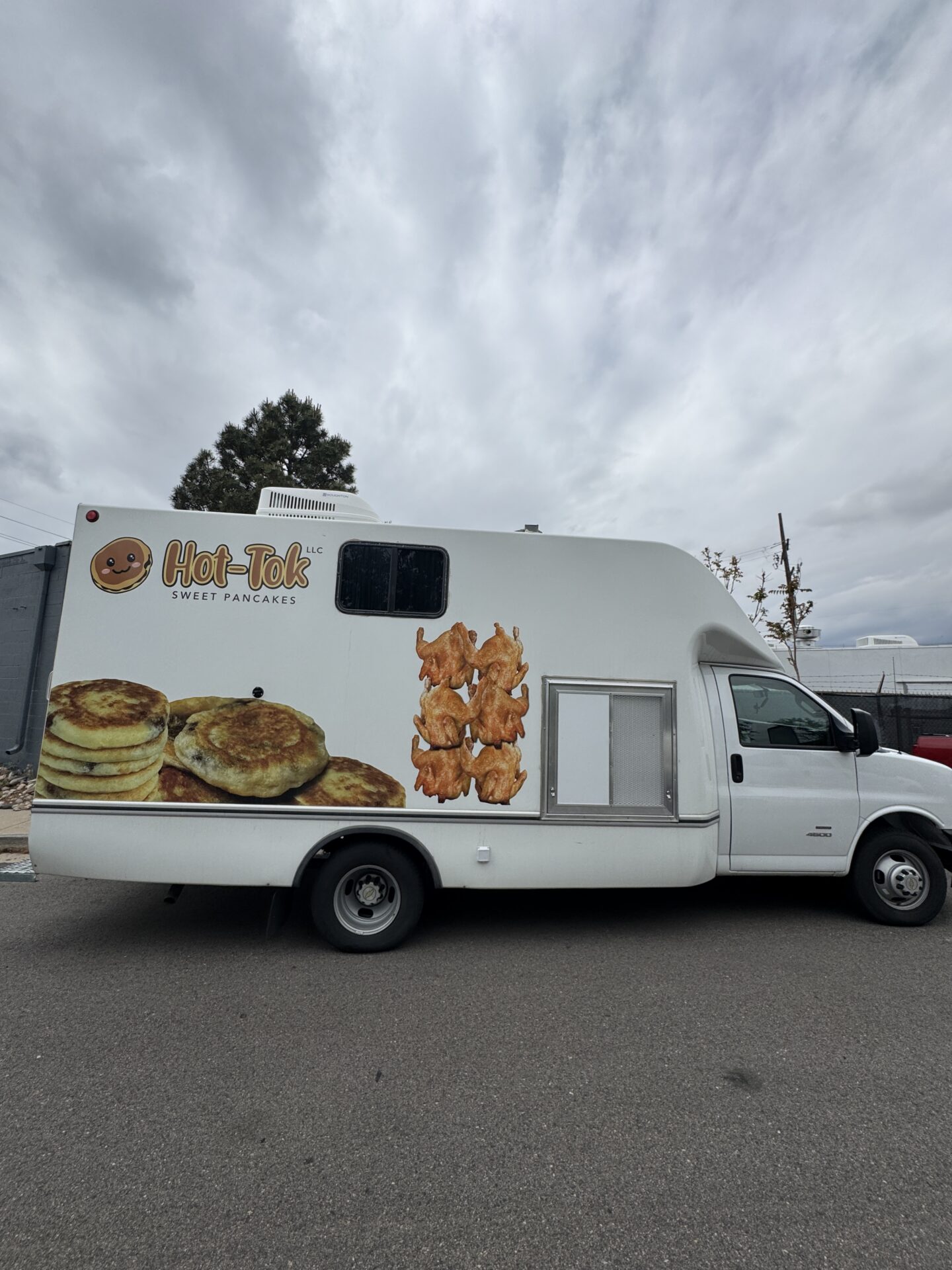
The customer on this build is Hot-Tok LLC, a Korean sweet pancakes concept rolling out in our home state. The wrap shows it. Stacked golden hotteok across one side, the Hot-Tok brand mark and the tagline “Sweet Pancakes” across the back, and a bear mascot at the corner that fits the warm K-street-food brand voice. There is also Korean fried chicken art on the rear panel, which tells you the menu is not just hotteok. The truck is set up to handle both.
Hotteok as a food truck menu
Hotteok is one of the most iconic Korean street foods. Winter night markets in Seoul are stacked with vendors griddling them, hand-pressed into shape and stuffed with brown sugar, cinnamon, peanuts, and sometimes sesame seeds or even savory fillings like japchae or kimchi. The dough is yeasted, slightly sweet, and rolled into balls that proof until they are ready to flatten and cook. Modern variants run from classic brown sugar to ice cream hotteok, where the finished pancake is split and stuffed with a scoop of ice cream while still warm. There is even a savory version, hotteok stuffed with vegetables and noodles, that sells year-round in Korea.
For a food truck menu, hotteok is almost ideal. The unit cost is low. The product travels well in the hand. It can be plated to-go or with a wrapper for walk-and-eat. Customers see the cooking process happen in real time at the griddle, which is half the show. And the menu naturally scales from a single sweet pancake at $5 up to a fully topped premium variant pushing $10 or more, which keeps the ticket flexible.
The catch is the dough. Yeasted dough needs time, temperature, and humidity to do its work. Without a proper proofing environment, the operator is at the mercy of ambient cabin temperature, which is bad news on a Colorado morning that starts at 38 degrees and on an August afternoon that hits 95 degrees. That is what the 9-pan proofer solves.
Why the proofer changes the build
A 9-pan proofer holds dough at a controlled temperature and humidity. The operator preps a batch of dough at the commissary the night before, divides it into balls, racks them in the proofer pans, and rolls into service. Through the day, the operator rotates dough through the proofer in waves so there is always a batch ready to go. The cooking line never waits on dough, and the dough never gets oversfermented sitting in the cabin.
For volume, the math matters. A skilled operator on a 48 inch griddle can run 12 to 16 hotteok at a time, with a cook time around 4 to 5 minutes per side. That works out to roughly 150 to 200 hotteok per hour at full clip. The proofer needs to keep up. A 9-pan rig with 12 to 16 balls per pan holds well over 100 ready-to-cook dough portions, with the next wave proofing behind. The operator can run a steady service at festival or event pace without the dough being the bottleneck.
The other piece is dough quality. Cold-cabin dough is dense. Over-proofed dough is gassy and tears on the griddle. A controlled proofer means the dough hits the griddle in the same condition every time, which means every customer gets the same pancake. That consistency is what builds the brand.
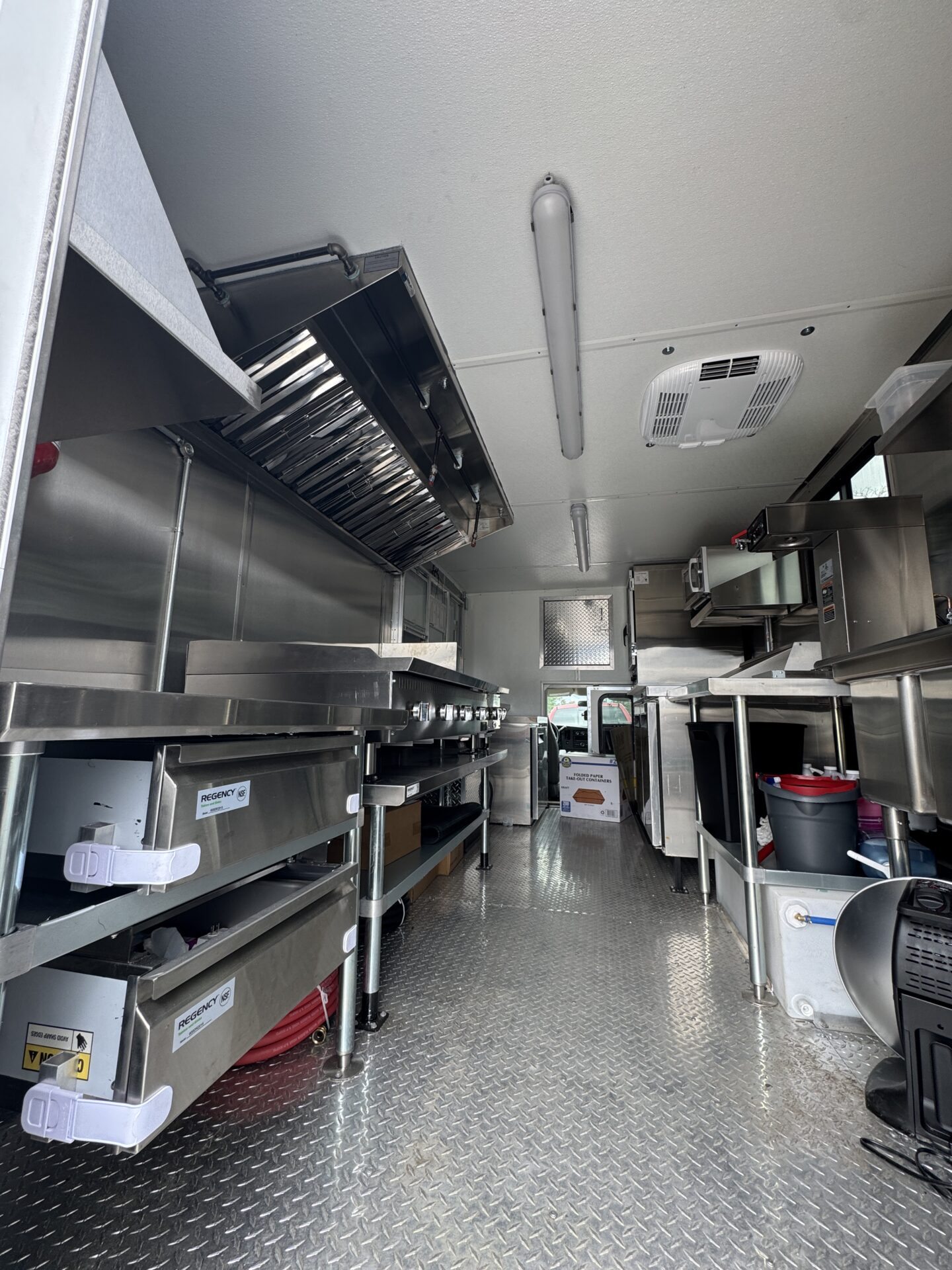
The 48 inch griddle and the cooking line
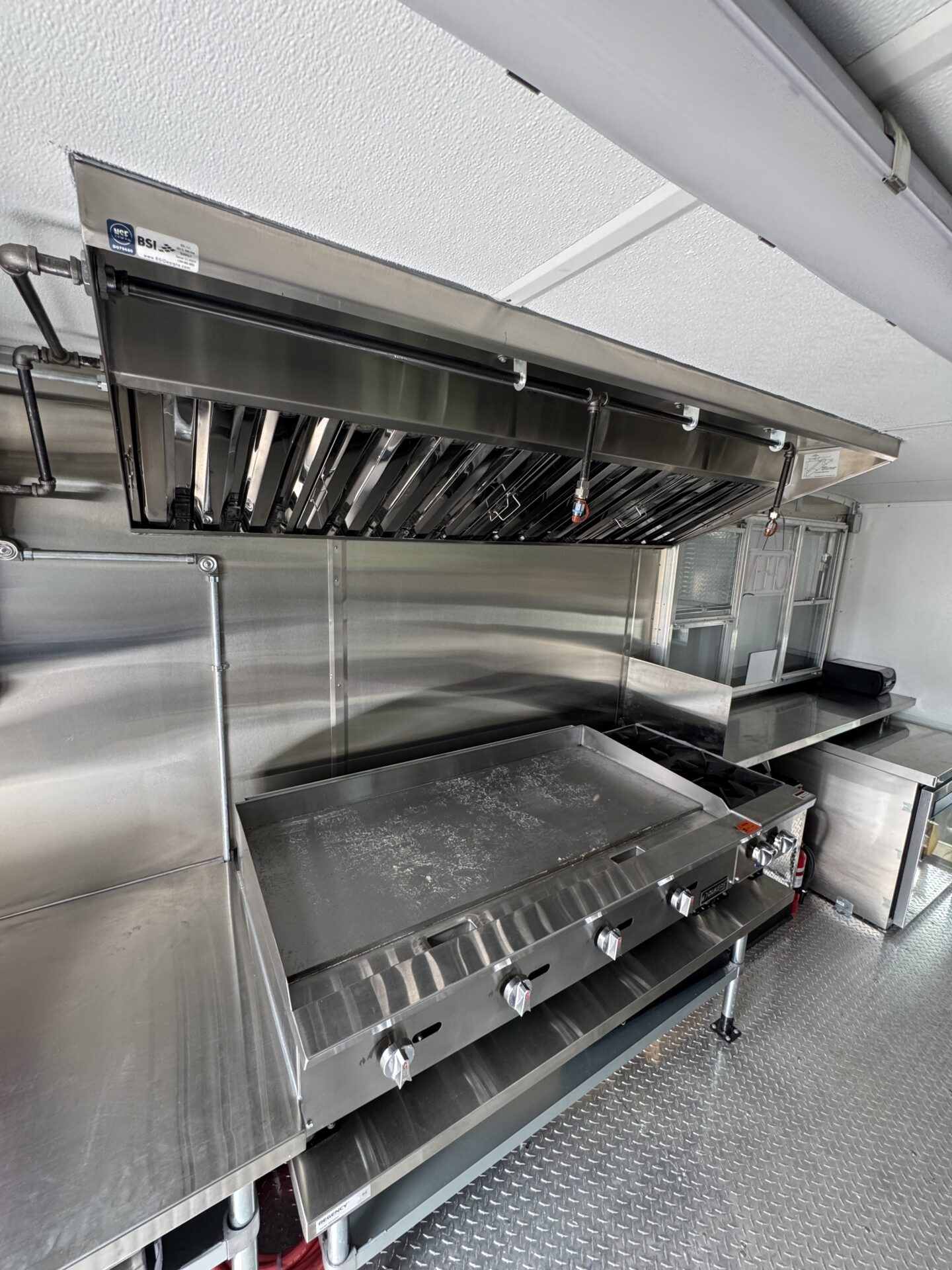
Most of our hot-food trucks ship with a 24 or 36 inch griddle. This one runs a full 48 inch surface. The size matters when the menu is built around batch cooking. The operator can keep one zone hot for the hotteok, a second zone slightly cooler for any side items that need a longer cook, and a third zone open for a la carte orders without crossing surfaces. On a busy day the griddle never goes empty.
Next to the griddle is a two-burner stove. For a Korean sweet pancake menu, those burners handle sauces, hot syrup for the dessert variants, and any small-batch frying. The sauce work matters more than people realize. Korean dessert menus carry signature drizzles and toppings that need to be made or held warm at service.
If the menu pushes into Korean fried chicken, which the wrap art suggests it does, the two burners and the existing fire suppression system handle that workflow too. A small-batch chicken operation does not need a dedicated fryer station the way a full chicken-truck would, but the equipment list as spec’d here has enough headroom to support it.
The 36 inch refrigerated prep table
A 36 inch refrigerated pizza prep table sits adjacent to the cooking line. Top rail holds the assembly mise en place: brown sugar and cinnamon mix, chopped peanuts, sesame seeds, any premium toppings, savory fillings on the side. The reach-in below holds bulk product cold and within reach. The operator can build a single hotteok in under thirty seconds at this station once the cooked pancake comes off the griddle.
Next to the prep table is a full-size standup commercial refrigerator for bulk storage. Premium toppings, dairy if the menu carries ice cream hotteok, bulk brown sugar inventory for the day, and any side menu items. Below the prep table line is an undercounter freezer, which is set up for ice cream inventory if the operator pushes a hotteok-with-ice-cream summer variant.
The kitchen display system is a first for us
This is the first build we have shipped with an integrated Kitchen Display System tied to the Point of Sale at the order window. For a small-format truck, that is a meaningful upgrade. Here is what it changes.
On a typical food truck, the order flow is: customer says order, cashier writes it on a paper ticket or shouts it back to the line, line cook reads or hears the ticket and starts the build. That works at low volume. At a festival lunch rush with 80 people in line, it falls apart. Tickets get lost, orders get confused, the line cook ends up rebuilding a hotteok that already went out because the customer at the back of the line said it again.
A KDS solves all of that. The customer orders at the window, the POS records the order, the screen at the cooking line shows it immediately with timestamp and any modifications, and the operator builds straight off the screen. When the order is done, the operator marks it cleared with a tap. The screen also tracks fulfillment time, so the operator knows in real time when service is starting to slow down.
The POS side handles cash, card, mobile pay, gift cards, and tip flow. Integrated with the KDS, it also handles end-of-day reporting that breaks down sales by menu item, hour, and channel. For a brand that wants to grow into multiple trucks or into a brick-and-mortar location, the data this system captures from day one is real operational value.
We spec’d this system after seeing a few of our customers retrofit their own KDS units to existing trucks with mixed results. Building it in from the start, with proper power, mounting, and cable management, is a better path than adding it later. Expect to see this option on more of our builds going forward.
Castle Rock and the Colorado Front Range market
Castle Rock sits in Douglas County, halfway between Denver and Colorado Springs along I-25. The town has grown fast over the past decade, with the most recent census putting it past 80,000 and rising. The Outlets at Castle Rock pull in millions of shoppers a year and run a consistent rotation of food trucks in the lot during peak season. Philip S. Miller Park hosts amphitheater concerts, summer festivals, and community events that book food trucks for the day. The Castle Rock Brewing Co and a handful of other breweries along Wilcox and along the Promenade book truck rotations on a weekly cadence.
For a Korean sweet pancake concept, Castle Rock is a strong landing spot. The town demographics over-index on dual-income families looking for novel, photogenic, kid-friendly food. The Outlets traffic adds a steady tourist component. And the lack of any direct competition for Korean street food in the area means the brand can establish without anyone fighting for the same customer.
For permits and licensing, Douglas County food trucks operate under the Tri-County Health Department, which covers Adams, Arapahoe, and Douglas counties for mobile food unit licensing. The Town of Castle Rock layers its own special event vending and right-of-way rules on top of that. Operators should plan on a Tri-County mobile retail food establishment license plus any town-specific permits for the venues they intend to work. Our state-by-state food truck permits guide has more detail on how the Colorado regulatory layer stacks for mobile operators.
Walls, floor, lighting, and the standard build items
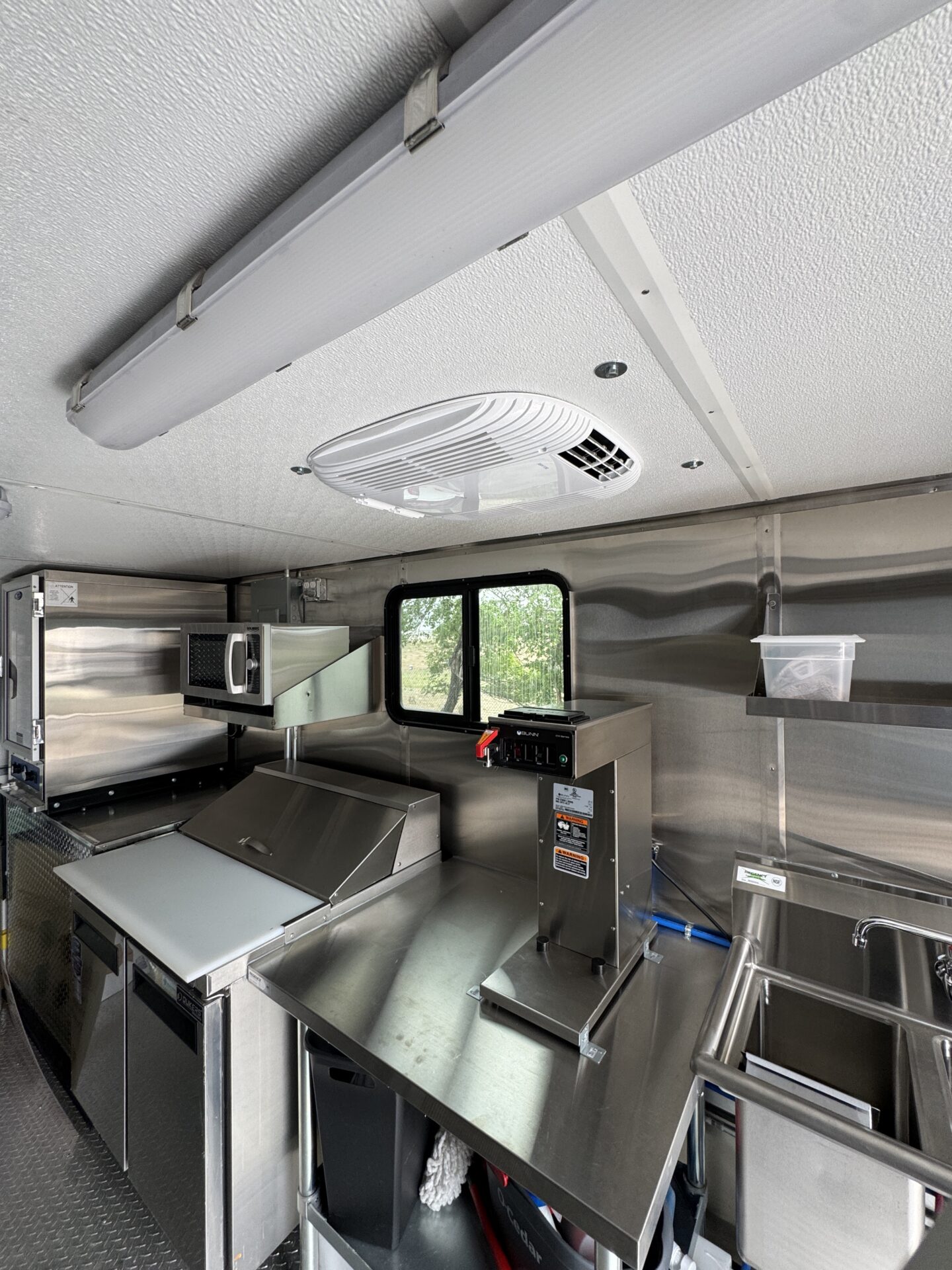
Cooking wall is stainless steel, as it is on every hot-food truck we build. The rest of the cabin walls are a mix of stainless and FRP, which is what the operator on this build wanted. Stainless behind any splash zone or high-heat surface, FRP elsewhere for the cleaner cabin aesthetic and slightly lower upfront cost. Aluminum diamond plate floor, the standard we install on every truck. LED strip lighting runs through the cabin so the operator has even bright light at every station, plus exterior LED on the awning and side panels for evening service at events.
The 5 foot service window is on the curbside, sized for a clean line at events. Flip-up awning door doubles as overhead cover and a brand surface for the wrap. Self-closing inset doors below the awning and a screen for warm-weather service when the window is open for hours.
Plumbing is built for Tri-County and any Colorado county or city inspector to pass first time. Hand wash sink at the cooking line with paper towel and soap dispensers, three compartment sink for utensils and small-ware wash, 8 gallon water heater feeding both. Fresh water tank is 30 gallons and grey water tank is 40 gallons, both undermount.
Power is a 12 kW generator. Sized for the cooking equipment load plus the proofer, refrigeration, freezer, KDS and POS, lighting, and water heater all running together with headroom. Our food truck generator size guide covers the math for builds like this. Fire suppression is a full UL 300 wet chemical system over the cooking line, Class K extinguisher at the line for grease fires, and an ABC extinguisher for the cabin.
Full equipment list
- Stainless steel cooking wall
- Stainless steel and FRP wall panels elsewhere in the cabin
- Aluminum diamond plate floor
- LED lighting inside the cabin and along the exterior
- 48 inch griddle
- Two burner stove
- 36 inch refrigerated pizza prep table
- Standup full-size commercial refrigerator
- Undercounter freezer
- 9 pan dough proofer
- Microwave oven
- Kitchen Display System and POS
- UL 300 wet chemical hood fire suppression
- Class K and ABC fire extinguishers
- 5 foot service window with awning door, self-closing inset doors, and bug screen
- Hand wash sink with soap and paper towel dispensers
- Three compartment sink
- 8 gallon water heater
- 30 gallon fresh water tank, undermount
- 40 gallon grey water tank, undermount
- 12 kW generator
Walk-in tour
Frequently asked questions
How much does a Korean food truck like this cost in 2026?
A 14ft Korean food truck built to this spec, with the 48 inch griddle, proofer, two-burner stove, prep table, full refrigeration, KDS and POS, and a 12 kW generator, lands in the $80,000 to $110,000 range depending on the chassis, the wrap, and the specific tech package on the KDS. The proofer and the kitchen display system both add real cost over a basic build, but both pay back fast in throughput.
Why a 9-pan proofer instead of a smaller unit?
Throughput. A 48 inch griddle running hotteok at full clip will outrun a 4 or 6-pan proofer in less than an hour at festival pace. The 9-pan rig matches the griddle capacity and gives the operator the buffer to keep service moving without the dough becoming the bottleneck. For a Korean street food menu that depends on yeasted dough quality, undersizing the proofer is the single most common mistake we see.
Can the same truck handle both hotteok and Korean fried chicken?
Yes, at small-batch volume. The two-burner stove and the existing fire suppression handle the chicken side. A full chicken-truck would add a dedicated fryer and more cabin space, but for a hotteok-anchored menu with chicken as a secondary item, the equipment as spec’d here is enough. The Hot-Tok build on this truck is set up exactly that way.
What is a Kitchen Display System and is it worth it on a 14ft truck?
A KDS is a screen at the cooking line that shows incoming orders in real time from the POS at the customer window, with timestamps, modifications, and a tap-to-clear workflow. On a small truck, it replaces paper tickets and verbal order callouts, which is the most common source of order errors at high volume. The setup cost is real, several thousand dollars for hardware plus the POS integration, but it pays back any time the truck does festival-pace service. We expect to see this option more often on future builds.
What licenses does a food truck need to operate in Castle Rock, Colorado?
A Tri-County Health Department mobile retail food establishment license is the foundation. The Town of Castle Rock then layers its own special event vending and right-of-way rules for any specific venues. Most operators also need a Colorado sales tax license through the Department of Revenue and a State of Colorado food handler card for the operator and any employees. Festival and special event bookings often require additional event-specific paperwork through the organizer.
More recent builds
Other recent trucks worth a look. The 18ft Native American food truck for Wichita, Kansas is on the opposite end of the size spectrum but built around a similar menu-first philosophy. The 14ft bagel food trailer for Yard Sale Bagels in Bozeman is another build organized around a yeasted dough workflow. The 10ft Sprinter coffee van for alMOKÁ Coffee in Rockford and Chicago is the smaller-format cousin.
If you are just thinking about a build, our 2026 guide to starting a food truck business covers the financial and operational basics, and what equipment goes in a food truck walks through the layout logic in more detail.
Ready to build yours?
We build food trucks, trailers, and van conversions out of Woodland Park, Colorado for operators across the Mountain West, the southern plains, the Midwest, and the front range we call home. If you have a Korean concept, a hotteok or KFC operation, or any other menu and need a truck designed around it from the cooking line out, call 719-722-2537 or head to our contact page to start the conversation.