

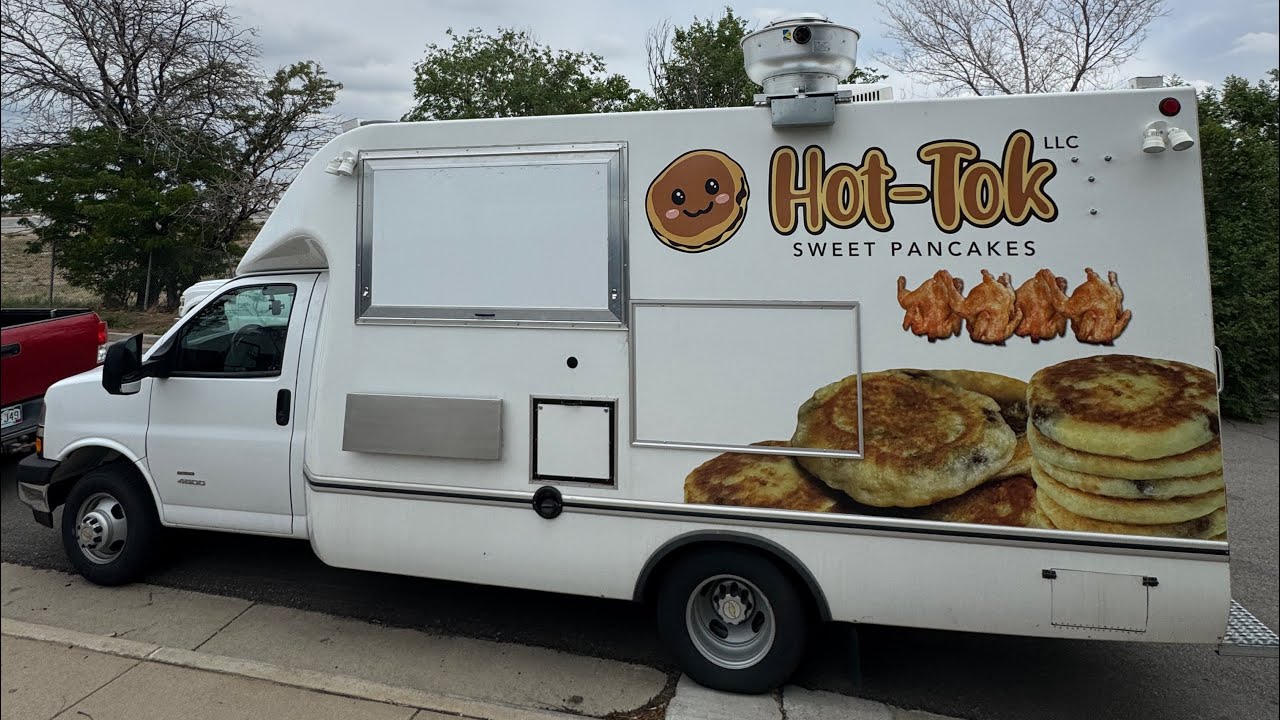
Hotteok is a yeasted dough, and that one fact drove the whole layout of this build. A Korean sweet pancake starts as a dough that has to rise before it hits the griddle, so the workflow on this truck runs proofer to griddle to service window, in that order, with everything the cook needs in between. This is a 14ft Korean food truck we built for Hot-Tok LLC, a hotteok and Korean fried chicken concept headed to Castle Rock, Colorado, and it is one of the more thought-through cook lines we have shipped this year.
Most food trucks do not carry a dough proofer. This one has a 9-pan proofer, and it earns its floor space. Here is why it matters, what else went into the build, and why Castle Rock is a smart place to park a Korean truck.
The proofer, and why a Korean truck needs one at altitude
A 9-pan proofer holds dough at a controlled temperature and humidity so it rises the same way every service. On a truck, that control is not a luxury, it is the only way to get consistent hotteok. A food truck interior swings from cold morning to hot afternoon, and Castle Rock sits at about 6,200 feet where the air is dry and yeast behaves differently than it does at sea level. Without a proofer, the dough proves fast and unevenly on a warm day and barely at all on a cold one. With one, the cook pulls a properly risen pancake dough whenever the line calls for it. If you are building around a yeasted product, this is the single most important piece of equipment on the truck, and it is the reason we laid the rest of the line out around it.
From the proofer, the dough moves to a 48-inch griddle, which is the workhorse for both the sweet pancakes and the savory side of the menu, backed by a two-burner stove for sauces and the fry work that Korean fried chicken needs. Cold storage is a 36-inch refrigerated pizza prep table for fillings and toppings, a full-size standup refrigerator, and an undercounter freezer, so the cook has proteins, produce, and frozen stock all within reach. There is a microwave for quick reheats. It is a compact line, but nothing is more than a step away.
A Kitchen Display System and POS, built in
This truck runs a Kitchen Display System and a point-of-sale system, integrated into the build rather than bolted on after. On a menu with a made-to-order item like hotteok, a KDS is the difference between a line that flows and one that loses tickets during a rush. Orders come in at the window, fire to the screen at the cook line, and the cook works the queue without paper tickets blowing around or getting greased over. For an operator planning to work farmers markets, festivals, and a steady lunch crowd, that order flow pays for itself in throughput. We wire the power and mounting for it during the build so it is clean and reliable, not a tangle of cords added later.
The shell around all of this is a stainless steel cooking wall behind the hot line with stainless and food-grade FRP on the other walls, an aluminum diamond plate floor, and LED lighting inside and out. The service window is a 5-foot opening with an awning door, self-closing service doors, and a bug screen.
Fire safety and how this truck passes inspection in Castle Rock
Korean fried chicken means a fryer, and a fryer means the truck has to meet a real fire standard. This build carries a hood suppression system over the cook line, a Class K extinguisher for cooking oils, and A, B, and C extinguishers for everything else. Castle Rock Fire and Rescue inspects any mobile unit that produces smoke or grease-laden vapors, and the department has adopted the 2024 International Fire Code. The practical expectations for a frying truck are UL-300 hood suppression, a Class K extinguisher, and a propane system installed to NFPA 58, all of which this truck has. Castle Rock charges an annual fire permit fee, currently 100 dollars, and the department accepts reciprocal permits from other Colorado jurisdictions that use the 2024 code if you submit ahead of time. Keep the inspection report in the vehicle.
On the health side, Castle Rock is in Douglas County, and this is a spot where a lot of online guides are now wrong. Tri-County Health Department dissolved, and as of 2023 Douglas County runs its own Douglas County Health Department, which is the licensing and inspection authority for a food truck here. A new mobile unit submits a mobile unit plan review, schedules an inspection, and pays the annual retail food license fee, which runs on the Colorado state framework where plan review starts at a 155 dollar application fee. A commissary is required, and if you do not own the facility you need a signed commissary agreement. On top of the county license, the Town of Castle Rock requires a business and tax license, which is a 10 dollar application through the town’s sales tax portal, and the town sales tax rate is 4.2 percent. Confirm the current license amounts with the Douglas County Health Department and the Town of Castle Rock before you file, since the county sets its fee schedule locally.
Water, power, and cooking at 6,200 feet
The plumbing is a hand wash sink, a three-compartment sink for wares, and an 8-gallon water heater, fed by a 30-gallon fresh tank and draining to a 40-gallon grey tank, both mounted under the truck. Power comes from a 12kW generator sized to run the proofer, the refrigeration, the KDS, and the lighting together.
Altitude is a real design factor here, and it is one we deal with on every Colorado build. At Castle Rock’s 6,200 feet, gas appliances lose roughly 15 percent of their rated output compared to sea level, so propane burners, the griddle, and the fryer all run leaner and recover more slowly. We account for that when we spec the equipment so the cook is not fighting a weak flame during a rush. Water also boils at a lower temperature up here, which changes cook times, and the dough behavior at altitude is exactly why the proofer matters so much. Castle Rock also gets four real seasons and strong Front Range wind, so the service window and awning are built to take it.
Why Castle Rock is a strong market for a Korean truck
Castle Rock is one of the fastest-growing and most affluent towns in Colorado, with a median household income around 145,000 dollars and steady growth since 2020. That is a market with disposable income and a young family base that turns out for food events, and it is largely underserved for Korean food. The Denver-metro Korean scene is concentrated up in Aurora, so a hotteok and Korean fried chicken truck in Douglas County is filling a real gap rather than fighting for a crowded corner.
The event calendar gives a truck plenty of places to be. The Douglas County Fair and Rodeo runs July 24 through August 2 in 2026 at the fairgrounds in Castle Rock. Downtown Castle Rock runs Boots and Brews on July 25, Oktoberfest on September 19, and the Starlighting on November 21, which is the town’s signature event and draws thousands downtown. Add the Outlets at Castle Rock, Philip S. Miller Park, and the town’s brewery scene, plus the corporate and HOA catering demand from master-planned neighborhoods like The Meadows, Founders Village, and Plum Creek, and there is enough work here to keep a truck busy well beyond the festival weekends.
Full equipment list
- Stainless steel cooking wall, with stainless and FRP on the other walls
- Aluminum diamond plate floor
- LED lighting throughout the interior and exterior
- 48-inch griddle
- Two-burner stove
- 36-inch refrigerated pizza prep table
- Full-size standup refrigerator
- Undercounter freezer
- 9-pan dough proofer
- Microwave oven
- Kitchen Display System and POS system
- Hood suppression system with Class K and A/B/C extinguishers
- 5-foot service window with awning door, self-closing doors, and bug screen
- Hand wash sink and three-compartment sink
- 8-gallon water heater
- 30-gallon fresh water tank and 40-gallon grey water tank, mounted under the truck
- 12kW generator
Walkthrough video
Frequently asked questions
Why does a Korean food truck need a dough proofer?
Hotteok, the Korean sweet pancake, is made from a yeasted dough that has to rise before it hits the griddle. A 9-pan proofer holds that dough at a controlled temperature and humidity so it proves consistently, which is hard to do otherwise inside a truck that swings from cold to hot, especially at Castle Rock’s altitude.
Who licenses a food truck in Castle Rock, Colorado?
The Douglas County Health Department licenses and inspects food trucks in Castle Rock. Tri-County Health Department dissolved, and Douglas County has run its own health department since 2023. You also need a Town of Castle Rock business and tax license.
Does altitude affect a food truck in Castle Rock?
Yes. At about 6,200 feet, gas appliances lose roughly 15 percent of their rated output, so burners, griddles, and fryers run leaner and recover slower. We spec the equipment to account for the derating, and the altitude is part of why a controlled proofer matters for the dough.
Does a Korean fried chicken truck need fire suppression?
Yes. Frying requires UL-300 hood suppression, a Class K extinguisher for cooking oils, and a propane system to NFPA 58. Castle Rock Fire and Rescue inspects mobile units that produce grease-laden vapors under the 2024 International Fire Code, and this truck carries all of it.
Why put a Kitchen Display System on a food truck?
A KDS keeps a made-to-order line flowing during a rush. Orders fire from the point-of-sale straight to a screen at the cook line, so the cook works a clean queue without paper tickets. On a menu with a built-to-order item like hotteok, that order flow protects your throughput.
How long does Zion take to build a truck like this?
A custom build like this runs about six weeks in our shop, and we source the truck so you do not have to. We build for operators across Colorado and the wider Mountain West and hand over a truck that is road and inspection ready.
More resources before you build
- What Equipment Goes in a Food Truck
- Best POS System for Food Trucks
- How to Pass a Food Truck Health Inspection
- What Permits Do I Need (State by State)
- How to Start a Food Truck Business (2026 Guide)
If you are planning a Korean food truck, a dessert or sweets truck, or any build with a specialized cook line, we would be glad to talk it through. We source the truck, build it out, and get it road and inspection ready. Reach us at zionfoodtrucks.com or call 719-722-2537.
Jacob Varghese
Zion Foodtrucks
719-722-2537